

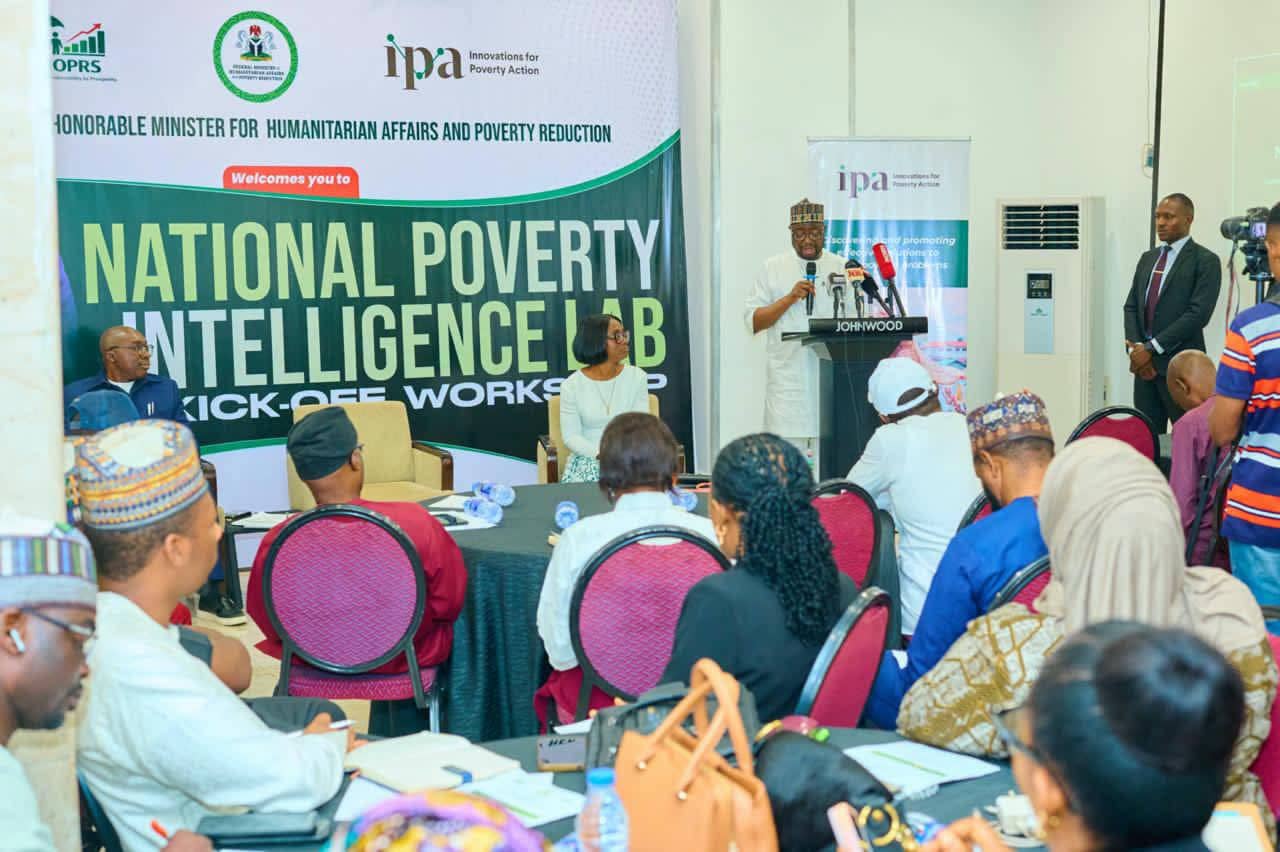

Federal Government Launches National Poverty Intelligence Lab in Abuja
The Federal Government of Nigeria officially launched the National Poverty Intelligence Lab on Wednesday, marking a significant step towards a more strategic approach to poverty alleviation. This new initiative introduces a sophisticated data-driven platform specifically designed to enhance the targeting, monitoring, and evaluation processes of the nation's various poverty-reduction programs. The primary objective of the lab is to confront the dire circumstances of an estimated 140 million Nigerians who currently live below the national poverty line, a figure that underscores the immense scale of the challenge facing the country.
Dr. Bernard Doro, the Minister of Humanitarian Affairs and Poverty Reduction, presided over the unveiling of the new platform. The launch took place during the opening of a three-day workshop held in Abuja, which was convened to focus on the operationalization and practical implementation of the lab. Government officials have characterized the National Poverty Intelligence Lab as a crucial central hub for intelligence and evidence gathering, intended to provide robust support for all federal anti-poverty interventions.
This launch signals a discernible shift in the government's strategy, moving towards what officials describe as a more systematic and informed approach to managing social welfare data. The platform is engineered to consolidate disparate information sources, thereby creating a unified repository of data that will be instrumental in guiding future policy decisions, optimizing resource allocation, and ensuring greater efficacy in poverty alleviation efforts across all regions of the country.
Minister Urges a New Era of Evidence-Based Leadership
During his address at the Abuja workshop, Dr. Doro delivered a compelling call for a fundamental change in Nigeria's approach to tackling poverty. He emphatically stated that the country can no longer afford to rely on outdated methods characterized by assumptions and fragmented, uncoordinated interventions. The Minister stressed that such an approach has proven insufficient in addressing the pervasive and complex issue of poverty.
According to Dr. Doro, the sheer magnitude and depth of the poverty challenge necessitate a completely new strategy, one firmly anchored on robust data, verifiable evidence, and unwavering accountability. He reiterated the staggering statistic: "Recent estimates indicate that approximately 140 million Nigerians live below the poverty line. The scale and depth of the challenge is staggering, but it is surmountable." This statement underscored both the gravity of the situation and the government's resolve to overcome it through innovative means.
The Minister further elaborated that the current national moment demands a leadership style driven by comprehensive systems and actionable intelligence, rather than merely repeating past strategies that yielded limited results. He asserted that what is critically required now is coordinated, transparent, and accountable action, all rigorously supported by empirical evidence. This new paradigm aims to ensure that interventions are not only well-intentioned but also strategically sound and impactful.
Operational Framework and Stakeholder Engagement
The three-day workshop held in Abuja served as the pivotal venue for not only unveiling the National Poverty Intelligence Lab but also for detailing its operational framework. The event successfully brought together a diverse group of stakeholders, including government officials, experts, and implementers, to engage in discussions about how the new data platform will function effectively in practice and integrate seamlessly into existing structures.
Officials indicated that the lab is envisioned to become the primary, authoritative source of verified information for all government anti-poverty programs. This strategic centralization of data is expected to yield multiple benefits, most notably a significant reduction in operational inefficiencies that have historically plagued such programs. Furthermore, by providing accurate and timely intelligence, the lab aims to ensure that assistance reaches its intended beneficiaries with greater precision and effectiveness, minimizing leakage and misdirection of vital resources.
The discussions during the workshop focused on establishing clear protocols for data collection, analysis, and dissemination, ensuring that the intelligence generated is both reliable and actionable. The collaborative environment fostered during the event was crucial for aligning expectations and building a shared understanding among all parties involved in the nationwide effort to combat poverty.
Targeting the 140 Million: A Measurable Path to Poverty Reduction
The initiative directly targets the substantial portion of the Nigerian population living in poverty, with the estimate of 140 million people serving as a critical baseline. This figure is not merely a statistic but represents the human scale of the challenge against which the ultimate effectiveness and success of the new intelligence lab will be rigorously measured. The government's commitment is to translate this data into tangible improvements in the lives of these individuals.
By establishing a dedicated and centralized hub for evidence gathering, the Federal Government aims to cultivate a more transparent and measurable system for tracking progress in poverty reduction across all states and communities. The National Poverty Intelligence Lab is designed to provide real-time data and analytical insights, which are indispensable for informing timely policy adjustments, optimizing program designs, and conducting thorough evaluations of ongoing interventions. This continuous feedback loop is essential for adaptive governance and ensuring that resources are deployed where they can have the greatest impact.
The lab's capacity to collect, analyze, and interpret vast amounts of data is expected to provide a clearer picture of poverty dynamics, identify vulnerable populations more accurately, and pinpoint the most effective interventions. This data-driven approach is anticipated to foster greater accountability within government programs and among implementing agencies, ultimately accelerating the nation's journey towards significantly reducing the number of people living below the poverty line.