

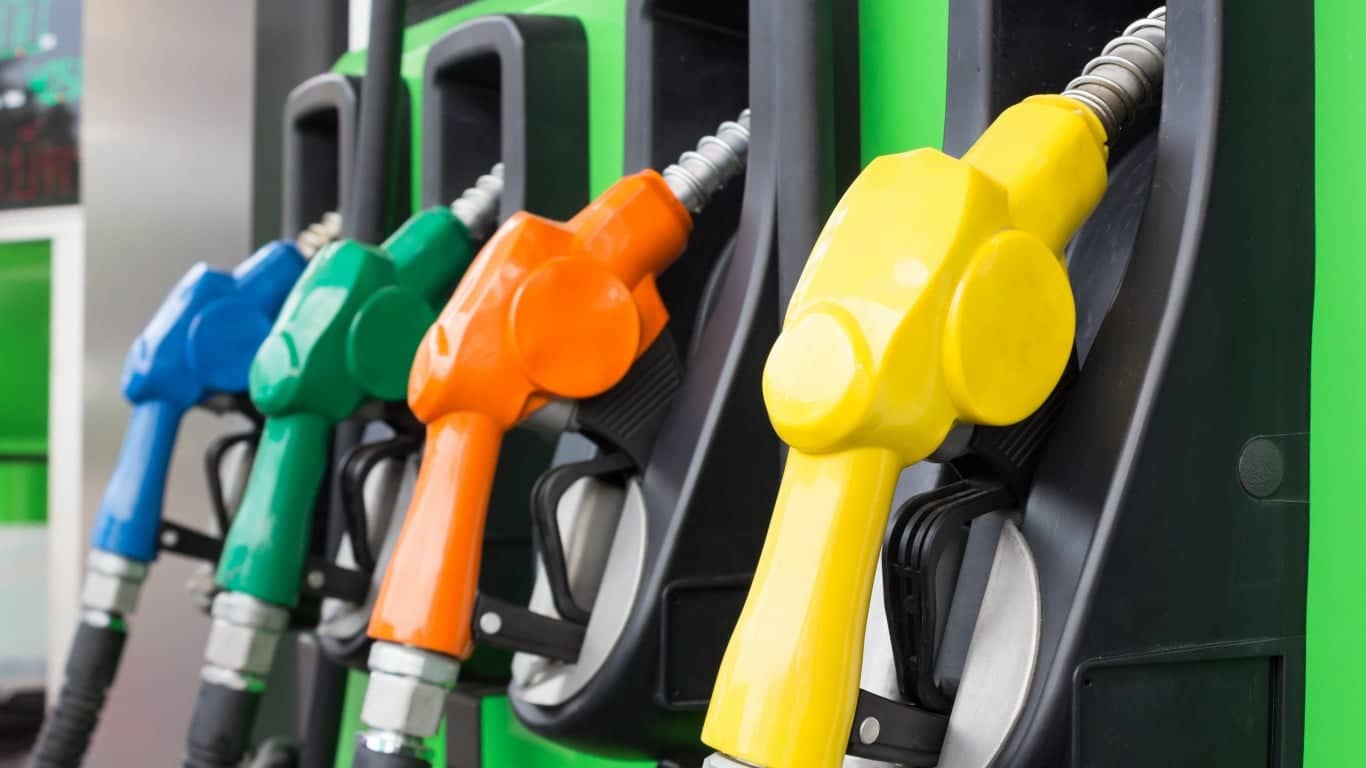

Volatility in US Gasoline Markets Driven by Geopolitical Tensions
United States gasoline prices exhibited substantial fluctuation during the spring of 2026, a period characterized by supply disruptions originating in the Middle East. Data from the FRED weekly regular gasoline series indicates that prices reached a peak of $4.50 per gallon on May 11, 2026. Following this high point, costs began to decline, easing to $3.78 by July 6, 2026, just prior to the July Fourth holiday.
Market dynamics shifted slightly in the subsequent week, with prices edging back up to approximately $3.85 per gallon. The Energy Information Administration (EIA) had forecasted that global inventories would fall by 8.5 million barrels per day during the second quarter. Despite these inventory projections, West Texas Intermediate (WTI) crude prices had already dropped by 26%, illustrating the rapid reversibility of geopolitical premiums in energy markets.
Broader market indicators on July 14, 2026, reflected modest movements across major indices. The S&P 500 closed at 7,762.60, representing a 0.16% increase. The Dow Jones Industrial Average rose 0.06% to 53,821.20, while the Nasdaq 100 gained 0.29% to reach 29,810.80. The Russell 2000 increased by 0.15% to 3,051.40. Conversely, international markets showed slight declines, with the FTSE 100 dropping 0.29% to 10,824.80 and the Nikkei 225 falling 0.19% to 68,415.70.
Refining Sector Leads Gains Amid Price Swings
Analysts identify refining stocks as primary beneficiaries of rising gasoline prices, with Valero Energy (VLO) and Phillips 66 (PSX) noted for their exposure to crack spreads. Crack spreads represent the difference between the price of crude oil and the price of refined petroleum products, serving as a key metric for refinery profitability.
Valero Energy reported a year-to-date stock price increase of 74% at the time of publication. The company’s shares traded at a forward price-to-earnings (P/E) ratio of just 10. This valuation metric suggests that investors are pricing in future earnings expectations relative to current share prices, though it does not inherently predict future performance.
Valuation Comparisons in the Beverage Sector
The beverage sector is highlighted for comparative valuation purposes within the current market environment. Historical transaction data provides a baseline for assessing current corporate valuations. Dunkin’ was previously acquired for $11 billion. JDE Peet's, another major player in the coffee and tea industry, initially public offering (IPO) occurred at a $17 billion valuation.
Starbucks currently holds a market capitalization of approximately $110 billion. These figures are cited to illustrate the scale of valuations within the consumer staples and beverage industries relative to other sectors benefiting from energy price changes.
Sponsored Investment Opportunities
The source material includes sponsored content regarding investment opportunities in the coffee supply chain. Green Coffee Company is described as an entity controlling the supply chain from seed to sale. The text identifies this company as an investment opportunity, stating it "wants to be the next great investment." This segment is explicitly labeled as sponsored content within the original reporting.
The article notes that Flywheel Publishing may receive compensation for actions taken through links provided by sponsors and affiliates. This disclosure is standard practice in financial journalism to identify potential conflicts of interest or promotional material integrated into editorial content.