

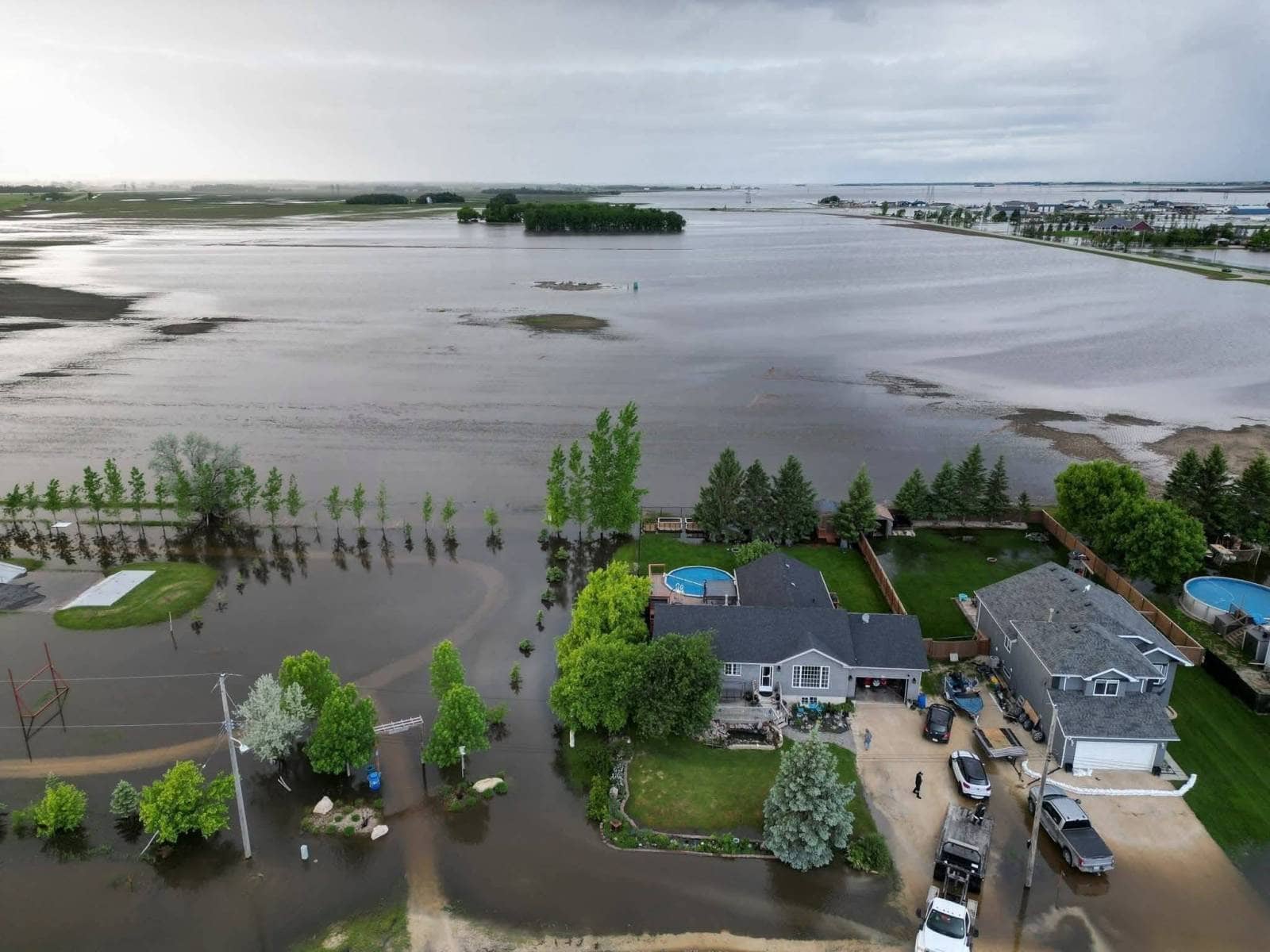

Fields within the Rural Municipality of Rockwood are currently submerged under water. Local landowners have pointed directly to inadequate drainage systems as the primary cause for this inundation, raising significant concerns for the region's agricultural sector and the livelihoods of its farming community.
Campbell Compares Lush Land to Retention Ponds
Curtis Campbell, a resident and owner of agricultural property in the area, observed his fields on Monday afternoon. He noted that the landscape has changed significantly from its usual state. The normally green and lush land, vital for cultivation and livestock grazing, is now extensively covered by standing water. This transformation from potentially productive farmland to a waterlogged expanse underscores the immediate and severe challenges faced by farmers in Rockwood.
Looking out over the submerged terrain, Campbell likened his specific plots to retention ponds rather than active farmland. This vivid visual comparison highlights the severity of the current conditions for local agriculture in that municipality. The description suggests not just temporary dampness or a minor inconvenience, but a significant and persistent accumulation of water that fundamentally alters the land's utility. Such conditions pose a direct threat to crop viability, soil health, and the overall productivity of the land, especially as the critical spring planting season progresses.
Systemic Drainage Failures Threaten Agricultural Productivity
The attribution of the widespread flooding to inadequate drainage systems by local landowners points to a critical infrastructure challenge within the Rural Municipality of Rockwood. Effective drainage is paramount in agricultural regions, designed to efficiently manage excess water from rainfall and snowmelt, preventing it from saturating fields for extended periods. When these systems are insufficient, poorly maintained, or outdated, the consequences for farming operations can be severe and far-reaching, leading to the kind of extensive inundation currently observed.
The Critical Role of Water Management in Farming
Agricultural drainage systems, which typically include a complex network of open ditches, culverts, and sometimes subsurface tile drains, are engineered to maintain optimal soil moisture levels. Their primary function is to prevent waterlogging, a condition where soil pores become saturated with water, displacing oxygen essential for plant root respiration. Without adequate oxygen, crops suffer from stunted growth, increased susceptibility to disease, and ultimately, significant yield reductions or complete failure. Proper drainage also ensures that farmers can access their fields with machinery for timely planting, cultivation, and harvesting—operations that are highly dependent on suitable ground conditions. The current state of fields in Rockwood suggests a significant breakdown in this essential water management function, leaving vast tracts of land unproductive and vulnerable.
Economic Strain and Long-Term Environmental Impact
The transformation of fertile fields into what resembles retention ponds carries substantial economic repercussions for the agricultural community of Rockwood. Farmers face immediate losses from delayed or impossible planting, reduced yields, or the complete destruction of crops that cannot tolerate prolonged submersion. This directly impacts their annual income, their ability to meet financial obligations, and the broader regional economy, which heavily relies on a robust agricultural output. Beyond immediate crop losses, prolonged waterlogging can also severely degrade soil structure, leading to compaction and reduced fertility. It can leach vital nutrients from the topsoil, and create an anaerobic environment conducive to certain plant pathogens, potentially affecting the land's productivity for future seasons. While the research notes do not detail specific environmental impacts, the disruption of natural hydrological processes and land use patterns inherently carries ecological considerations for the rural landscape.
Community Calls for Infrastructure Review
The collective voice of local landowners, as highlighted by individuals like Curtis Campbell, underscores a growing concern over what they perceive as systemic issues with the municipality's water management infrastructure. Their direct attribution of the problem to "inadequate drainage systems" suggests a widespread belief that the current flooding is not merely an isolated weather event, but a preventable outcome linked to deficiencies in infrastructure design, capacity, or ongoing maintenance. This sentiment points towards a strong desire within the agricultural community for a comprehensive review and potential upgrades to the existing drainage network to prevent future occurrences.