

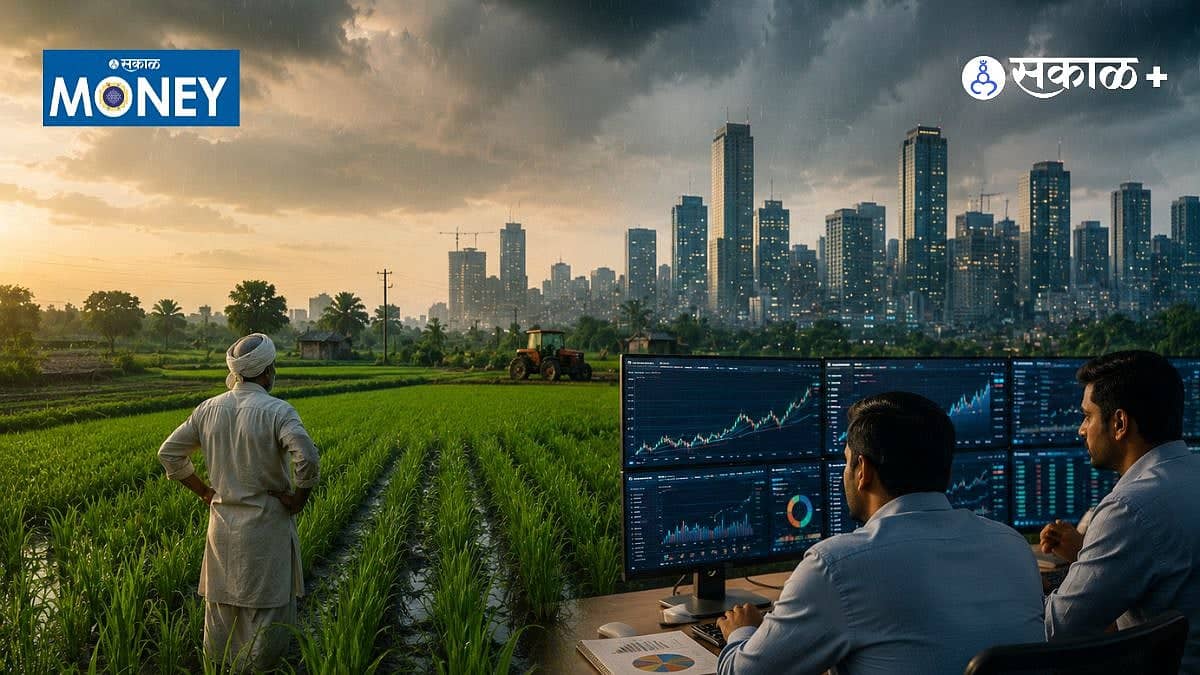


Agricultural Yields And The Mechanics Of Inflation
The Indian economy operates as a complex chain of interconnected elements where changes in one specific area trigger effects across numerous other sectors. This structural dependency is particularly evident regarding the monsoon, which serves as a primary variable for economic stability.
According to data presented by Sakal Money, the performance of India's agricultural output faces direct correlation with fluctuations in rainfall patterns. When monsoon precipitation levels deviate from historical averages—either through deficits or excesses—the resulting impact on crop yields is immediate and measurable. This variation in harvest volume subsequently dictates food prices within domestic markets.
Dr. Virendra Tatké, identified as the author of the analysis published by Sakal Money on June 24, 2026 at 12:00 pm IST, explains that inflation rates are heavily influenced by these agricultural shifts. A decline in production due to inadequate rainfall leads to a scarcity of essential commodities, driving up consumer prices and eroding purchasing power for households across the nation.
The source material emphasizes that this relationship is not merely theoretical but constitutes a fundamental reality of India's economic landscape. The text notes explicitly: "Indian economy largely depends on monsoon." Consequently, any disruption in rainfall patterns creates ripples through the supply chain affecting food security and cost-of-living metrics for millions of citizens.
The Banking Sector And Rural Consumption Drivers
Financial institutions play a critical role in mediating the economic impact of seasonal weather events. The banking sector's performance is intrinsically linked to monsoon outcomes because a substantial portion of credit lines are disbursed specifically for agricultural purposes.
Sakal Money reports that lenders adjust their risk assessments and loan disbursement strategies based on projected crop health, which relies heavily on timely rainfall. During periods of drought or delayed onset, banks often tighten lending criteria to mitigate the high probability of non-performing assets (NPAs) arising from farmer distress.
Rural demand acts as a crucial engine for broader economic growth in India, and this driver is tightly coupled with agricultural success rates determined by monsoon performance. When farmers experience favorable weather conditions leading to bumper harvests, rural disposable income rises significantly. This increase translates into higher consumption of non-food items such as appliances, vehicles, and construction materials.
Conversely, poor rainfall results in reduced farm incomes, which suppresses spending power in rural areas. The source context highlights that "rural demand is closely tied to the success of monsoon season." This suppression or stimulation of rural consumption directly feeds into national GDP calculations and corporate earnings reports for companies operating in consumer goods sectors.
Investor Sentiment And Stock Market Volatility
The stock market serves as a barometer for investor confidence, which is frequently swayed by macroeconomic indicators including rainfall data. Investor sentiment regarding the performance of various economic sectors shifts according to monsoon forecasts and actual precipitation records.
According to Dr. Virendra Tatké's analysis published on esakal.com under the title "Monsoon And Indian Economy," fluctuations in weather patterns cause immediate recalibration of portfolio strategies by institutional investors. Sectors such as fertilizers, farm machinery manufacturers, and food processing companies see their valuations rise or fall based on anticipated harvest outcomes.
The article text states that these dynamics provide important lessons for investors: "Monsoon & Markets: How Indian economy and stock market depend on rainfall." Market analysts observe that a weak monsoon often leads to defensive positioning in equity portfolios, moving capital away from cyclical industries toward utilities or essential services less sensitive to weather variability.
Conversely, an above-normal monsoon can trigger rallies in agricultural stocks. The source notes that "investor decisions in the stock market are also influenced by monsoon's effect on various economic sectors." This feedback loop ensures that equity markets remain reactive to meteorological data released during the critical June through September window.
Economic Interconnectedness And Future Outlook
The narrative presented by Sakal Money underscores a central tenet of Indian economics: "Economy is one chain connected with many things." This metaphor illustrates how a localized event, such as rainfall in the Kharif season, propagates effects through banking systems, retail markets, and capital allocation decisions.
Dr. Virendra Tatké utilizes an educational dialogue format to demystify these complex interactions for readers interested in finance and economics. The conversation between a student named Aniket and Dr. Tatké serves as the vehicle to explain how "changes in monsoon patterns can affect agricultural output, which in turn influences food prices."
The source explicitly attributes this chain reaction mechanism to the heavy reliance of Indian agriculture on natural precipitation rather than irrigation infrastructure alone. The text warns that ignoring these dependencies could lead to misjudgments regarding inflation forecasts and corporate earnings projections.
Furthermore, the publication emphasizes that "impact of rainfall on stock market agriculture rural demand economic growth" constitutes a vital area of study for financial professionals. By understanding this linkage, investors can better anticipate volatility in emerging markets where weather-dependent sectors dominate GDP contributions.
The analysis concludes by reiterating that while external factors like global trade and interest rates matter, the domestic monsoon remains an uncontrollable yet decisive variable shaping India's economic trajectory annually. The source text advises stakeholders to monitor meteorological reports closely as these data points serve as leading indicators for broader financial health assessments.
Dr. Virendra Tatké notes that "impact of rainfall on stock market agriculture rural demand" requires a comprehensive understanding from policymakers, bankers, and investors alike. The article maintains throughout that no single sector operates in isolation within the Indian context; rather, they function as interdependent nodes in a larger economic network.