

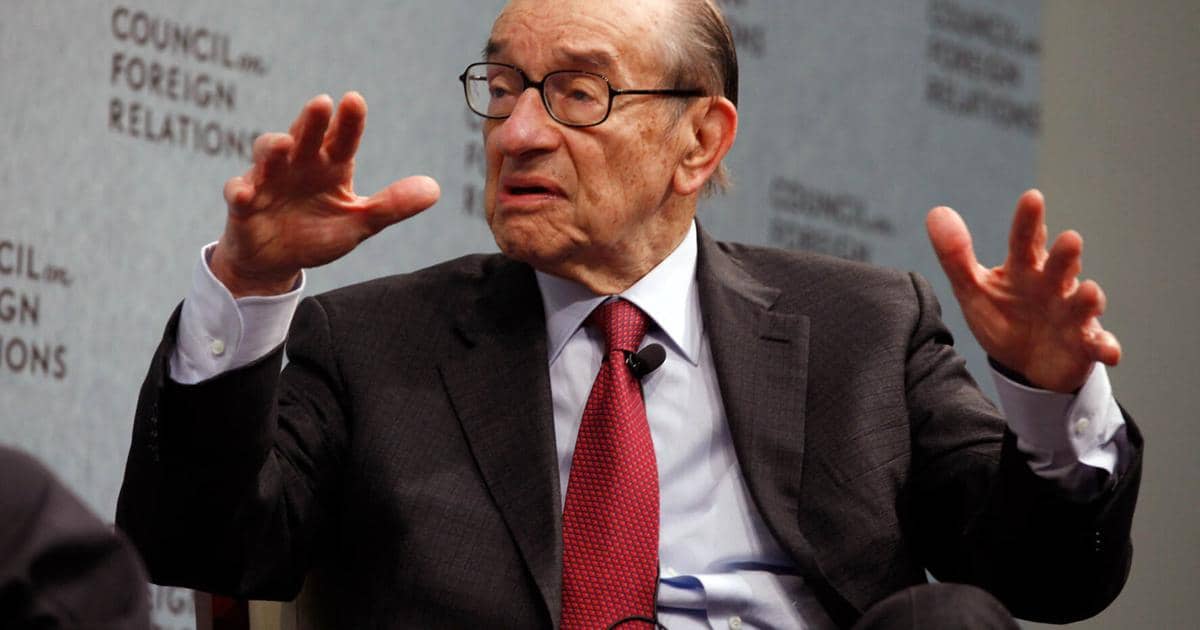

Alan Greenspan, who served as chairman of the Federal Reserve Board, has died. He was 100 years old.
The source notes describe him as having presided over a long period characterized by economic stability and prosperity. According to the article's narrative, he was accorded rock-star status in the financial world during his tenure.
His reputation has been reported to have suffered damage following a recession and global financial crisis. The source context describes this downturn as wrenching.
The death announcement appears on Sentinelsource under the headline "Alan Greenspan, longtime head of the Federal Reserve, dies at 100." The URL associated with the report is https://www.keenesentinel.com/news/national_world/alan-greenspan-longtime-head-of-the-federal-reserve-dies-at-100/article_2f339a07-8aae-5f52-9335-cba78a308486.html.
Greenspan's role as the longtime head of the Federal Reserve is confirmed by multiple descriptions in the source material. The text refers to him specifically as "former Federal Reserve Board chairman" and "longtime head of the Federal Reserve." These titles are used interchangeably within the provided context to identify his position.
The narrative surrounding his career highlights a trajectory from high regard to diminished standing. Sources state he was accorded rock-star status in the financial world only to have that reputation tarnished later in life due to economic events.
Specific details regarding dates of birth or death, as well as specific locations where services may be held or causes of death beyond age-related factors, are not included in the provided research notes. The text focuses on his tenure and its aftermath rather than biographical minutiae outside of these points.
The characterization of his era includes terms such as "economic stability" and "prosperity," though these descriptions are attributed to accounts cited within the article's narrative structure rather than presented as independent statistical verification in the text snippet provided for analysis. The source explicitly frames this period through the lens of those specific descriptors.
Regarding his later years, the reporting indicates a shift in public and professional perception linked to financial instability. The phrase "reputation tarnished" is used directly by the source context when discussing the impact of the recession and global crisis on his standing.