

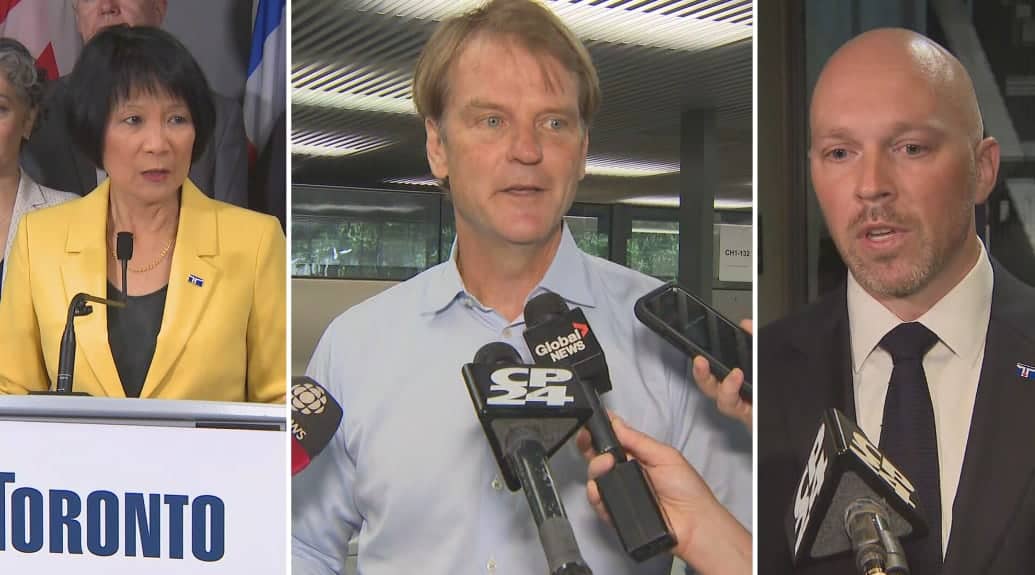

Official Entry Into The Mayoral Contest
Former Member of Parliament Chris Alexander has formally announced his candidacy for the position of Mayor of Toronto. This announcement marks a new chapter in the federal Conservative cabinet minister's political career, transitioning from national service to local municipal governance. Mr. Alexander's extensive background in federal politics, including his tenure as a cabinet minister, brings a distinct set of experiences and perspectives to the municipal arena.
The launch event serves as an official declaration that Mr. Alexander intends to compete against other candidates currently vying for leadership of Toronto City Hall. By stepping forward at this stage, he joins a field of contenders seeking to shape the city's future policies and administration. His formal entry into the race adds another significant voice to the public discourse surrounding Toronto's direction and challenges, intensifying the competition for the city's top political office.
This move signifies a shift in focus for Mr. Alexander, from the broad national issues typically addressed in Ottawa to the more localized, yet equally complex, urban challenges facing Canada's largest city. His candidacy introduces a contender with a federal political pedigree into a race that often features candidates with long-standing municipal or provincial experience.
Alexander's Assessment of Toronto's Trajectory
Central to Mr. Alexander's campaign messaging is his assessment of the current state of affairs in the municipality. He has publicly stated that Toronto is currently 'slightly adrift.' This specific phrasing was used during his announcement to describe what he perceives as a deviation from an optimal path for the city.
According to Mr. Alexander, this description reflects his view on how the administration and elected officials are managing key issues facing the metropolis. The term 'slightly adrift' suggests a critique that, while not portraying a city in crisis, implies a lack of clear direction, suboptimal governance, or a failure to fully capitalize on Toronto's potential. It positions his campaign as a corrective force, rather than one advocating for radical upheaval, suggesting that the city has strayed from an ideal course rather than completely lost its way.
The Outsider's Perspective on Governance
In articulating why he should be chosen for the role, Mr. Alexander emphasizes his status as an 'outsider.' He believes that this perspective is necessary to correct what he identifies as the city's current course. This self-identification as an outsider is a strategic move, designed to differentiate him from candidates who may have been long-entrenched in Toronto's political landscape.
His argument rests on the premise that a candidate who has not been deeply embedded in existing political structures or specific local power dynamics might offer fresh solutions and an unbiased approach to municipal challenges. By labeling himself an outsider, Mr. Alexander aims to distinguish his approach from those of long-standing politicians within Toronto politics, appealing to voters who may be seeking a departure from the status quo and a new vision for the city's future.
Charting a New Direction for the City
Mr. Alexander's campaign platform includes a pledge to get the city back on track. This statement implies that he views the current administration as having lost its way, even if only slightly in his estimation. The phrase 'back on course' suggests a belief in a correct trajectory for Toronto that has been obscured or abandoned by previous leadership. His candidacy is framed around restoring this perceived direction through new management strategies and potentially different policy priorities.
This commitment to realigning Toronto's path directly addresses his assessment that the city is 'slightly adrift.' For Alexander, the 'outsider' perspective he brings is not merely a point of distinction but a crucial asset for implementing the necessary changes. He positions himself as the catalyst for a return to effective governance, where the city's administration and policies are more closely aligned with what he considers optimal outcomes for residents and businesses.
Implications for Toronto's Future Policies
The promise of 'new management strategies' and 'different policy priorities' suggests a re-evaluation of how City Hall operates and where its resources are allocated. While specific policy details were not outlined in the initial announcement, the overarching message points towards a desire for greater efficiency, accountability, and a renewed focus on core municipal services. This approach aims to instill a sense of purpose and clarity in the city's administration, ensuring that Toronto's trajectory is intentional and beneficial.
His vision implies a belief that with the right leadership and a fresh perspective, Toronto can overcome its current challenges and achieve its full potential. The emphasis on getting 'back on course' indicates a foundational belief in the city's strength and resilience, needing only a guiding hand to steer it towards a more prosperous and well-managed future.
Shifting Dynamics in the Mayoral Race
Candidates Chow and Bradford have responded to the news of Chris Alexander's entry into the race. Their reactions were noted during coverage surrounding his announcement, indicating that their campaigns are aware of the new competition entering the field. The presence of Mr. Alexander adds another layer to the competitive landscape for Toronto mayoralty, introducing a candidate with a distinct federal background and a specific critique of the city's current direction.
His formal entry means other candidates must now address a contender who frames himself as an outsider seeking to correct the city's direction. This could prompt existing campaigns to refine their own messaging, particularly concerning their vision for Toronto's future and their strategies for addressing municipal challenges. The dynamic between these various contenders will undoubtedly evolve as their respective campaigns progress toward election day, potentially leading to new debates and a broader range of policy discussions for Toronto voters to consider.