

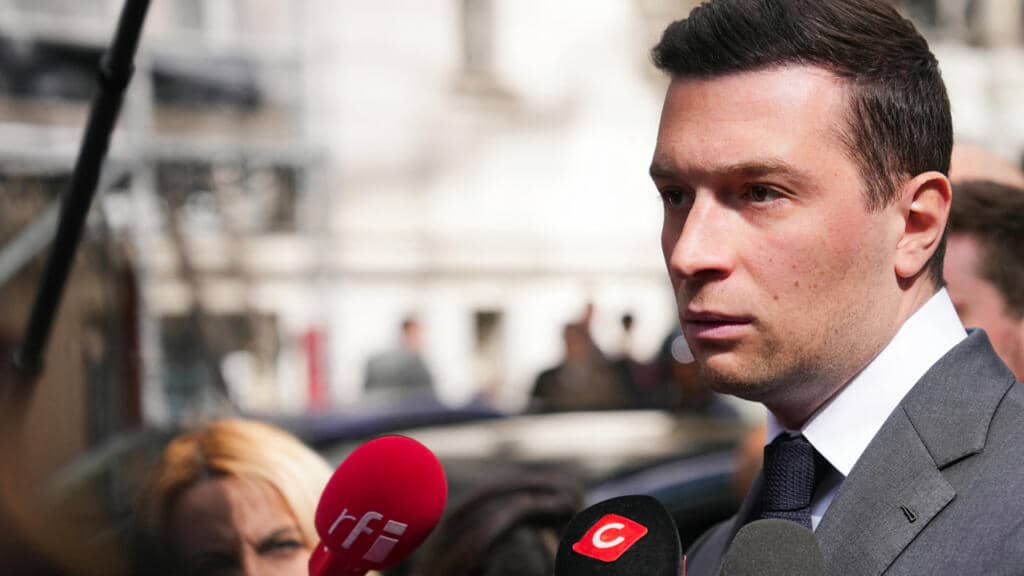

Bardella to Address Reform UK Conference in Birmingham
Jordan Bardella, the leader of France’s far-right National Rally, is scheduled to deliver a keynote address at the Reform UK party conference in Birmingham on Friday. The appearance places the 30-year-old French politician alongside Nigel Farage, the 62-year-old prominent figure in the United Kingdom’s far-right movement, as both seek to elevate their political profiles on an international stage.
Bardella’s participation in the event is part of a broader strategy to build his profile abroad. His invitation to speak at the conference signifies a deepening relationship between two of Europe’s most successful populist radical-right parties. While these groups share common ideological ground, particularly regarding immigration policy, they have not always been natural allies in the past.
The upcoming address marks a notable moment in the diplomatic and political alignment between the French National Rally and Reform UK. By appearing at a major gathering of British populist activists, Bardella is positioning himself within a wider network of European right-wing politics that transcends national borders.
Shared Ideologies and Historical Divergence
The strengthening ties between the two parties are rooted in their similar positions on key policy issues. Both organizations have established themselves as significant forces in their respective countries by focusing on populist radical-right platforms. A central pillar of this shared ideology is a strict stance on immigration, which has become a defining characteristic of their political appeal.
Despite these current alignments, the relationship between Bardella’s National Rally and Farage’s Reform UK has not always been seamless. Historically, the two parties have experienced periods of divergence and have not consistently acted as natural allies. The current effort to forge closer ties represents a shift in this dynamic, suggesting a strategic convergence of interests that goes beyond mere rhetorical similarity.
Observers note that the collaboration between Bardella and Farage highlights a growing transnational populist movement in Europe. This alliance demonstrates how political leaders from different nations are increasingly coordinating their efforts to amplify their messages and influence domestic politics through shared international platforms.
Generational Contrast and Personal Rapport
The partnership between Bardella and Farage is characterized by a distinct generational contrast. At 30, Bardella represents a younger wave of populist leadership in Europe, while Farage, at 62, has been a long-standing figure in British right-wing politics. Despite this age gap, reports indicate that the two men appreciate one another’s political approaches and strategic acumen.
Nigel Farage publicly expressed his enthusiasm for Bardella’s attendance at the conference. In a statement quoted by Politico, Farage said, “I am pleased to welcome Jordan to our party conference.” This public endorsement underscores the personal rapport between the two leaders and signals Reform UK’s willingness to engage closely with its French counterpart.
The joint appearance aims to strengthen the political profiles of both men. For Bardella, speaking in Birmingham offers visibility among British voters and activists, potentially enhancing his standing within the National Rally as he navigates France’s complex political landscape. For Farage, hosting a leader from another major European populist party reinforces his role as a central figure in the broader anti-establishment movement across the continent.
Implications for European Populism
The event in Birmingham serves as a tangible indicator of how far-right politics are evolving in Europe. The collaboration between National Rally and Reform UK suggests a coordinated approach to populist governance that may influence future political strategies across the region. As these parties continue to align their platforms, particularly on issues like immigration, they are creating a model for cross-border populist cooperation that other groups may emulate.
The success of this alliance will likely depend on how effectively Bardella and Farage can translate their shared rhetoric into actionable political outcomes in their respective countries. Their ability to maintain public support while navigating the complexities of international diplomacy will be closely watched by political analysts and opponents alike.