

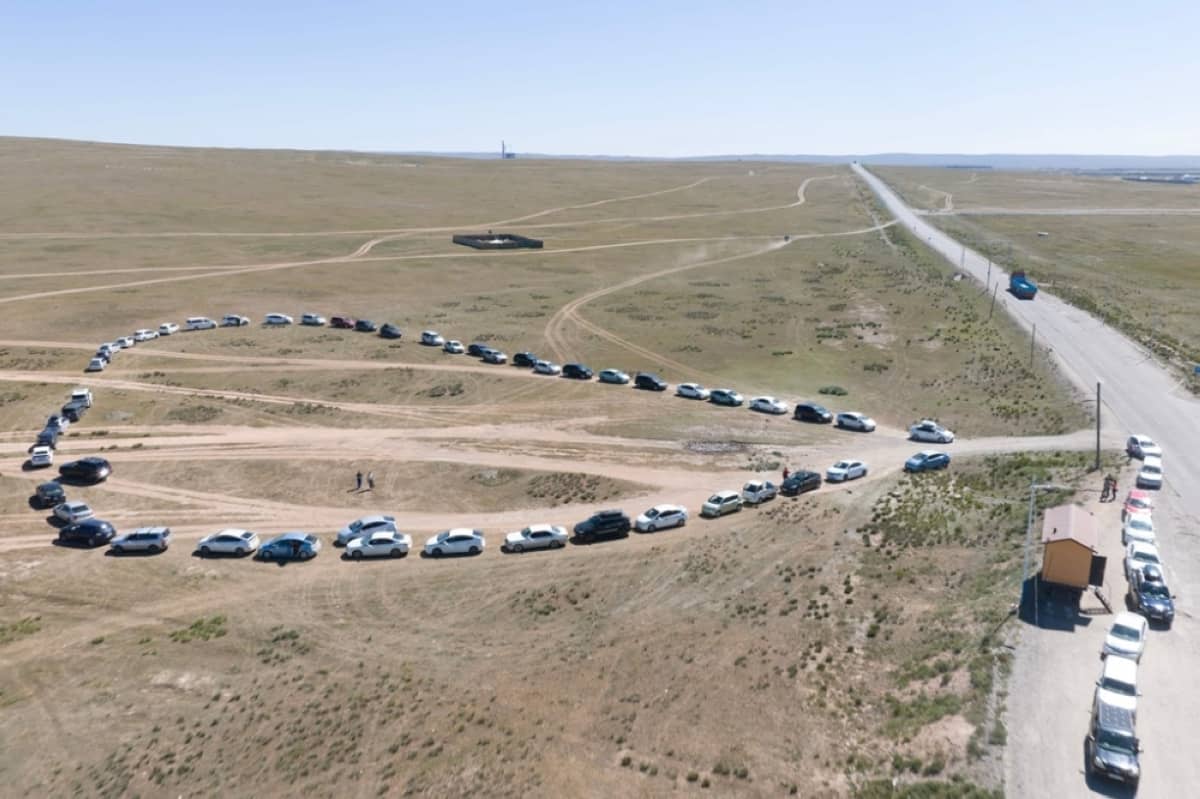

Long Lines Stretch Across the Steppe as Fuel Vanishes
In the arid landscape of Baganhangai, Mongolia, a five-hour wait for gasoline has left pensioner Nasanjargal still ten cars away from a pump. Dozens of vehicles sit motionless behind him in a line snaking into the surrounding steppe. Nasanjargal arrived at the station after driving one-and-a-half hours from the capital, Ulaanbaatar, only to find the situation unchanged.
"Fuel is unavailable; there are huge queues everywhere," Nasanjargal told Agence France-Presse (AFP) from inside his Toyota sedan. The former police officer, who goes by a single name, described the experience as "very troublesome and extremely difficult overall." He noted that he had hoped rural areas might offer better availability, but found the shortage to be universal.
"It’s the same story everywhere," he said, while his young granddaughter shifted impatiently in the back seat. Nasanjargal stated he was "out of options" as the crisis persists across the country.
Ukrainian Strikes Disrupt Supply Chain for Landlocked Nation
Mongolia, a landlocked country sandwiched between Russia and China, has historically imported more than 95 percent of its oil from its vast northern neighbor. This heavy reliance on Russian supplies has left the nation vulnerable to external disruptions.
According to reports, recent Ukrainian strikes on Russian oil facilities have disrupted these supplies in recent months. The interruptions have triggered a relentless fuel shortage within Mongolia, depleting the country's limited stockpiles and raising questions about its energy security.
The disruption has had immediate economic and social consequences. Logistics operations have been roiled, costs have lifted, and the plans of many Mongolians have been ruined. Citizens accustomed to taking advantage of the short summer season with road trips in the picturesque countryside have found their travel plans hindered by the lack of fuel.
Government Rationing Measures Fail to Ease Frustration
The prolonged crisis has increased pressure on Mongolian authorities to ensure an unfettered supply of fuel. In response, the government has implemented several rationing measures to manage demand.
These measures include daily individual caps on fuel purchases and a ban on stockpiling. Additionally, an alternating license-plate scheme has been introduced to reduce the number of cars filling up at any given time.
Despite these interventions, the rationing has frustrated many ordinary citizens. Nasanjargal’s experience in Baganhangai reflects the broader sentiment among Mongolians who find the new restrictions insufficient to alleviate the shortages.
Tourism and Rural Regions Face Compounding Challenges
Beyond the crowded capital of Ulaanbaatar, which is already notorious for its daily traffic, fuel shortages present additional challenges for rural regions. These areas are heavily dependent on tourism, a sector that relies on reliable transportation.
Munkhchuluun Samdannyam, governor of central Dundgovi province, addressed the local impact of the crisis. While specific details of his full statement were not fully elaborated in the immediate source text, his involvement highlights the strain on local governments in tourism-dependent regions as they attempt to manage the logistical fallout.
The shortage has effectively halted the mobility of residents and visitors alike, disrupting the economic lifelines that rural communities depend on during their brief summer season. The combination of high costs and limited availability continues to complicate daily life for Mongolians outside the capital.