

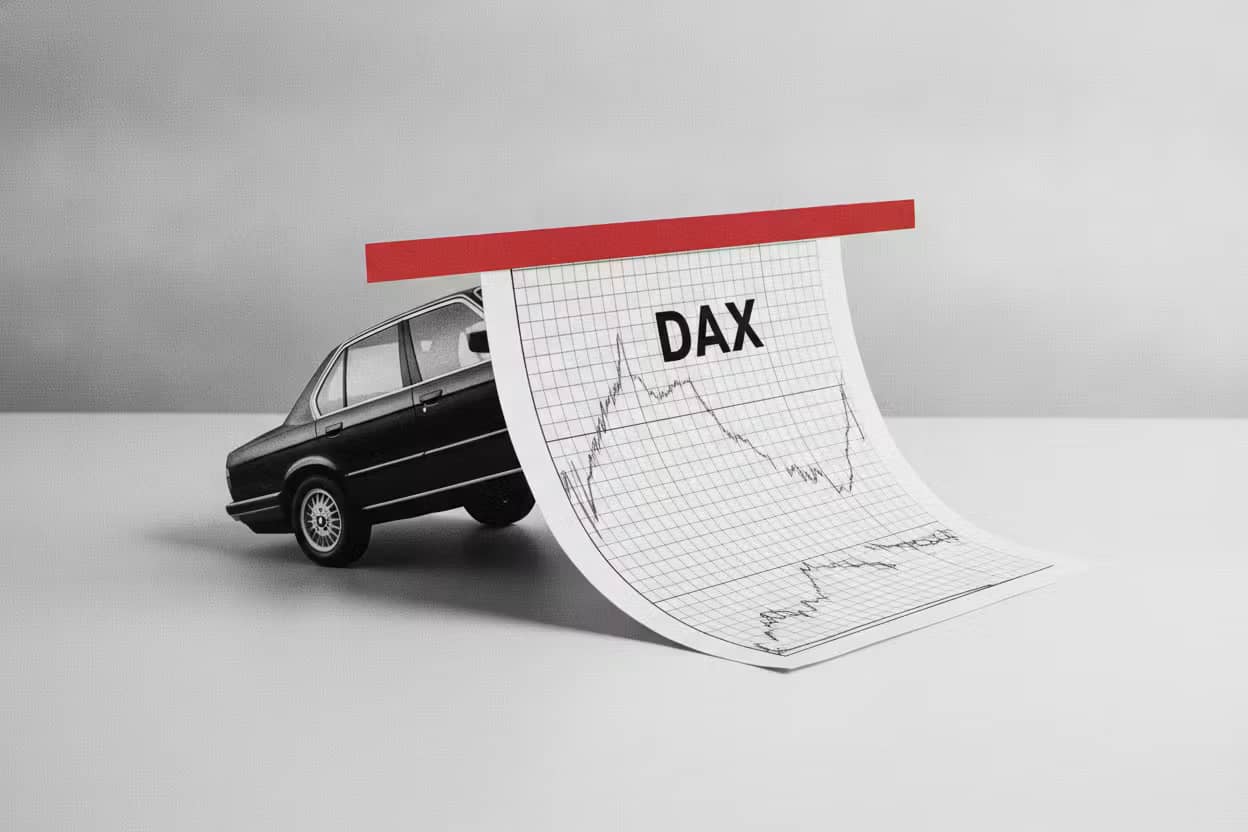

DAX Declines as Inflation Data Rebounds
German stocks slid after fresh data showed inflation in Europe’s biggest economy ticking back above 3%, with Germany’s Federal Statistical Office reporting prices rose 3.3% in September, up from 2.9% and above forecasts.
The DAX fell 0.74% following the release of the September figures. Under the hood, “core” inflation – a measure that strips out jumpy items like energy and food – held at 2.4%, hinting that the rebound is being driven more by volatile costs than by broad-based overheating.
That matters because it keeps the outlook unusually tied to geopolitics and energy markets. The ifo Institute, a German economic think tank, added to the caution: its latest survey showed more companies planning price hikes as energy costs rise.
Corporate Responses and Cost-Cutting Measures
With that backdrop, the DAX’s moves can become less about the day’s inflation print and more about which companies can protect profits if costs stay stubborn. BMW outlined a plan to flatten its organization by cutting divisions and management roles by 20% by mid-2027, while investing 2 billion euros in German production.
BMW’s strategy represents a shift in operational structure as the automaker navigates the current economic environment. The company’s announcement coincides with broader market reactions to the inflation data, signaling that major industrial players are adjusting their long-term plans in response to rising costs.
Deutsche Bank CEO Addresses Political Concerns
In a separate development highlighting investor sentiment, Deutsche Bank CEO Christian Sewing warned Germany’s political shift is troubling foreign investors. The warning underscores the intersection of economic data and political stability in influencing market confidence.
ING Bank said its base case has German headline inflation staying above 3% until early 2027, helped along by higher oil prices and a drawn-out conflict in the Middle East. This projection suggests that the current inflationary pressure may persist for an extended period, affecting corporate strategies and investment decisions across the region.