

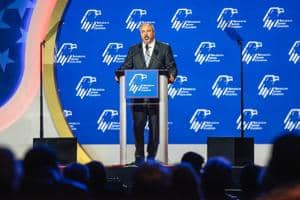

Gruters Addresses Convention Location and Paxton Confidence
DALLAS — The Republican Party has moved forward with plans to host its national convention in Dallas. This event will feature former President Donald Trump as the central figure leading the proceedings for the party. Republican National Committee Chair Joe Gruters made a specific statement regarding the location of this major gathering. He stated that the decision was not influenced by the outcome or status of Texas' marquee Senate race. According to Gruters, the party had already expressed confidence in Attorney General Ken Paxton before any final decisions were finalized on hosting arrangements. Gruters emphasized that bringing the convention to Dallas is a strategic choice independent of legislative battles currently unfolding within the state. He indicated that the selection process for the host city was completed with certainty regarding the Senate race's impact, suggesting the two issues are distinct in the eyes of party leadership.
Senate Race Remains Central Topic Despite Denial
Despite Gruters' assertion that the convention is not being held because of Texas political dynamics, reports indicate a different reality on the ground. Republicans present at the Dallas gathering are certainly talking about the Senate race. The contest for the U.S. Senate seat in Texas has emerged as a significant topic of discussion among party members and delegates attending the event. This focus persists even after Gruters publicly downplayed its role in securing the convention location. The disparity between official statements from committee leadership and the observable conversations within the convention hall highlights the complex political landscape surrounding the state. The Senate race involves Attorney General Ken Paxton, a prominent figure in Texas Republican politics. While Gruters expressed confidence in his candidacy during earlier communications about hosting logistics, that same candidate remains at the center of intense scrutiny as he campaigns for re-election against Democratic opponents. Party officials acknowledge that while they are not citing the election results or potential outcomes as the sole reason for selecting Dallas, the race cannot be ignored. The presence of so many delegates from Texas and across the country ensures that state-level political developments will inevitably influence national party strategy during these convention proceedings.
Political Dynamics in Texas Influence National Strategy
The selection of a host city for such a high-profile event involves multiple layers of consideration. Factors include venue availability, security logistics, and the broader political environment within the state where the convention is being held. Texas has historically been a battleground state with significant influence on national election outcomes. The Senate race in Texas carries weight beyond local interests because it impacts perceptions of Republican strength or weakness heading into subsequent elections nationwide. This dynamic ensures that even when leadership claims otherwise, the conversation naturally gravitates toward high-stakes legislative contests.
Gruters noted during his remarks to reporters and party officials that confidence in Paxton was established prior to finalizing convention details. However, he did not rule out future discussions about how state-level races might affect national messaging or strategy moving forward. The distinction between official statements made by the chair of the Republican National Committee and internal conversations among delegates suggests a nuanced approach to managing public perception versus addressing substantive political realities.
Statements from Party Leadership on Hosting Decisions
The decision-making process behind selecting Dallas involved careful evaluation of various criteria. Gruters was quoted as saying that the party felt secure in its choice well before final announcements were made regarding specific candidates or races. This timeline suggests that external pressures related to ongoing elections did not dictate the outcome for hosting rights. The convention organizers focused on securing a venue capable of accommodating thousands of attendees while maintaining necessary security protocols and logistical requirements.
While Gruters maintained his position publicly, other party members attending the event engaged in debates about how best to frame messages around state-level races like the one involving Paxton. These discussions reflect standard political strategy where national parties must balance local concerns with broader campaign goals. The convention serves as a platform for unifying messaging and setting priorities for upcoming elections across multiple states.
As delegates arrive in Dallas, they bring diverse perspectives shaped by their regional experiences and current electoral environments. This diversity ensures that conversations at the convention will reflect real-world political challenges rather than abstract theoretical scenarios. Gruters reiterated his commitment to supporting candidates who align with party values while navigating complex legislative landscapes.
The focus on specific races like Texas' Senate contest demonstrates how local elections intersect with national priorities during major party gatherings. This intersection shapes narratives that will influence voter engagement and fundraising efforts leading up to the next election cycle. Party strategists monitor these developments closely as they prepare for potential shifts in political momentum or public sentiment based on outcomes from key races like the one involving Attorney General Paxton.
Ultimately, the convention aims to present a united front while addressing legitimate concerns about state-level politics that resonate with voters across party lines. The balance between national unity and local accountability remains a central theme as organizers prepare for what promises to be an event of significant interest to Republicans nationwide.