


Accelerating Ice Loss Drives Global Climate Concerns
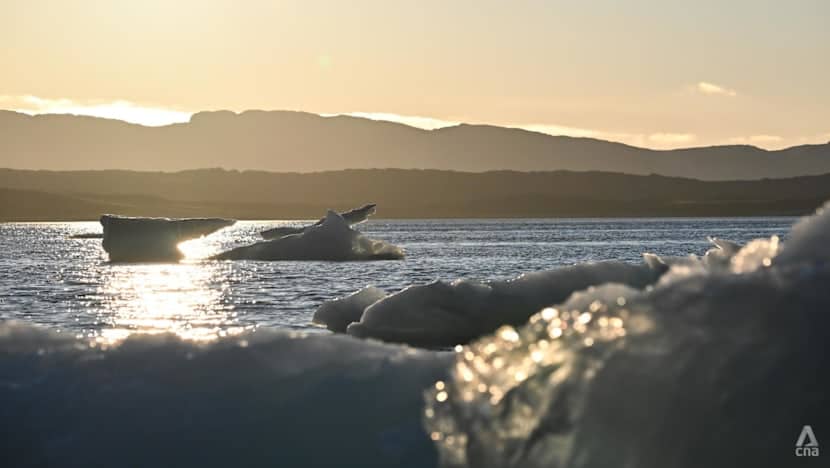
The melting of Greenland's ice sheets is occurring at an accelerating pace due to rising global temperatures, a development that scientists and international observers warn will have repercussions extending far beyond the Arctic region. According to reporting by Channel Newsasia, the changes taking place within Greenland's vast ice cover are not isolated environmental events but are set to ripple across the planet, affecting sea levels and weather patterns worldwide.
The primary driver of this transformation is identified as rising global temperatures. As the climate warms, the integrity of the Greenlandic ice sheets degrades, releasing significant volumes of freshwater into the Atlantic Ocean. This process contributes to global sea-level rise, a critical metric for coastal nations and island states that rely on stable climatic conditions for their economic and social stability.
While the immediate physical effects are visible in the Arctic landscape, the broader implications involve complex interactions within the global climate system. The loss of ice reduces the Earth's albedo effect, as darker ocean water absorbs more solar radiation than reflective white ice, potentially creating a feedback loop that further accelerates warming. These dynamics underscore why environmental analysts view Greenland not merely as a local geographic entity but as a central component in the global climate equation.
Geopolitical Contention Intensifies Over Arctic Territory
Beyond the environmental implications, the Arctic region is becoming an increasingly contested site for geopolitical influence. The strategic importance of Greenland has grown alongside its changing physical landscape, drawing attention from major world powers seeking to secure resources, shipping routes, and military advantages in the high north.
Among the most notable expressions of this geopolitical interest is the stance taken by United States leadership. US President Donald Trump has publicly expressed interest in acquiring Greenland, a proposal that highlights the island's strategic value to Washington. This assertion of interest signals a shift in how external powers view the territory, moving it from a peripheral concern to a focal point of international diplomacy and potential territorial negotiation.
The prospect of acquisition or increased foreign control over Greenland has sparked discussions regarding sovereignty and national identity. As global powers eye the region's resources and strategic position, the local population and the Kingdom of Denmark, which governs Greenland's foreign affairs and defense, face increasing pressure to define their place in this evolving geopolitical landscape.
Diverging Priorities: Climate Action vs. Strategic Acquisition
The dual narrative of environmental crisis and geopolitical ambition creates a complex picture for Greenland. On one hand, the melting ice serves as a stark warning of the urgency required to address climate change on a global scale. On the other hand, the interest from nations like the United States suggests that strategic competition may overshadow collaborative environmental efforts.
Observers note that the intersection of these two themes—climate change and geopolitical rivalry—poses significant challenges for international cooperation. While the melting ice demands unified global action to mitigate its effects, the contest for influence in the Arctic could fragment diplomatic consensus. The presence of competing national interests complicates the formation of cohesive policies aimed at preserving the region's ecological balance.
Implications for International Relations and Security
The convergence of climate change and geopolitical competition in Greenland has broader implications for international relations. As ice melts, new shipping lanes and access to natural resources become viable, enticing nations to assert their presence in the region. This shift transforms the Arctic from a remote, icy expanse into a hub of economic and military activity.
President Trump's expressed interest in acquiring Greenland underscores the United States' desire to maintain its strategic dominance in the hemisphere. Such moves are often interpreted by rival powers as attempts to encircle or contain US influence, potentially leading to increased tensions in the region. The response from other Arctic nations and global powers will likely shape the future stability of the area.
For Greenland itself, these developments present a critical juncture. The island must navigate the delicate balance between addressing the immediate threats posed by its melting ice and managing the external pressures exerted by powerful nations seeking to expand their footprint. The outcome of this interplay will determine whether Greenland becomes a symbol of global climate resilience or a prize in a new era of Arctic rivalry.
Global Repercussions of Local Changes
The warnings emanating from Greenland are not confined to the Arctic. The melting ice sheets contribute to rising sea levels, which threaten coastal cities and low-lying islands around the world. This physical reality links the fate of Greenland directly to the security and prosperity of nations thousands of miles away.
As global temperatures continue to rise, the pace of ice loss in Greenland is expected to accelerate, intensifying both the environmental warnings and the geopolitical scramble for control. The international community faces the dual challenge of mitigating climate change while managing the resulting power shifts in the Arctic. How nations respond to these overlapping crises will define the geopolitical and environmental landscape of the coming decades.