

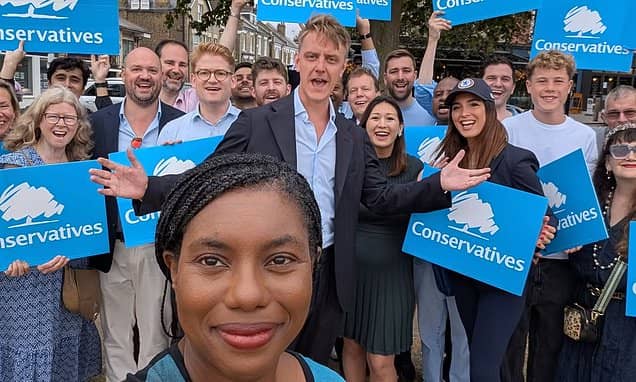

Trinity Ward By-Election Scheduled for Bank Holiday Weekend
A by-election in the Trinity ward of the London Borough of Wandsworth is scheduled to take place this Thursday, coinciding with the bank holiday weekend. The contest involves a relatively small number of voters in a specific corner of south London. Despite its localized nature, columnist Robert Hardman has described the event as potentially significant for national political dynamics.
The election occurs during what Hardman characterized as the "doldrums" of the long weekend. He noted that while the poll may appear little-noticed to the general public, it could have repercussions extending beyond the capital and across Britain. The timing places the vote at a point in the 2026 by-election season that follows several high-profile contests.
Comparison to Recent High-Profile Contests
Hardman contextualized the Trinity ward election by comparing it to recent notable by-elections. He referenced the contest in Clacton, which he described as involving "Farage v Binface," and the Gorton by-election, which pitted the Greens against Reform. He also cited Andy Burnham's victory in Makerfield, referring to it as a "victory-cum-coronation." According to his assessment, the Wandsworth poll does not rank alongside these events in terms of immediate prominence.
However, Hardman suggested that the outcome in Trinity ward could still reverberate across the country. He argued that the result might help shape the direction of travel for political parties as they enter what he termed a "possibly seismic round" of activity. The column was published on August 24, 2026, with updates provided later that day.
Arguments for Conservative Revival and Council Control
The columnist posited that the election offers an opportunity to "supercharge a Tory revival." He stated that voters in Trinity ward have the chance to restore Conservative control over Wandsworth Council. Hardman referred to the council as having been previously known as "Margaret Thatcher's favourite council." This historical reference was used to underscore the potential significance of regaining influence in the borough.
Hardman framed the election as a mechanism to prevent what he described as "loony-Left Greens taking over crime-hit south London." He suggested that stopping Green gains in this area is a primary objective for Conservatives. The language used by the columnist characterizes the political landscape in terms of a struggle between Tory revival and Green expansion.
Implications for National Politics
According to Hardman, the results of this obscure election could influence the broader political direction of the country. He implied that the performance of the Conservative Party in this specific ward might serve as an indicator or catalyst for their national standing. The column suggests that a successful outcome for the Tories in Trinity ward could contribute to reversing recent trends.
The article does not provide detailed polling data, voter demographics, or specific policy platforms from any of the participating parties. It focuses on the potential political implications of the vote as interpreted by Hardman. No responses from Green Party representatives, Labour officials, or Wandsworth Council leadership were included in the source material.
Political Context and Voter Impact
The Trinity ward election is situated within a broader period of activity for UK political parties. Hardman described the current phase as a "seismic round," suggesting significant shifts or events are anticipated. The by-election serves as one data point in this larger context, though its specific weight is subject to interpretation.
Hardman’s commentary highlights the strategic importance placed on local elections by some political observers. He argued that even votes involving only a few thousand individuals can have outsized effects on party morale and national narratives. The column presents a view that the Conservative Party is seeking to leverage this specific contest to demonstrate resilience and potential recovery.
The description of Wandsworth as "crime-hit south London" reflects Hardman’s characterization of the area’s challenges. He linked these local issues to the broader political battle between Conservatives and Greens. The argument rests on the premise that preventing Green gains is essential for maintaining Tory influence in the region.
Future Political Directions
As parties approach this phase of the political calendar, the Trinity ward result may be analyzed for trends. Hardman suggested that the outcome could help determine whether the Conservatives are able to halt Green advances and initiate a revival. The column does not offer predictions beyond these possibilities, nor does it provide evidence of how other parties plan to respond to the potential outcomes.
The election remains focused on local governance within Wandsworth, but its perceived national significance is derived from the political narratives surrounding it. Hardman’s analysis serves as a framework for interpreting the vote as a critical moment in the ongoing competition between major UK political groups.