

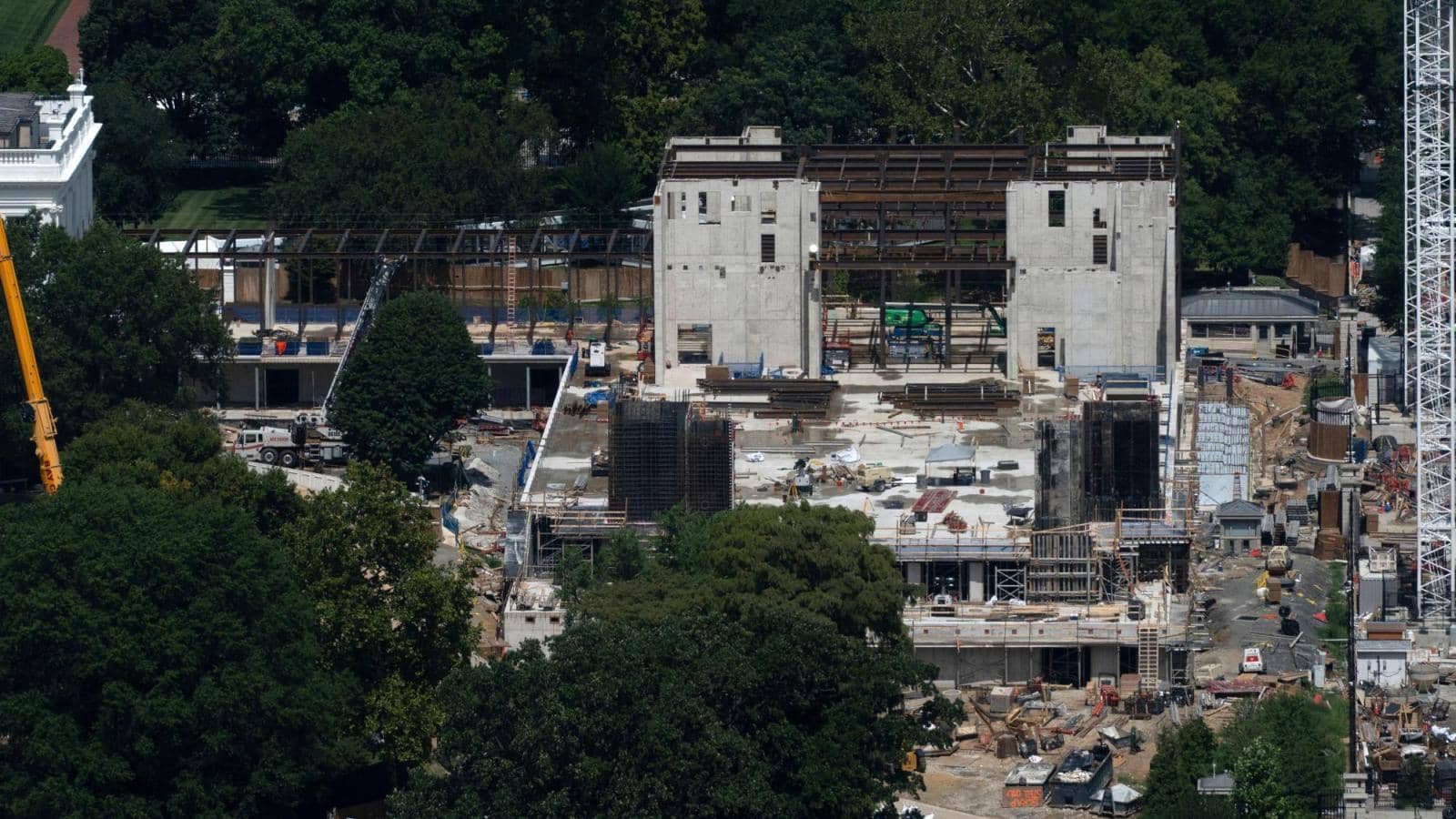

Supreme Court Greenlights $400 Million White House Ballroom
The U.S. Supreme Court has issued a definitive ruling, clearing the path for the White House to proceed with an ambitious expansion project. This undertaking, estimated to cost $400 million, involves the construction of a new ballroom within the historic White House complex. The high court's decision effectively lifts a series of prior restrictions that had been imposed by lower federal courts, which had previously mandated a complete halt to all construction work until specific legislative conditions were met.
The project, notably associated with former President Donald Trump, who initiated its planning during his time in office, has been the subject of intense legal scrutiny. The Supreme Court's intervention resolves an immediate legal standoff, allowing contractors and government officials to resume physical development of the ballroom. This ruling brings an end to a period of significant stagnation that had gripped the building site due to the earlier judicial injunctions.
Lower Courts' Mandate for Congressional Consent
The journey to this Supreme Court decision was characterized by a fundamental legal disagreement concerning the separation of powers and established federal budgeting procedures. Lower federal courts had consistently held that the White House lacked the necessary authority to proceed with the construction without explicit congressional approval. These judicial bodies had ruled that any project of this considerable magnitude, involving substantial capital improvements, required legislative consent for its funding and authorization.
The lower court rulings were grounded in the principle that executive branch initiatives, particularly those entailing significant financial outlay and alterations to federal property, must adhere to strict congressional oversight protocols. The injunctions issued by these courts were specifically designed to prevent the expenditure of public resources or the commitment of government property until such approval was secured through the proper statutory channels. Opposing parties in the legal battle had argued vehemently that proceeding without this essential legislative backing would constitute a violation of established financial regulations and executive limitations. The lower courts concurred with this assessment, citing the need for congressional approval as a mandatory prerequisite for the project's continuation, thereby pausing all physical activities on the site.
A Clash Over Executive Authority and Federal Spending
At the core of the legal dispute was a fundamental clash over the extent of executive authority in managing federal properties and initiating large-scale construction projects. The conflicting legal interpretations centered on whether the executive branch possessed the unilateral power to undertake an expansion of this scale, or if it was bound by the legislative branch's constitutional role in approving appropriations and overseeing federal expenditures.
The legal challenges brought against the project underscored the argument that such a significant expenditure, estimated at $400 million, demanded explicit legislative backing to ensure accountability and adherence to democratic principles of governance. The lower courts' decisions reflected a judicial emphasis on checks and balances, asserting that congressional oversight was not merely a procedural formality but a critical safeguard against potential overreach by the executive branch. This legal barrier effectively froze the project, transforming it into a high-profile test case regarding the boundaries of presidential power in relation to federal infrastructure development.
The Project's Substantial Cost and Presidential Origins
The expansion project is defined by its substantial financial scope, with an estimated cost of $400 million. This figure has garnered considerable attention from both legal observers and fiscal watchdogs, highlighting the significant investment of public funds involved. The designated purpose of these funds is the creation of a new ballroom, intended to serve as a premier event space within the presidential residence, capable of hosting various official functions and diplomatic engagements.
While specific architectural plans or a definitive timeline for completion were not immediately detailed in reports following the Supreme Court's decision, the project's association with former President Donald Trump remains a central point of context. The planning for this significant addition to the White House infrastructure was initiated during his administration, reflecting long-term planning objectives set under his tenure. The ballroom is envisioned as a permanent fixture, expanding the functional capabilities of the White House complex for future administrations.
Repercussions for Future Executive Branch Developments
The Supreme Court's decision to allow the White House ballroom construction to proceed marks a significant shift in the legal landscape governing executive branch property improvements. By permitting the work to continue, the high court has effectively validated the White House's position that it possessed the authority to move forward with the project, even in the absence of explicit congressional approval at the time the lower court rulings were issued. This outcome provides a critical precedent for how similar large-scale federal projects might be approached in the future.
This ruling stands in direct contrast to the findings of the lower courts, which had consistently emphasized the necessity of legislative consent for such an undertaking. The clear divergence in judicial opinion between the lower federal courts and the Supreme Court underscores ongoing debates regarding the precise extent of executive authority in managing federal properties and initiating major construction projects without direct legislative mandates. As construction now resumes, the $400 million investment will be directed toward the physical realization of the ballroom, with the Supreme Court's ruling serving as the ultimate judicial clearance for the work to proceed, moving the project from a state of legal limbo to active development.