

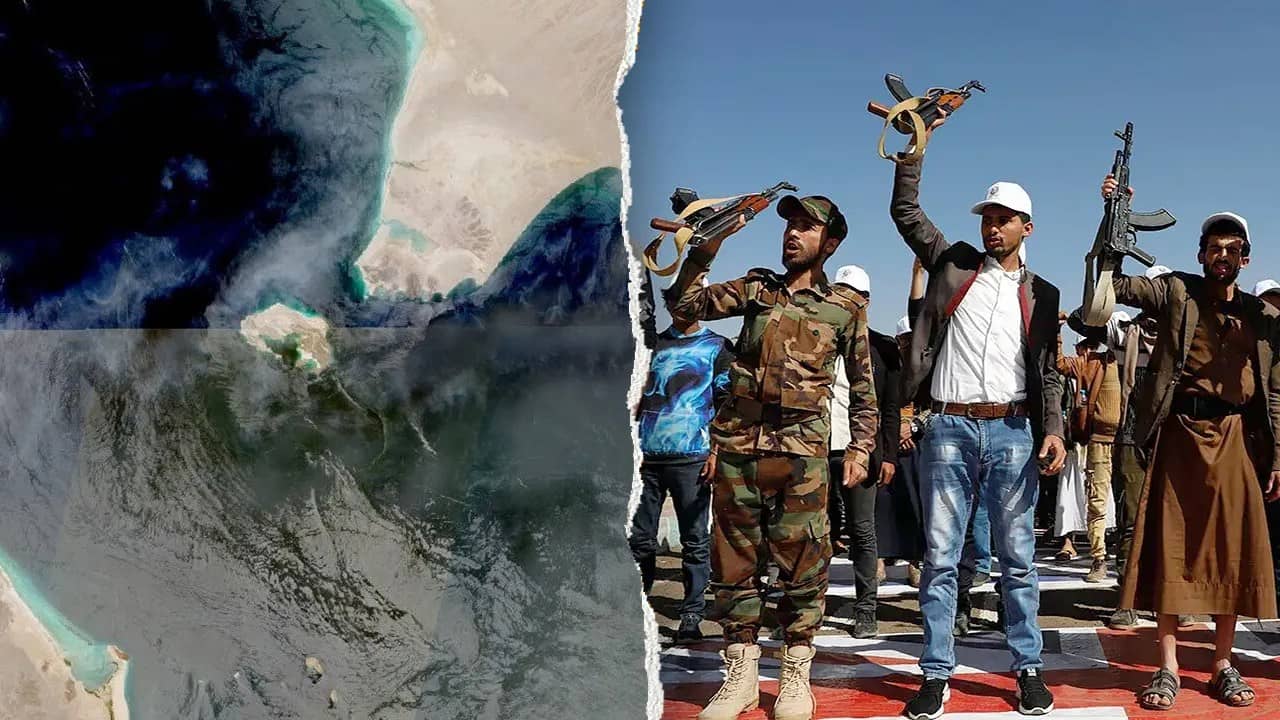

Strategic Comparisons Between Red Sea and Persian Gulf Chokepoints
The escalating campaign by Iran-backed Houthi forces against commercial shipping in the Bab el-Mandeb Strait has triggered a growing strategic debate regarding the future stability of global maritime trade routes. According to reporting from News Pub, these attacks are raising significant questions about whether the waterway connecting the Red Sea and the Gulf of Aden could evolve into a second major flashpoint comparable to the Strait of Hormuz in the Persian Gulf.
The comparison between the two chokepoints is not merely rhetorical but is rooted in the geographic and political realities of the region. The Bab el-Mandeb Strait, which sits at the southern entrance of the Red Sea, is a critical artery for international commerce. However, the nature of the threats facing it differs substantially from those in the north. While both locations are vital to global energy supplies, the dynamics influencing security in each area are distinct.
Analysts and observers note that the answer to whether Bab el-Mandeb will mirror Hormuz is complicated by two primary factors: the specific geography of the strait and the internal political situation within Yemen. Unlike the Strait of Hormuz, where Iran possesses the capability to directly threaten shipping lanes through its proximity and military posture along the northern coast, the threat landscape at Bab el-Mandeb is influenced by different operational dynamics.
Divergent Threat Profiles in Yemen and Iran
The distinction between the two waterways lies largely in the actors involved and their methods of influence. In the case of the Strait of Hormuz, the potential for direct Iranian intervention is a central component of regional security assessments. The geography there allows for more immediate control or disruption by state actors with naval capabilities.
Conversely, the Bab el-Mandeb Strait faces pressure from non-state actors aligned with regional powers. The Houthi movement, described in source materials as Iran-backed, has been conducting escalating attacks on shipping through this specific strait. These actions are not necessarily indicative of direct Iranian command over every tactical move but rather reflect a broader proxy dynamic that complicates the security environment.
This divergence means that while fears of a "second Hormuz" are rising, the mechanics of disruption at Bab el-Mandeb are shaped by the complex interplay of local Yemeni conflict dynamics and external support. The geography of the strait, flanked by Yemen on one side and Djibouti and Eritrea on the other, creates a different set of challenges for naval forces attempting to secure passage compared to the narrower, more constrained waters of the Persian Gulf.
Implications for Global Shipping Security
The increasing frequency of Houthi strikes has led to heightened anxiety among maritime insurers, shipping companies, and governments. The fear is that if the attacks continue to escalate without effective deterrence, the Bab el-Mandeb Strait could become as perilous and politically charged as the Strait of Hormuz during periods of high tension.
However, experts caution against a direct equivalence. The strategic implications are complex because the Bab el-Mandeb situation is deeply entangled with the civil war in Yemen. While Iran’s influence is acknowledged through its backing of the Houthis, the root causes of the instability are also local. This makes the resolution of security concerns at Bab el-Mandeb potentially more difficult than in the Strait of Hormuz, where state-to-state diplomacy often plays a larger role in de-escalation.
Ongoing Concerns and Regional Stability
As the situation evolves, the international community remains focused on the security of the Red Sea. The potential for the Bab el-Mandeb Strait to become a sustained focal point of tension is a concern that extends beyond regional actors to global economic stakeholders who rely on the safe passage of goods through this narrow corridor.
The current climate suggests a shift in how maritime chokepoints are perceived. Where once the Strait of Hormuz was the primary example of vulnerability to geopolitical disruption, the Bab el-Mandeb Strait is now viewed with similar apprehension. The key difference remains the source and nature of the threat: state-centric power projection in the Persian Gulf versus a mix of proxy warfare and local insurgency in the Red Sea.
Monitoring these developments is essential for understanding future maritime security policies. The actions taken by Houthi forces continue to test the resilience of international naval coalitions and diplomatic efforts aimed at stabilizing Yemen. Whether the Bab el-Mandeb Strait will permanently join the Strait of Hormuz as a site of persistent geopolitical friction remains an open question, dependent on both local political outcomes in Yemen and broader regional power dynamics.