

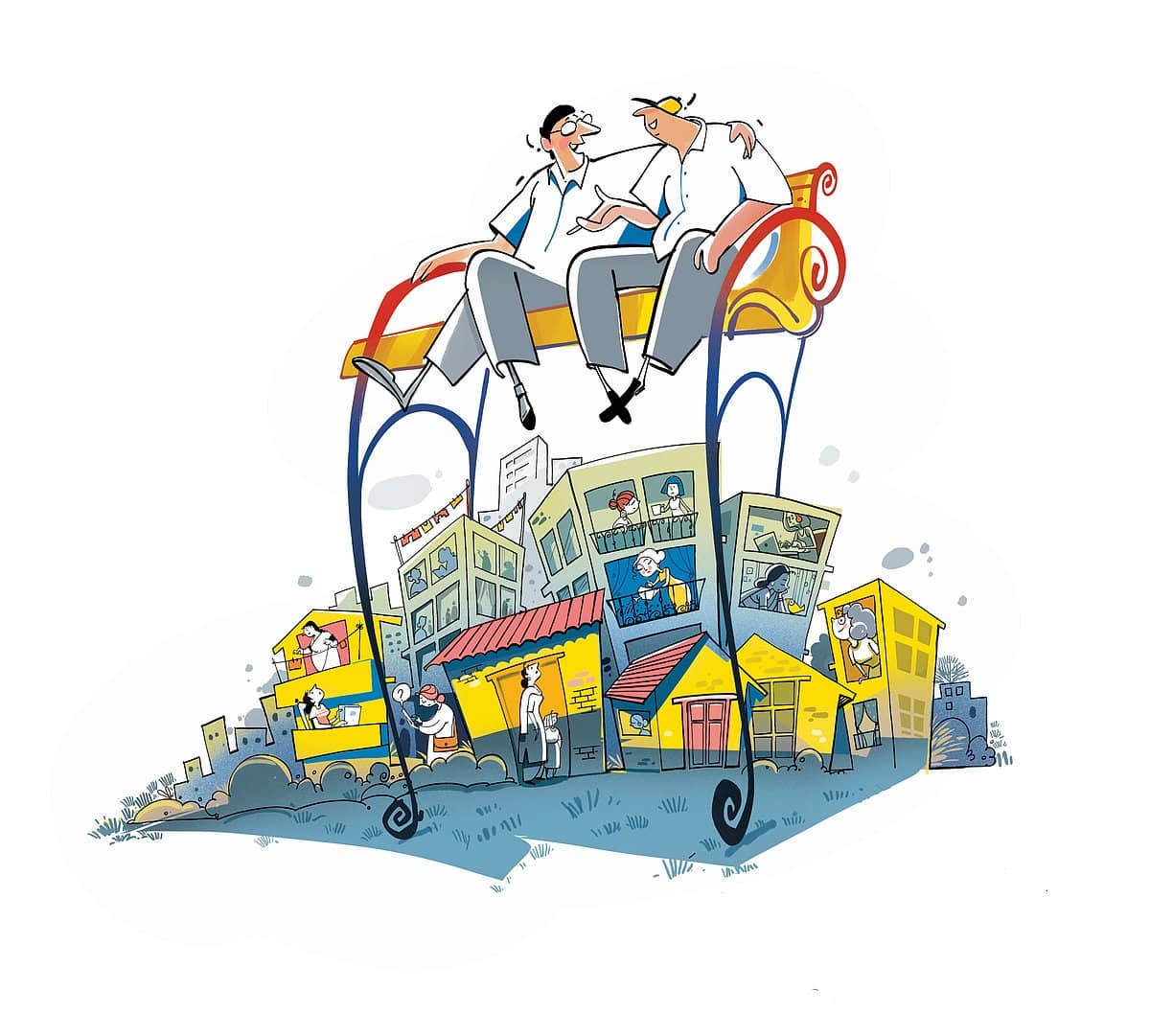

Background: The Visibility Gap in Urban Leisure Spaces
In contemporary urban environments, a distinct disparity exists regarding who is visible engaging in casual public leisure. Observations across various cityscapes reveal that male gatherings are ubiquitous and socially unremarkable. Men frequently congregate at transportation hubs such as bus stops, traffic junctions, and roadside tea stalls throughout the day. These interactions occur while wearing casual attire, creating a normalized landscape of masculine sociability that permeates the daily rhythm of the city.
Conversely, women are rarely observed gathering together publicly for similar leisure activities. While individual women may be seen working or traveling in public spaces, groups of women sipping drinks or engaging in banter about everyday life—topics such as food, marriage, travel plans, and personal desires—are conspicuous by their absence from the general view.
This scarcity is not merely a matter of population distribution but points to deeper sociological factors. Urban environments featuring sprawling spaces like parks, theatres, libraries, gyms, cafes, restaurants, and shopping malls still exhibit complicated social layers regarding women's presence. The mere physical availability of these locations does not guarantee equal usage by all genders for leisure purposes.
The nature of public space itself has evolved from a concept of open access to one that is densely constructed and controlled by civic bodies rather than being free or accessible corners for all citizens without restriction. This shift in the definition of public space complicates the ability of certain demographics, particularly women seeking informal social connection, to utilize these areas freely.
What Happened: The Dynamics of Male Public Discourse
The phenomenon of men gathering publicly is characterized by a specific type of discourse that covers diverse and often weighty topics. In public spaces such as bus stops or tea stalls, male conversations frequently encompass politics, infrastructure projects, migration for work, and even discussions surrounding funerals.
These subjects are treated with casual ease in these settings without causing social uneasiness to the broader community. The ability of men to discuss serious matters like national policy or economic shifts while standing on a street corner establishes a precedent that public space is an appropriate venue for such exchanges among male groups.
This behavior reinforces the idea that public spaces are designed, at least culturally speaking, as arenas for political and civic engagement dominated by masculine voices. The topics discussed—politics, infrastructure, migration—are traditionally associated with spheres of power or economic production where men have historically held a dominant presence in public discourse.
The casual attire worn during these interactions further normalizes the scene. There is no expectation that men must dress formally to participate in civic life at street level; their engagement with politics and community issues happens organically as they wait for transport or rest briefly between work shifts.
Key Details from Research: Cultural Structures vs. Infrastructure
The scarcity of visible female leisure groups suggests that infrastructure accessibility is not the sole factor determining usage patterns; deep-seated cultural structures also play a significant role in shaping behavior. While cities invest heavily in building parks, libraries, and cafes to enhance civic life, these physical improvements do not automatically translate into equal social participation for women.
Research indicates that urban environments are socially stratified based on gendered expectations of safety and propriety. Women often navigate public spaces with a heightened awareness of potential harassment or judgment, which discourages the formation of informal groups where they might engage in banter about food or marriage plans. This self-regulation is not driven by physical barriers but by internalized cultural norms regarding female mobility.
The language used to describe these phenomena often highlights the contrast between male and female experiences. Men are described as freely occupying spaces for leisure, while women's presence is frequently scrutinized or viewed through a lens of utility rather than pleasure. This linguistic framing influences how public areas are utilized; if an area is perceived as a place where men discuss politics casually, it reinforces the idea that such behavior belongs to them.
Furthermore, the control exerted by civic bodies over these spaces often inadvertently favors male-dominated behaviors. The design of benches, lighting, and seating arrangements in parks or transit hubs may implicitly encourage solitary use or mixed-gender groups rather than female-only gatherings focused on leisure banter. When women do gather publicly to discuss everyday life topics like travel or food preferences, they are less visible because these activities lack the same social license as male political discourse.
The implication is that changing physical infrastructure alone will not resolve the issue of gender disparity in public spaces. Without addressing the cultural structures that dictate who feels safe and welcome enough to gather for leisure, new parks or cafes may remain underutilized by women seeking community connection through casual conversation about daily life topics such as food, marriage, travel, or desires.
Ultimately, the visible absence of female groups in public spaces is a reflection of how society constructs gender roles within the urban fabric. The grammar of language and social interaction dictates that men belong in these spaces for leisure and political discourse, while women are expected to remain more private or utilitarian in their use of public areas.
Understanding this dynamic requires acknowledging that public space is not a neutral ground but one shaped by historical and cultural forces. The ability of men to discuss funerals, migration, and infrastructure projects without social uneasiness stands in stark contrast to the silence surrounding women's attempts to do the same about food or marriage plans.