


The Core Mission Spanning Eight Decades
Observers frequently note that the United Nations (UN) stands as a central entity when headlines cover major international events, underscoring its pervasive role in global affairs. This organization appears prominently whenever significant instability disrupts borders, natural disasters strike regions globally, or health emergencies threaten populations. Its consistent presence in such critical moments highlights its established function as a primary forum for international cooperation and a key actor in crisis response.
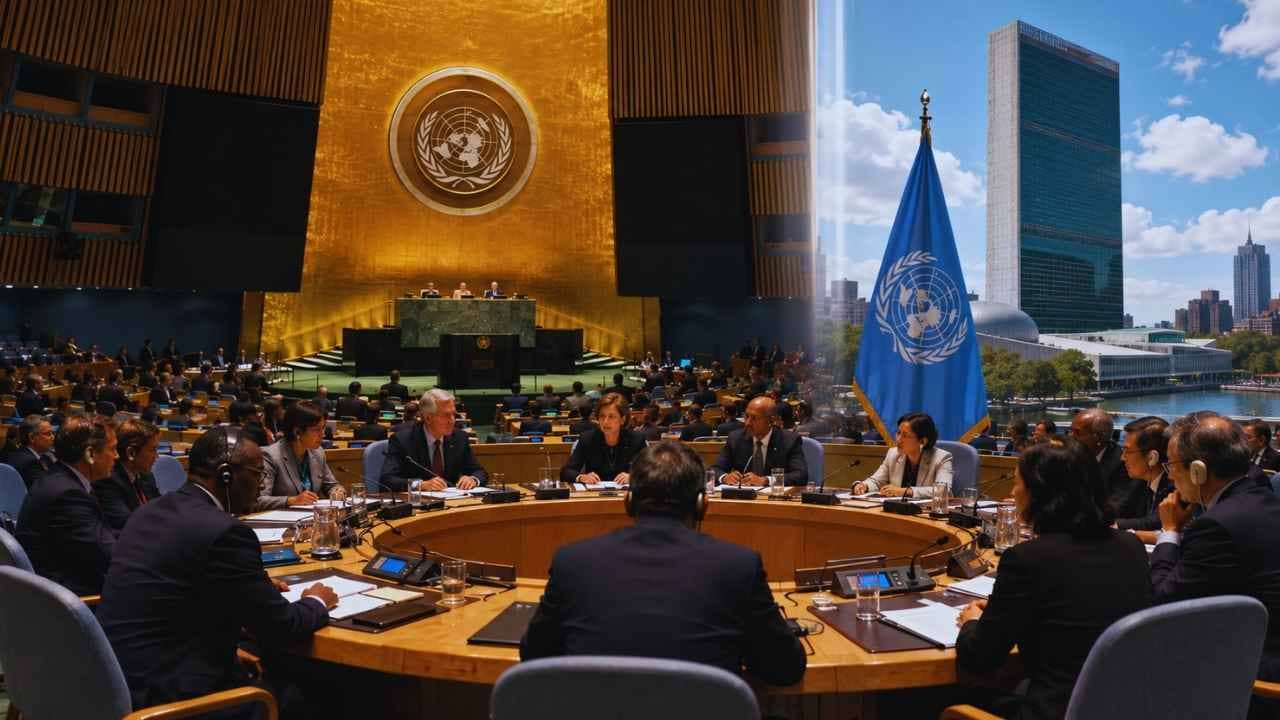
A specific pattern emerges in media coverage, illustrating how the UN consistently captures public attention during these moments of crisis. The visual identity associated with this global body is instantly recognizable: an iconic blue emblem, which is visible on aid trucks deployed to affected areas worldwide. This emblem signifies not just the presence of assistance, but also the collective international effort behind humanitarian relief operations.
Simultaneously, the diplomatic processes that define the UN's work often involve late-night emergency votes conducted within its headquarters in New York. These crucial voting sessions occur as part of the organization's comprehensive response mechanisms during urgent situations, whether they involve escalating border clashes, devastating earthquakes requiring immediate humanitarian intervention, or global health scares demanding coordinated international action. The immediacy and gravity of these votes reflect the UN's mandate to address pressing global challenges.
Beyond these highly visible actions and symbolic representations, the UN operates with a foundational core mission that has persisted for eighty years. This extensive history provides crucial context to its current activities and structural roles within international relations. Over eight decades, the organization has evolved into a complex network of bodies and initiatives, all working towards common goals of peace, development, and human rights, building on a legacy of international diplomacy and collective problem-solving.
Breaking Down Operational Components
The functioning of this global organization relies on several distinct bodies working in intricate coordination, each playing a vital role in addressing the multifaceted challenges of international relations. An analysis of its primary components reveals five key structures, each responsible for different aspects of global governance, humanitarian assistance, and the promotion of peace.
These principal organs are designed to operate both independently and collaboratively, ensuring a comprehensive approach to the UN's broad mandate. Their collective efforts underpin the practical application of the UN's core mission, translating diplomatic ideals into tangible actions across the globe.
- The General Assembly (GA)
- The Security Council (UNSC)
- The Economic and Social Council (ECOSOC)
- The Secretariat
- The International Court of Justice (ICJ)
The General Assembly: A Forum for Global Dialogue
Each component serves a specific function within the broader framework of the United Nations. The General Assembly (GA) stands as the main deliberative, policymaking, and representative organ of the UN. It represents all member states, providing a unique global forum for multilateral discussion on a vast array of international issues. Its deliberations encompass critical areas such as international peace and security, economic development, human rights, and humanitarian concerns, allowing for the expression of the collective will of the international community.
The Security Council: Upholding International Peace
The Security Council (UNSC) holds primary responsibility for maintaining international peace and security. Unlike the General Assembly, it has the power to make binding decisions on member states. Its measures range from the peaceful resolution of disputes through mediation and negotiation to the imposition of sanctions or, when deemed necessary, authorizing military action to restore or maintain peace. The UNSC's decisions carry significant weight in global affairs, making it a critical instrument for crisis management and conflict prevention.
The Economic and Social Council: Driving Sustainable Development
The Economic and Social Council (ECOSOC) coordinates the economic, social, and related work of 14 specialized agencies, 9 functional commissions, and 5 regional commissions established by the UN system. It serves as the central platform for discussion and innovative thinking on sustainable development. ECOSOC promotes integration between different areas of concern, including development, human rights, environmental protection, gender equality, poverty reduction, and the broader goals of sustainable development across the globe. Its work is crucial for fostering international cooperation on complex socio-economic issues.
The Secretariat: The UN's Administrative Engine
The Secretariat provides the essential administrative and logistical support to all organs of the United Nations. Under the direction of the Secretary-General, who serves as the UN's chief administrative officer and a symbol of the Organization's ideals, the Secretariat carries out the diverse day-to-day work of the UN. This includes administering peacekeeping operations, mediating international disputes, surveying economic and social trends, preparing studies on human rights, and providing public information on the UN's activities. Its global staff ensures the smooth functioning of the entire UN system.
The International Court of Justice: The World Court
The International Court of Justice (ICJ) serves as the principal judicial organ of the UN, often referred to as the "World Court." Located in The Hague, Netherlands, it settles legal disputes submitted by states in accordance with international law. Furthermore, the ICJ gives advisory opinions on legal questions referred to it by authorized UN organs and specialized agencies. Its role is fundamental in upholding the rule of law in international relations and providing authoritative interpretations of international legal norms.
Funding Mechanisms And Operational Costs
Financial sustainability remains a critical aspect of how this global machine functions effectively over time, enabling its extensive reach and diverse operations. Reports consistently indicate significant figures regarding the operational funding requirements necessary to maintain the UN's worldwide presence and activities.
A mention in available records highlights a substantial $3.45 billion figure related to funding discussions. This amount represents a crucial data point within the broader financial architecture required to sustain the vast array of operations across various programs and missions worldwide. This funding supports everything from peacekeeping forces in conflict zones to humanitarian aid delivery, development projects, and the administrative backbone of the organization.
Without adequate and consistent resources, the deployment of aid trucks bearing the iconic blue emblem would become impossible during emergencies requiring immediate response capabilities, such as those following devastating earthquakes or widespread health scares. The financial contributions from member states directly translate into the tangible assistance provided on the ground, reaching millions of people in need.
Furthermore, the ability to convene late-night emergency votes in New York, a hallmark of the UN's rapid response to global crises, also depends on the robust logistical and operational support funded through these mechanisms. Financial allocations are instrumental in determining which regions receive priority attention for crisis intervention efforts, managed by dedicated UN staff members stationed globally. Ultimately, the UN's capacity to uphold its core mission and respond effectively to international challenges is inextricably linked to the financial commitments of its member states.