

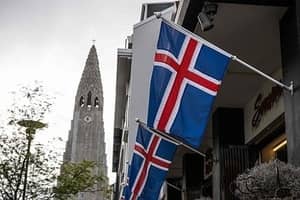

Referendum Date Set as Security Concerns Mount
Iceland is scheduled to hold a national referendum on August 29 regarding the resumption of negotiations to join the European Union. This vote marks a significant development in the country's relationship with Brussels, occurring 13 years after Iceland suspended its accession talks in 2013.
The decision to pursue EU membership initially arose in the aftermath of the devastating 2008 financial crisis, which severely impacted the Icelandic economy and prompted a search for greater stability and integration with larger economic blocs. However, the current political climate has shifted considerably since that period, leading to a re-evaluation of the country's international alignment.
The timing of the vote appears to be strongly influenced by evolving geopolitical pressures in the North Atlantic region. Reports indicate that mounting security concerns have contributed to the decision to hold an earlier-than-planned vote, reflecting a changing regional landscape and a renewed strategic calculus in Reykjavík.
Geopolitical Shifts Drive Renewed EU Consideration
These security concerns are multifaceted and have gained prominence in recent years. They include documented pressure from former U.S. President Donald Trump regarding Greenland, which underscored the strategic importance of the Arctic region to global powers. Concurrently, increased Russian activity in the North Atlantic has raised alarms among NATO allies and regional states, prompting a re-evaluation of national security postures across the Nordic region. The European Union, for its part, views Iceland as a strategically important nation, not only for its own enlargement ambitions but critically for Arctic security, given Iceland's geographical position and control over vital sea lanes.
Fishing Industry Remains Central Flashpoint
A primary and historically enduring point of contention in the debate over EU membership is the critical issue of fishing sovereignty. Fishing accounts for a substantial 40% of Iceland's exports, making it not merely an industry but a foundational pillar of the national economy and cultural identity. The potential loss of independent control over its rich fishing grounds and quota management under the European Union's Common Fisheries Policy (CFP) has consistently emerged as the biggest flashpoint in discussions about European integration.
Voters are being asked to decide whether the country should take another step toward European integration, with the fishing sector at the forefront of their considerations. Those opposing the move argue vehemently that joining the EU would fundamentally threaten Iceland's ability to manage its own fisheries independently, potentially leading to reduced quotas, increased competition, or external regulation that might not align with national interests. This concern is rooted in the perception that the CFP could undermine the very economic stability that fishing provides, a stability hard-won since the 2008 crisis.
Conversely, proponents of resuming negotiations suggest that a “European umbrella” might offer significant benefits despite the risks to fishing sovereignty. While the specifics of such benefits would be subject to negotiation, the general argument often includes access to larger markets, increased political influence within the bloc, and enhanced security cooperation, which could indirectly bolster Iceland's long-term economic and strategic interests, potentially offsetting concerns about fisheries management.
Polling Shows Narrow Margin
Recent polling indicates a very close race between the two camps, underscoring the deep divisions within Icelandic society regarding the country's future alignment. Data shows a narrow lead for the “Yes” camp, which supports resuming talks with the EU. The polls report 51.3% of respondents in favor compared to 48.7% against, a margin that falls within the typical statistical error for such surveys.
This razor-thin margin suggests that the outcome could hinge on last-minute voter sentiment, the effectiveness of final campaign pushes, or turnout differences between the opposing groups. The closeness of the poll results reflects the ongoing national debate, balancing concerns about economic security through independent fishing policies against the perceived benefits of broader geopolitical alignment and economic integration with Europe. The referendum is therefore not just a vote on EU talks, but a reflection of Iceland's evolving identity and priorities on the global stage.
Process and Next Steps
If the August 29 referendum results in a majority vote to resume talks, Iceland will formally restart negotiations with the European Union. It is crucial to understand that this step is procedural rather than final, initiating a potentially long and complex diplomatic process. Resuming negotiations does not guarantee that Iceland will eventually become an EU member; instead, it opens the door for detailed discussions on various policy areas, including the contentious issue of fisheries, financial contributions, and adherence to EU laws and standards.
A second, separate referendum would still be required to finalize accession, should negotiations prove successful and a membership treaty be agreed upon. The current vote serves only as a mechanism to determine if the government should engage in the complex and lengthy process of joining the bloc. The outcome will determine whether Iceland re-engages with a political and economic union it first sought to join after a significant national crisis, only to suspend its efforts 13 years ago amidst differing national priorities and concerns over sovereignty and economic independence.