

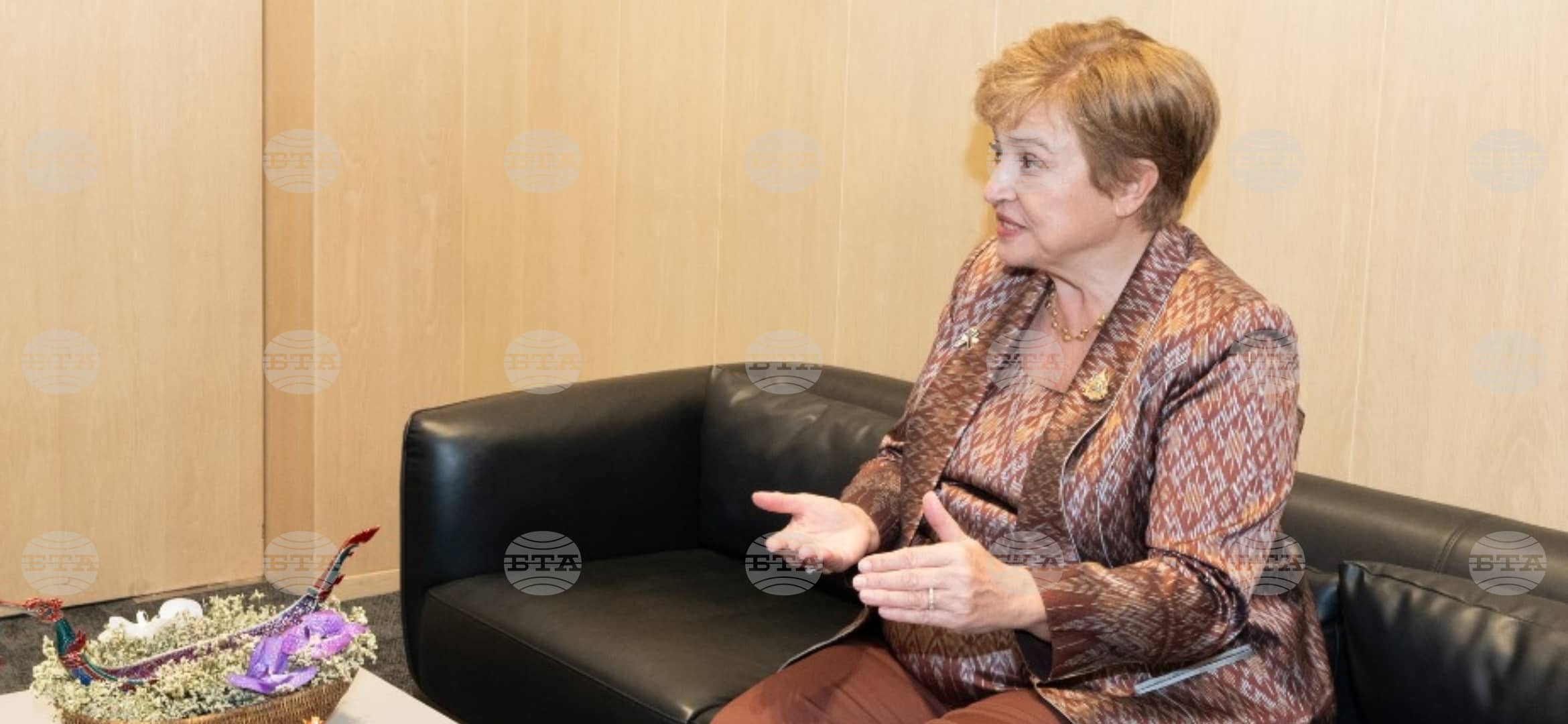

Georgieva Calls for Structural Fiscal Adjustments
Bulgaria needs to implement systemic changes to address its budget deficit, which stands at 5% of gross domestic product, according to International Monetary Fund Managing Director Kristalina Georgieva. Speaking in an interview with the Bulgarian News Agency (BTA) at the conclusion of the IMF and World Bank Annual Meetings in Bangkok, Georgieva emphasized that one-off fiscal measures do not provide a systemic solution for building necessary buffers.
Georgieva noted that countries must build resilience against increasingly frequent external shocks. She argued that revenue policies should be aligned with the structural needs of budgets rather than relying on temporary fixes. While acknowledging that one-off measures, such as a proposed excessive profits tax, can help in the short term, she stated they do not constitute a long-term fix for fiscal stability.
The IMF Managing Director called for more cautious fiscal policy amid current inflationary pressures. She warned that higher government spending generates additional demand, which puts upward pressure on prices. Georgieva described inflation as a tax on low-income earners and noted that monetary policy needs to be more restrictive to combat these effects.
Global Economic Outlook and Inflation Drivers
The IMF assessed that the global economy remains resilient, although accumulating risks are limiting its capacity to absorb further shocks. Georgieva pointed out that inflation is currently driven by high energy prices, rising defence spending, ongoing trade tensions, and stronger demand associated with artificial intelligence.
Looking ahead, Georgieva said she expects the European Central Bank to introduce further interest rate hikes. Her comments reflect a broader concern about the sustainability of current economic trajectories without tighter monetary controls.
Bulgaria’s Growth Projections Revised
In its October forecast, the IMF lowered its projection for Bulgaria's economic growth in 2026 to 2.6%, down from 2.8% in April. However, the institution raised its growth forecast for Bulgaria in 2027 from 2.5% to 2.7%. These adjustments reflect the IMF's ongoing assessment of Bulgaria's economic trajectory amidst global uncertainties.
Defence Spending and European Security
Georgieva commented on the changing security environment, stating that the period of low defence spending following the Cold War has ended. She attributed this shift to Russia's invasion of Ukraine and developments in the Middle East. She noted that it would be more effective for Europe to increase defence spending collectively rather than for each country to act independently.
To support this collective approach, the IMF recommends a larger European budget to allow countries to jointly finance shared priorities. This recommendation underscores the need for coordinated fiscal strategies in response to evolving geopolitical risks.
AI Adoption and Productivity Challenges
Georgieva described Bulgaria's well-developed information technology sector as a strong foundation but noted that the country would not become a producer of the most advanced artificial intelligence models. Instead, she stated that Bulgaria can participate in AI supply chains, but the most important priority is to use the technology to increase labour productivity.
Georgieva said Bulgaria needs to improve workforce skills and its education system while expanding the use of artificial intelligence in small businesses and government institutions. She noted that Bulgaria and Europe lag behind the United States in labour productivity and that broader adoption of new technologies is essential to improving competitiveness.