

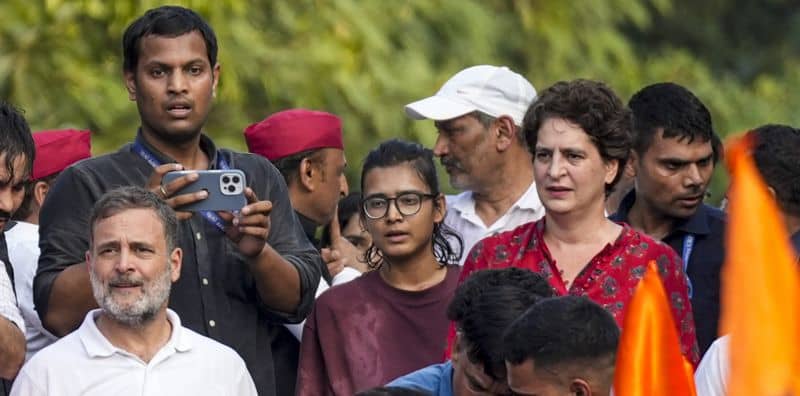

Detentions Ahead of Planned Rally
The Indian government thwarted attempts by the Citizens for Justice and Peace (CJP) and other groups to hold a large ‘Lehra do Tiranga’ rally at Central Park in Connaught Place, Delhi. The CJP’s top leadership was detained ahead of the scheduled event, preventing the gathering from taking place.
Editor-in-Chief Jyoti Malhotra, writing for The Tribune, stated that the Modi government must shift headlines away from protests to retain control of the narrative. She argued that the restrictions placed on protest locations treat rights as a favor rather than a fundamental guarantee.
Debate Over Protest Rights and Access
The detention of activists has sparked debate regarding the availability of traditional protest venues. Supreme Court senior advocate Sanjay Hegde argued that restricting access to established protest locations like Jantar Mantar effectively turns civil liberties into privileges granted by the state rather than inherent rights.
Malhotra echoed this sentiment, suggesting that when restrictions become fundamental, the nature of democratic expression shifts. The government’s actions in Connaught Place have been viewed by some commentators as an attempt to manage public discourse through physical containment of dissent.
Diplomatic Shifts and Regional Security
Amidst domestic political tensions, US Secretary of State Marco Rubio is visiting India from October 18 to 22. The itinerary focuses on discussing bilateral ties, trade, regional security, and energy cooperation. Rubio’s schedule includes stops in Gujarat’s Jamnagar and Mumbai but excludes Delhi.
Defense analyst C Uday Bhaskar argues that the assumption of corresponding security objectives between India and the United States vis-a-vis China is no longer valid. He notes that while the US seeks bloc discipline, India continues to pursue strategic freedom.
Border Developments in Ladakh and Afghanistan
Former Ambassador to China Gautam Bambawale reports that China has responded strongly to India’s recent move to standardize the names of 28 places in Ladakh. This diplomatic friction highlights ongoing tensions along the border regions.
In Central Asia, Afghanistan’s de facto authorities have inaugurated a 121-km unpaved transit route connecting Badakhshan with China’s Xinjiang via the Wakhan Corridor. The new infrastructure bypasses Pakistan, altering regional trade dynamics.