

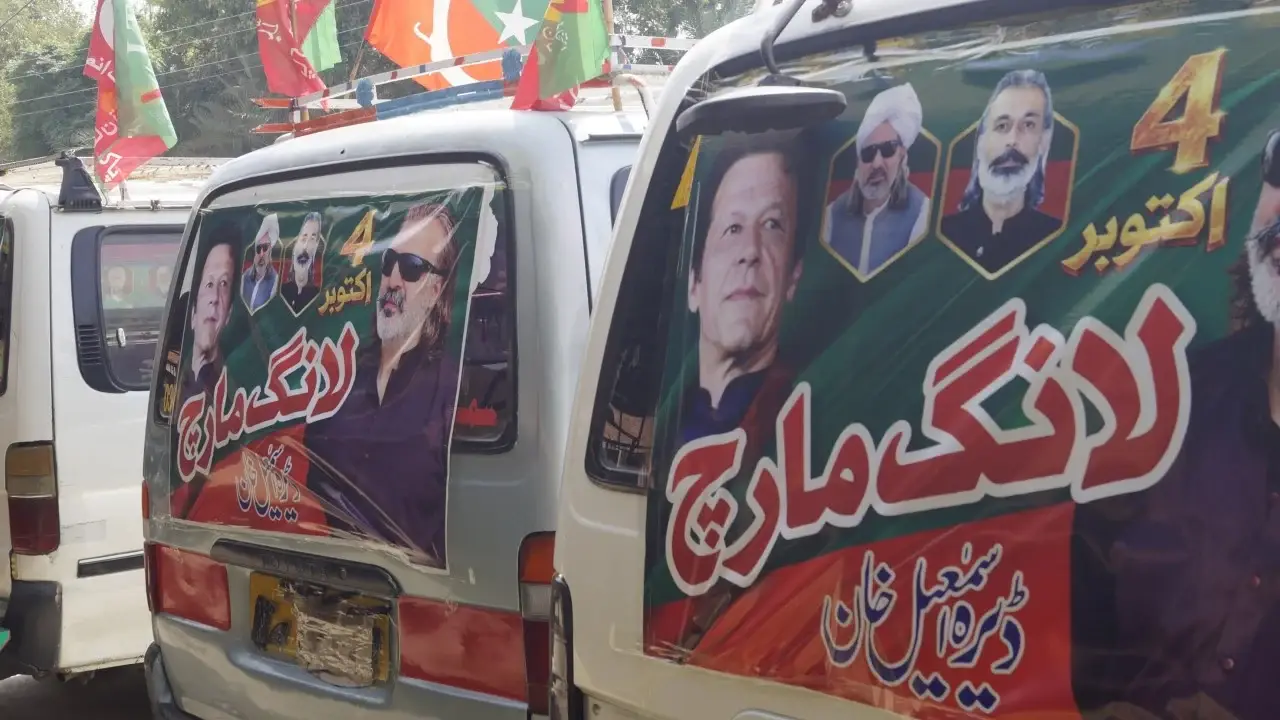

March Launches Following Negotiation Deadlock
Supporters of former Pakistani Prime Minister Imran Khan began a "long march" to Islamabad on Sunday after negotiations aimed at preventing the demonstration collapsed. The march, organized by supporters of Khan’s Pakistan Tehreek-e-Insaf (PTI) party, was originally scheduled for September 27 before being postponed until this week.
Videos posted on PTI’s official social media accounts showed supporters gathering in various areas within Khyber Pakhtunkhwa province and departing in convoys. Sohail Afridi, the chief minister for Khyber Pakhtunkhwa, confirmed via the platform X that the demonstration would proceed as planned.
Allama Raja Nasir Abbas, an opposition politician, told Geo TV that last-minute talks between the government and PTI representatives had reached a "deadlock." He cited an impasse over specific demands, including access for Khan’s doctor to visit him in prison. The failure of these discussions marked the final hurdle before the mobilization began, with supporters coalescing across the province to set off in organized groups.
Security Preparations and Route Details
Afridi stated that the demonstration would begin in Khyber Pakhtunkhwa on Sunday and is expected to reach Khairabad, located 80km west of Islamabad, by Thursday. In preparation for the potential arrival of demonstrators, authorities in Islamabad have been preparing for weeks and have blocked main access routes with double-stacked shipping containers.
James Dorsey, a fellow at the National University of Singapore, noted that the government’s determination to prevent protesters from entering Islamabad is influenced by broader security concerns, including Pakistan’s unresolved February 2026 war with Afghanistan. This geopolitical tension adds a layer of complexity to the domestic unrest, as the state prioritizes border security alongside internal order.
Khan’s Imprisonment and Protest Motivations
Imran Khan has been imprisoned since August 2023, facing charges ranging from corruption to treason following anti-establishment riots in May 2023. Khan and his legal team have rejected these allegations as politically motivated.
The Supreme Court ruled in August that Khan should be moved to a civilian hospital, but authorities returned him to prison after a short stay at a government-run facility. This medical dispute has become a focal point for the opposition, with demands for unrestricted doctor access cited as a key reason for the continued mobilization.
Tim Willasey-Wilsey of the UK-based Royal United Services Institute stated that the protests were "fundamentally driven by economic factors," linking fuel and food price rises to the Iran war and the war in Ukraine. Dorsey described Khan as a populist leader with broad popular support, suggesting that the current unrest is not merely about his detention but reflects deeper socioeconomic grievances exacerbated by global conflicts.