


Summit Strategy and Global Alignment
The Indian National Congress is organizing the second Bharat Summit, scheduled for November 12-14 in Hyderabad, to broaden its political appeal by aligning with international movements opposing majoritarian nationalism. The event is hosted by the Telangana provincial government and coincides with the 137th birth anniversary of Jawaharlal Nehru.
Organizers plan to bring together leaders from the United States, South America, Europe, and Asia during the three-day conference. The gathering aims to discuss a new platform connecting the Global South and Global North while foregrounding a multipolar world order.
Rahul Gandhi, identified as the Congress leader of the opposition, is scheduled to present an alternative political vision rooted in principled multilateralism. His address will reference the legacy of Non-Aligned and Afro-Asian solidarity. The summit is intended to showcase the party's growing disapproval of the Bharatiya Janata Party's (BJP) majoritarian policy line.
Domestic Protests and Political Context
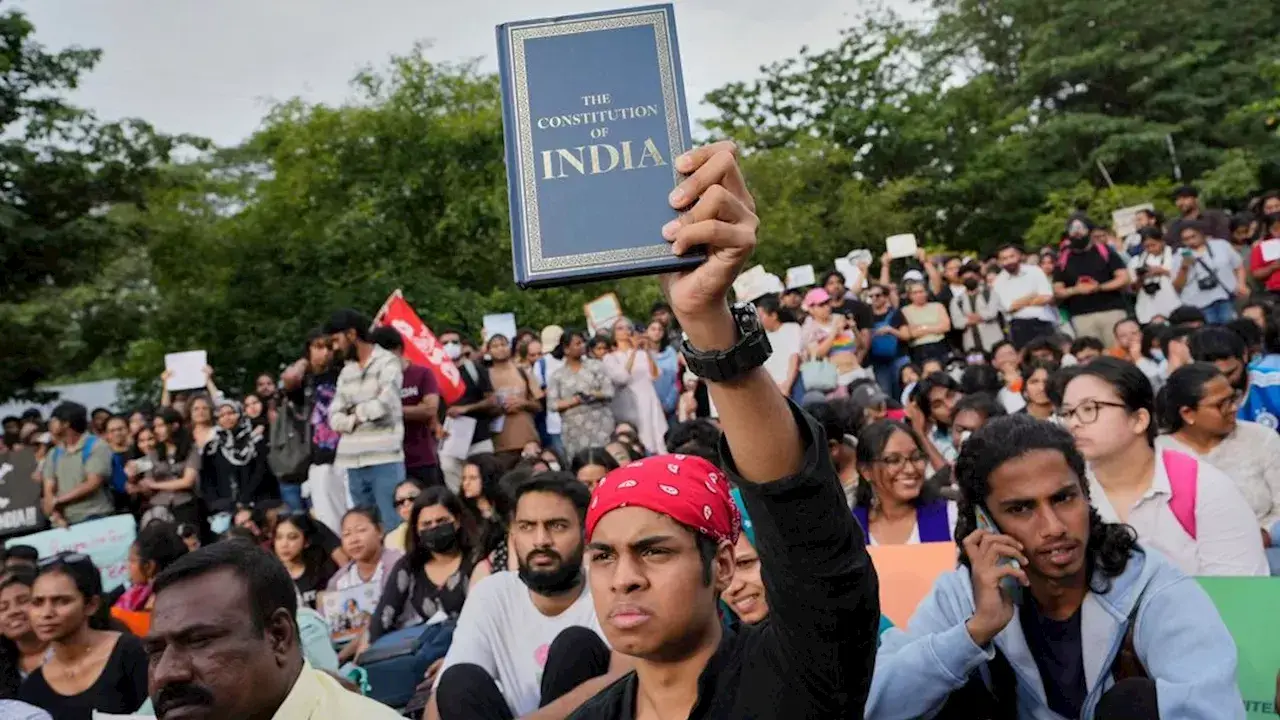
The strategic pivot toward global alliances occurs amid significant domestic unrest. Tens of thousands of Indian students and young people have joined successive waves of protests during the summer, October, and November. These demonstrations have demanded pluralism and institutional integrity.
Analysts note that these domestic protests mirror anti-populist movements observed globally. Experts argue that the protests expose widespread frustration with what they describe as a captured democracy, manipulated media, and stifled civil society under the Modi-led BJP's 12-year rule.
The political landscape remains sharply divided. In the 2024 elections, the BJP secured 37 percent of the national vote share, while Congress captured 21 percent. This disparity underscores the ruling party's organizational and financial depth compared to the opposition's current standing.
Election Analysis and Strategic Challenges
Praveen Rai of the Centre for the Study of Developing Societies cautions that structural differences between India and other democracies should not be ignored when drawing parallels to global trends. Rai notes that while the BJP maintains strong organizational muscle, Congress can learn from victorious campaigns in the United States and Brazil.
According to Rai, those successful campaigns focused on economic issues rather than social divides. He stresses that electoral success for Congress may require targeting economic concerns, particularly in non-Muslim dominated constituencies, to avoid communal polarization.
Minority Representation and Political Risks
The strategy of courting minority voters presents specific political risks. Analyst Siddharth argues that while the party's current language is more clearly constitutional and secular, its past flirtation with a softer Hindutva message remains a concern for observers.
Further complicating the opposition's approach, analyst Nielsen warns that overt courting of Muslim voters risks providing the BJP with a pretext for "Muslim appeasement." Despite this risk, Nielsen stresses that minority support—including Christians, Jews, Sikhs, and tribals—is crucial for sustaining a plural democracy.
Congress is determined to use the Bharat Summit as an opportunity to rekindle its credibility as a secular, multilateral alternative. The party hopes to leverage the global stage to counter the BJP's dominance, which analysts say has marginalized India's 15 percent Muslim minority, a group representing a significant portion of the country's population.