

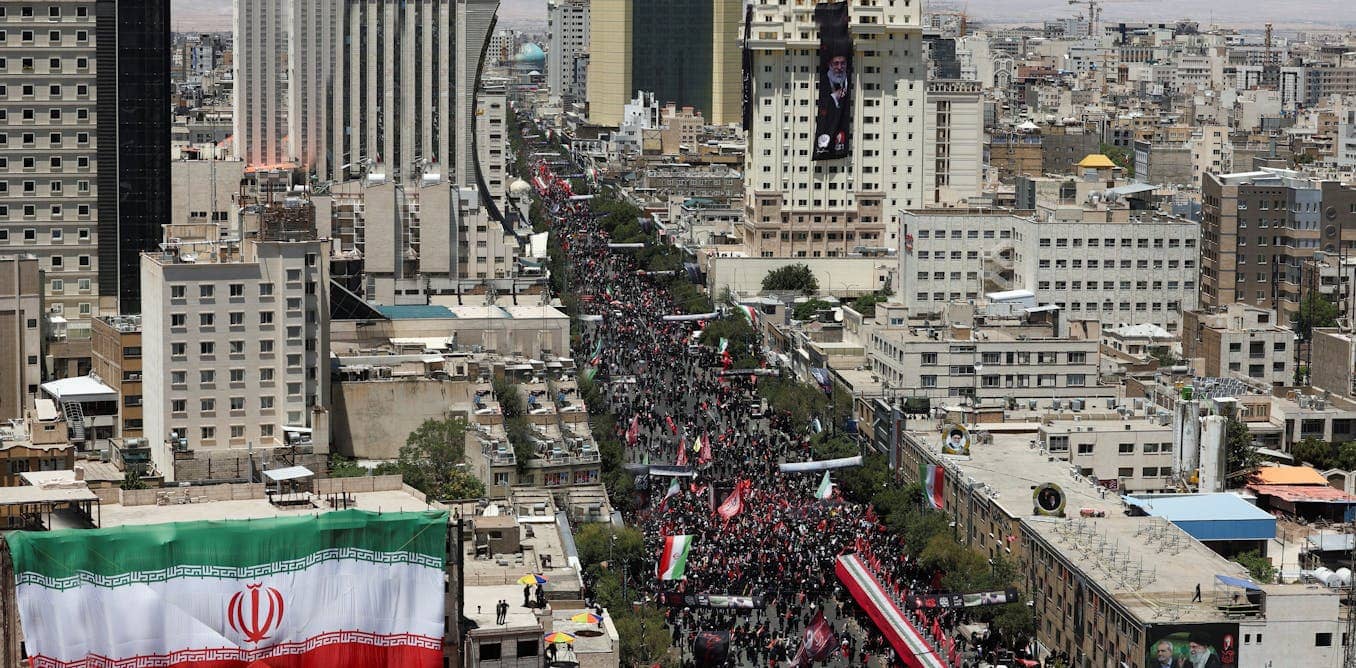

The burial ceremony for Ayatollah Ali Khamenei took place in his hometown of Mashhad earlier this month. The event followed a four-day period leading up to the interment of Iran's Supreme Leader. Many international delegations attended the proceedings, yet each nation selected its representatives with significant deliberation.
High-Level Attendance Signals Emerging Alliance
The decision by specific nations to send their prime ministers represented more than standard diplomatic courtesy according to analysis from The Conversation. Only two states dispatched leaders of that rank: Iraq and Pakistan. Both countries share a border with Iran, distinguishing them in the selection process.
This exclusive participation indicates an emerging "Axis of Sympathy" between these specific nations. Analysts suggest this grouping creates a new regional theater within Southwest Asia. This development breaks down simple binaries traditionally used to categorize geopolitical entities into either Middle Eastern or South Asian divisions.
Comparative Diplomatic Responses
In contrast to the high-level presence of Iraq and Pakistan, India sent a delegation that did not include its prime minister. Narendra Modi led this absence as he was absent from the event entirely. The report notes that Modi had also failed to condemn Khamenei's assassination in a joint US statement.
Geopolitical Implications for Southwest Asia
An emerging allegiance between Iran and Pakistan is reshaping power structures across southwest Asia according to published research. This shift suggests a strategic realignment that goes beyond immediate border concerns or shared religious heritage alone.
The formation of this grouping introduces complexity into the regional political landscape. It challenges existing frameworks where nations are often analyzed strictly through their continental affiliations. The specific choice of representatives at such a solemn occasion serves as a clear signal regarding bilateral relations and broader strategic interests.
Impact on Regional Dynamics
The presence or absence of prime ministers carries weight in international diplomacy. When two bordering nations send their heads of government to attend the funeral of Iran's Supreme Leader, it signals a depth of cooperation that may not be immediately visible through trade agreements alone.
India remains South Asia's biggest power and maintains its status as Pakistan's rival according to the source text. The choice by India to withhold its prime minister from the delegation stands in contrast to the attendance records of Iraq and Pakistan.
The Axis of Sympathy Concept
This decision indicates an emerging "Axis of Sympathy" between Iran, Iraq, and potentially other partners not explicitly named as sending prime ministers but implied by the regional theater concept. The term suggests a cohesive front or shared interest that transcends traditional geopolitical boundaries.
The new South-West Asian regional theatre breaks the simple binaries of the Middle East and South Asia according to the analysis provided in the source material. This structural change implies that future conflicts, trade negotiations, or diplomatic initiatives may require understanding these new alignments rather than relying on established continental categories.
Strategic Significance
The reshaping of power structures is a direct consequence of this emerging allegiance between Iran and Pakistan. As noted in the research from The Conversation published on July 21, 2026 at 4:50pm BST, these developments are being observed closely by international observers.
Each country will have chosen their representatives with the utmost care according to the source text. This level of scrutiny applies equally to those who attended and those who did not attend the funeral ceremony in Tehran or Mashhad.
Diplomatic Nuances at Khamenei's Funeral
The funeral ceremony for Ayatollah Ali Khamenei was held after a four-day ceremony according to the timeline provided. The location of the burial is identified as his hometown of Mashhad, not Tehran where many delegations were present.
Many international delegations were present but each country will have chosen their representatives with the utmost care according to the source text. This phrasing suggests that the composition of every delegation was a calculated decision rather than an automatic response based on diplomatic protocol alone.
The Role of Neighboring Nations
Only two states sent their prime ministers: Iraq and Pakistan, both of whom share a border with Iran. This fact highlights the specific nature of the relationship being analyzed by geopolitical experts.
This decision indicates an emerging "Axis of Sympathy" between the countries according to The Conversation analysis. The term is used specifically in relation to these two nations alongside Iran as they form this new grouping within Southwest Asia.
Broader Regional Context
The article text notes that India – South Asia's biggest power and Pakistan's rival – sent a delegation that did not include Prime Minister Narendra Modi. This detail provides context for the regional rivalry dynamics at play during the funeral proceedings.
An emerging Iran-Pakistan allegiance is reshaping southwest Asia's power structures according to the headline analysis from The Conversation. The publication emphasizes that this shift alters how Southwest Asian nations interact with one another and with external powers like India or the United States mentioned in relation to joint statements regarding Khamenei's assassination.
Modi had also failed to condemn Khamenei's assassination in a joint US- statement according to the source text. This detail is included as part of the broader context surrounding the funeral and diplomatic responses from South Asian nations.