Full story
Strait of Hormuz Reopening Conditions Defined
Iran’s top security official has established specific conditions for the reopening of the Strait of Hormuz, according to reports from Tasnim News Agency. The announcement marks a significant development in regional geopolitical dynamics, linking maritime security directly to broader diplomatic engagements between Tehran and its neighbors.
The strategic importance of the Strait of Hormuz cannot be overstated in the context of energy trade between Iran and Pakistan. Any disruption or conditional reopening of this waterway directly impacts the feasibility of energy imports that form a cornerstone of bilateral commerce. While the specific terms of these conditions have not been fully detailed in available reports, the linkage suggests that maritime access is being utilized as a lever in wider negotiations.
Joint Commitment to $10 Billion Trade Volume
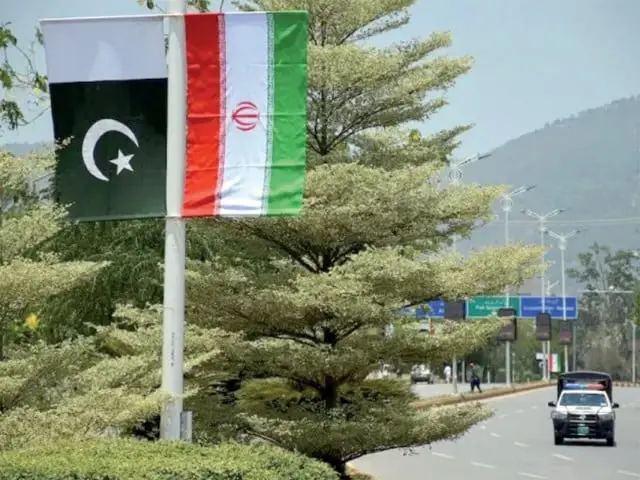
Leadership from both Iran and Pakistan has jointly committed to raising bilateral trade to $10 billion. This ambitious target has attracted considerable attention from economic analysts and policymakers alike. However, the feasibility of achieving this goal is currently questioned due to significant obstacles including international sanctions, complex payment mechanisms, and prevailing geopolitical factors.
The pursuit of this trade volume requires navigating a complex landscape of regulatory and logistical challenges. Experts note that while political will exists at the leadership level, translating that commitment into tangible economic results demands credible solutions for payments, sanctions compliance, and transit connectivity.
Historical Trade Data and Trends
To understand the scale of the current objective, it is necessary to examine historical trade data between the two nations. In 2006, exactly 20 years ago, Iran and Pakistan signed a "Preferential Trade Agreement." Under this agreement, Pakistan offered concessions to Iran on 338 tariff lines, while Iran gave concessions on 309 tariff lines. These concessions covered roughly 18% of mutual Most Favored Nation (MFN) tariffs.
According to State Bank of Pakistan (SBP) data from that year, total bilateral trade was $638 million. Of this total, $450 million represented exports from Iran to Pakistan. The primary exports from Iran to Pakistan included petroleum gas, refined petroleum, electricity, and dried legumes. Conversely, primary exports from Pakistan to Iran consisted of rice, meat, fruits, vegetables, and textiles.
Bilateral trade between Iran and Pakistan reached its peak at $1,321 million in 2009. Following this high point, trade volumes began a downward trajectory. By 2020, according to SBP data, total bilateral trade had fallen to $438 million. This decline highlights the structural difficulties that have persisted over the last two decades.
Requirements for Achieving the Target
Achieving the proposed $10 billion target will require addressing several critical barriers. A major practical step for Pakistan would be to request a US waiver for the purchase of petroleum products from Iran. Such waivers are necessary to navigate international sanctions regimes that currently restrict financial transactions related to Iranian energy exports.
Precedent exists for such arrangements. Several countries, including China, Turkiye, and India, have obtained similar waivers allowing them to purchase oil products from Iran. Securing a comparable waiver would likely serve as a foundational step for any substantial increase in trade volume between Islamabad and Tehran.
Beyond financial mechanisms, effective systems for payment are required. This may involve the implementation of barter systems or other non-standard financial instruments designed to bypass traditional banking channels restricted by sanctions. Additionally, improvements in logistical transit infrastructure are necessary to facilitate the physical movement of goods across borders.
The combination of these factors—sanctions compliance, payment mechanisms, and transit connectivity—stands between the political promise of a $10 billion trade relationship and its economic reality. Without credible solutions to these obstacles, the target may remain unattainable despite the joint commitment from leadership in both nations.