


Funeral Procession Projects Unity While Attacks Unfold
Dubai, July 09 — As millions of Iranians lined the streets to mourn their slain Supreme Leader, Ayatollah Ali Khamenei, the country's political leadership projected an image of solemn unity and unwavering control. The elaborate, multi-day funeral procession, broadcast extensively across state television, was meticulously orchestrated to reassure both domestic and international audiences that the Islamic Republic remained firmly in command despite facing one of the greatest shocks in its modern history – the loss of its paramount spiritual and political leader.
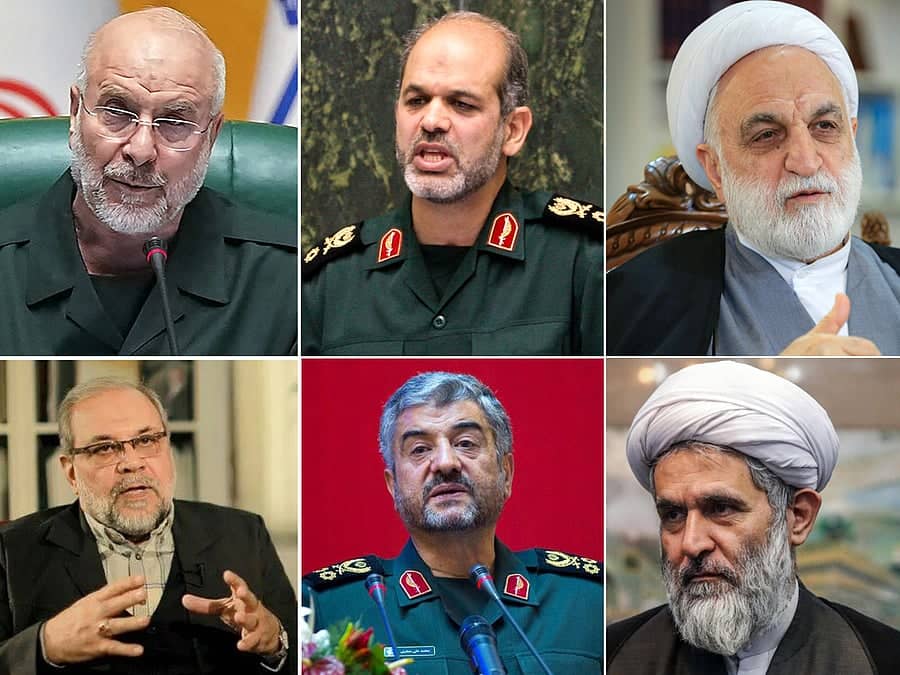
During this critical period, key figures of the Iranian establishment were prominently featured, presenting a united front. These included Iran Parliament Speaker and Iran's chief negotiator Mohammad-Bagher Ghalibaf, 64; IRGC commander Gen. Ahmad Vahidi, 67; Iran's Chief Justice Gholam-Hossein Mohseni-Ejei, 69; Hossein Taeb, 63, former head of the intelligence of the IRGC; Major General Mohammad Ali Jafari, 68, who served as ex-commander of the IRGC from 2007 to 2019; and Mohammad Bagher Zolghadr, 72, secretary of the Supreme National Security Council. Their collective presence aimed to signal stability and continuity in the nation's leadership.
Yet, hundreds of miles away, a starkly different narrative was unfolding, challenging the carefully constructed image of national cohesion. Commercial vessels transiting the strategically vital Gulf of Oman reported a series of alarming incidents. Western officials quickly indicated that these were not isolated events but rather coordinated assaults on three commercial tankers, all occurring within a single day, precisely as the nation was engrossed in mourning.
Coordinated Assaults Shatter Fragile Ceasefire
The timing and nature of these attacks carried immediate and severe geopolitical repercussions. The incidents reportedly shattered a fragile US-Iran ceasefire, an understanding that had temporarily eased tensions in the volatile region. The perceived coordination of the assaults on the three commercial tankers suggested a deliberate escalation, prompting an immediate and robust American military response. This response included targeted strikes near the Strait of Hormuz, a critical choke point for global oil shipments, and an Iranian southeastern port identified as Ch. The rapid escalation underscored the precarious balance of power in the Persian Gulf and the swiftness with which regional stability could unravel.
The attacks on these commercial vessels in the Gulf of Oman served as a potent reminder of the inherent geopolitical volatility that characterizes the Persian Gulf. The targeting of international shipping lanes during a period of intense national mourning for Iran's Supreme Leader introduced a layer of complexity, raising questions about the perpetrators' motives and the internal dynamics within Iran itself.
Internal Divisions Emerge Amid External Aggression
The confluence of these events—a meticulously choreographed display of national unity during the Supreme Leader's multi-day funeral and simultaneous, coordinated attacks on international shipping—has led observers to question the true state of Iran's internal command structure. Western officials and analysts suggest that these incidents may expose a fractured command within Iran, a stark contrast to the monolithic image of control projected by the country's leadership during the mourning period.
While the funeral procession showcased a unified front of senior political and military figures, the synchronized nature of the attacks on commercial vessels points to an operational capacity that could either be sanctioned by a centralized authority or, more troublingly, indicative of elements acting independently or with divergent agendas. The discrepancy between the public display of cohesion and the aggressive actions in the Gulf of Oman suggests a potential disconnect between various factions or power centers within the Islamic Republic.
This potential fracturing of command structure, if confirmed, could have profound implications for regional stability and international relations. It raises concerns about accountability and control over military and paramilitary assets, particularly in a region already fraught with tension. The attacks, occurring during a period intended to solidify national resolve and project strength, instead highlighted a potential vulnerability and internal discord that could further complicate efforts to de-escalate tensions in the Persian Gulf.