

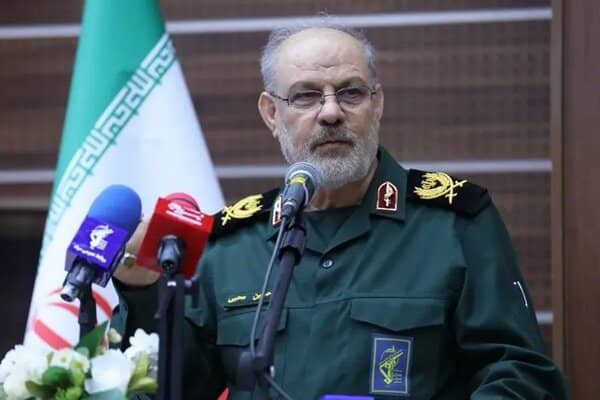

IRGC Spokesman Rejects Trump's Claims of Dialogue
TEHRAN, Aug. 17 (MNA) – The Islamic Revolution Guards Corps (IRGC) has issued a definitive rejection of assertions made by United States President Donald Trump, who claimed that secret negotiations were underway between Washington and Iranian military officials. Brigadier General Hossein Mohebbi, the official spokesperson for the IRGC, directly addressed these reports, stating unequivocally that no such dialogues exist between the two parties.
Speaking to local Iranian media on Monday, Brigadier General Mohebbi provided a clear statement on the military branch's position regarding the allegations. He affirmed, "There is no dialogue taking place between IRGC officials and the Americans." This statement served as a direct counter to President Trump's claims, which suggested a level of covert communication that the IRGC firmly denies.
Mohebbi's Strong Rhetoric Against US Assertions
Brigadier General Mohebbi did not mince words when addressing the veracity of President Trump's assertions. He characterized the US President's claim of ongoing backchannel talks as "merely fantasies caused by the delusions and nightmares resulting from defeat and desperation in the war" of aggression against Iran. This strong language underscored the IRGC's view of the current state of relations and the perceived motivations behind such claims from Washington, framing them as a product of a failing strategy.
The spokesperson further elaborated on the IRGC's operational philosophy, emphasizing its role as "the arm and voice of the power of the Iranian nation and the Islamic Republic." According to Mohebbi, the organization communicates its stance and exerts its influence primarily on the battlefield, rather than through clandestine diplomatic backchannels. This distinction highlights the IRGC's self-perception as a military and protective force, distinct from traditional diplomatic entities.
Mohebbi also clarified the division of labor within the Islamic Republic's governmental structure. He noted that diplomatic matters, including any potential negotiations or formal communications with foreign powers, fall within the responsibilities of other designated branches of the Islamic Republic, not the military command or the IRGC itself. This delineation reinforces the idea that the IRGC is not engaged in diplomatic overtures, secret or otherwise, with the United States.
Iran's Stance on Broader Diplomatic Engagement
Beyond the specific denial of backchannel talks involving the IRGC, Brigadier General Mohebbi also addressed the broader state of diplomatic relations between Iran and the United States. He stated that, based on comprehensive information available to the IRGC and corroborated by statements from Foreign Ministry officials, there are currently no talks whatsoever with the United States, not even through formal diplomatic channels. This confirms a complete absence of engagement across all levels of communication, formal or informal, military or diplomatic.
The spokesperson attributed this complete lack of diplomatic engagement to a history of mistrust and broken commitments on the part of Washington. Mohebbi specifically cited "Washington’s broken promises and its repeated violations of agreements" as the fundamental reasons for the current impasse. This perspective suggests that past actions by the US have eroded any basis for dialogue, making current engagement untenable from Tehran's viewpoint.
Washington's Role in Stalled Negotiations
The Iranian position, as articulated by Brigadier General Mohebbi, underscores a deep-seated grievance regarding the reliability of the United States as a negotiating partner. The reference to "broken promises and repeated violations of agreements" likely alludes to significant events in recent history, such as the US withdrawal from international accords or its perceived failure to uphold commitments. This context is crucial for understanding why Iran, from the perspective of both its military and diplomatic arms, views any claims of ongoing talks with skepticism and outright rejection.