

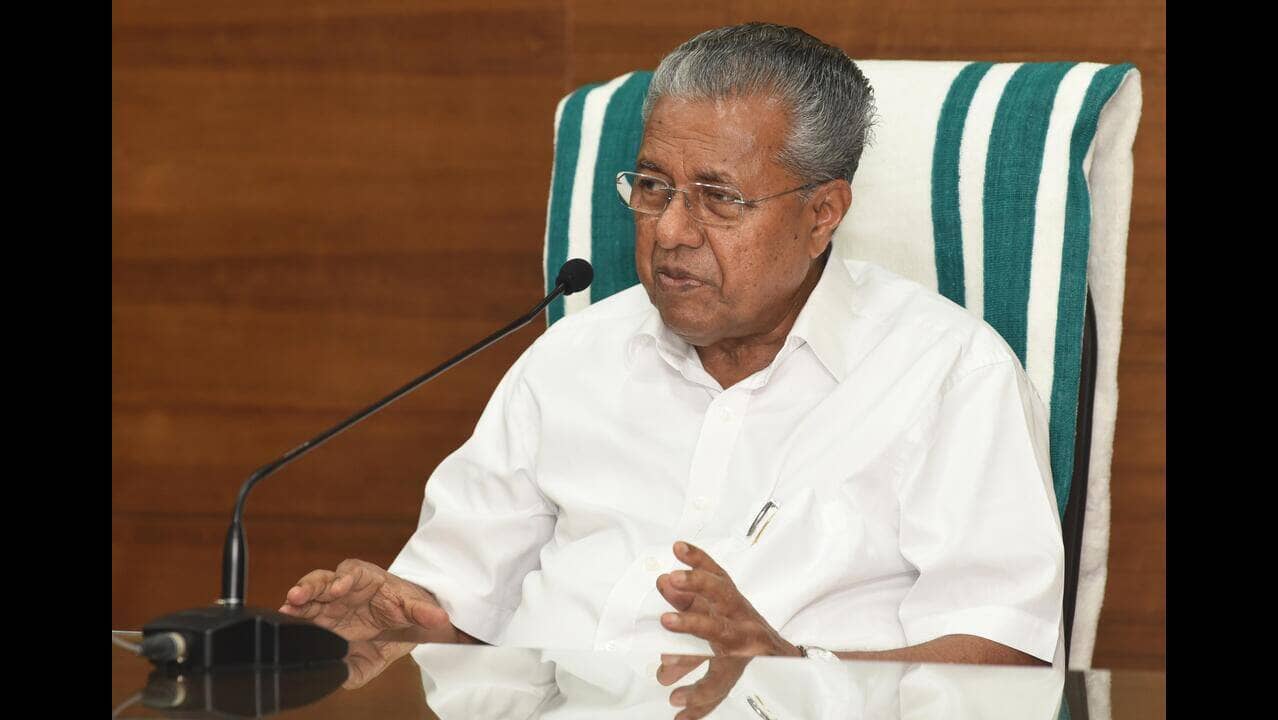

Opposition Leader Condemns Bypassing of State Cabinet
Thiruvananthapuram: Pinarayi Vijayan, the Leader of the Opposition in Kerala, has issued a sharp criticism against Governor Rajendra Vishwanath Arlekar regarding the latter's decision to directly summon the state police chief. According to reports from Aug. 17, 2026, Vijayan characterized this administrative move as "completely undemocratic" and asserted that it constituted a violation of established constitutional principles.
Vijayan stated that the Governor's action involved bypassing both the Chief Minister and the minister concerned with the department in question. In a parliamentary democracy, the executive power is vested in the elected council of ministers, headed by the Chief Minister, making direct administrative interventions by the Governor a significant departure from established norms. The opposition leader alleged that the Governor attempted to directly interfere in the state's administration through this direct communication channel, thereby circumventing the standard chain of command expected in a system where the elected government holds executive authority and accountability.
Allegations of Constitutional Violation and Executive Prerogative
In his critique, Vijayan emphasized that the protocol for summoning high-ranking officials such as the police chief should strictly adhere to constitutional guidelines. He argued that by initiating contact directly with the police chief without involving the elected government's head or the relevant minister, the Governor overstepped the boundaries of their office. Such actions, according to Vijayan, bypass the constitutional framework that places administrative control and responsibility squarely with the Council of Ministers, who are accountable to the state legislature and the electorate.
The Leader of the Opposition described the move as a breach of constitutional principles, suggesting that such actions undermine the democratic framework of the state by potentially creating a parallel line of authority that is not subject to the same democratic accountability. Vijayan's comments highlight the tension between the ceremonial head of the state, the Governor, and the elected government regarding the interpretation of administrative authority and protocol, particularly concerning executive functions that are the prerogative of the Chief Minister and the Council of Ministers.
Procedural Deviations and Governance Implications
The core of the disagreement centers on the procedural steps taken by the Governor's office. Vijayan noted that the standard procedure requires coordination with the Chief Minister and the minister responsible for the home or police department. Directives to state police or requests for information regarding law and order are traditionally routed through the Chief Minister's office or the Home Department, ensuring that the elected government maintains control and oversight over its administrative machinery. By skipping these intermediaries, the Governor's action was viewed as an attempt to establish a parallel line of authority, which could lead to confusion and undermine the clear chain of command essential for effective governance.
Vijayan alleged that this direct intervention was not merely a procedural error but a deliberate attempt to interfere in state affairs, eroding the autonomy of the elected government. The opposition leader's statement reflects a broader concern about the role of the Governor in the state's governance structure and the preservation of democratic norms during administrative operations, emphasizing that administrative control must remain with the people's representatives to ensure accountability.
The Governor's Role in a Parliamentary Democracy
In India's constitutional scheme, the Governor serves as the nominal head of the state, appointed by the President of India. While holding a significant constitutional position, the Governor is generally expected to act on the aid and advice of the Council of Ministers, headed by the Chief Minister, who collectively exercise the real executive power. This principle is enshrined in Article 163 of the Constitution, which outlines the Governor's functions. While the Governor possesses certain discretionary powers, these are typically limited to specific constitutional situations, such as reserving bills for the President's consideration or appointing a Chief Minister in a hung assembly. Direct involvement in the day-to-day administrative or law enforcement matters, especially those concerning the operational command of the state police, is generally considered to fall outside the scope of these discretionary powers and within the purview of the elected government.
The police force, being a subject under the state list, falls squarely under the administrative and operational control of the state government. Therefore, any communication or directive concerning the state police chief regarding administrative or operational matters is constitutionally expected to be routed through the Chief Minister or the relevant minister, ensuring that the executive authority of the elected government is respected and maintained.
Erosion of Administrative Accountability and Command
The Governor's direct summons to the state police chief carries significant practical implications for administrative accountability and the chain of command. Such an action can create ambiguity within the state's administrative hierarchy, potentially leading to uncertainty among officials about who holds ultimate authority over the police force. This could undermine the authority of the Chief Minister and the Home Minister, who are constitutionally responsible for maintaining law and order and ensuring the effective functioning of the police department in the state.
If the state police chief is perceived to be directly reporting to the Governor on operational matters, it blurs the lines of accountability to the elected government, which is answerable to the legislature and the public. This erosion of clear command structures can lead to administrative inefficiencies, potential conflicts of directives, and a weakening of the democratic principle that administrative control rests with the representatives chosen by the people. Vijayan's criticism, therefore, underscores a concern that such direct interventions could politicize administrative functions and disrupt the established system of governance.
Precedent and Future of State-Gubernatorial Relations
The incident involving Governor Arlekar and the state police chief, as highlighted by Pinarayi Vijayan, could set a significant precedent for the future of state-gubernatorial relations in Kerala and potentially other states. If direct communication and intervention by the Governor in administrative matters become a recurring practice, it could lead to increased friction and constitutional disputes between the Governor's office and the elected state government. Such actions challenge the delicate balance of power envisioned by the Constitution, where the Governor acts as a constitutional head while the executive power is wielded by the Council of Ministers.
Maintaining institutional respect and strict adherence to established constitutional conventions are crucial for the smooth functioning of India's federal democratic structure. Vijayan's strong stance on this matter reflects the gravity of the issues raised, emphasizing the importance of preserving the autonomy of the elected state government and upholding the democratic norms that define the relationship between the ceremonial head and the executive branch. The incident thus brings into focus the ongoing debate about the precise boundaries of the Governor's role in the day-to-day administration of a state.