

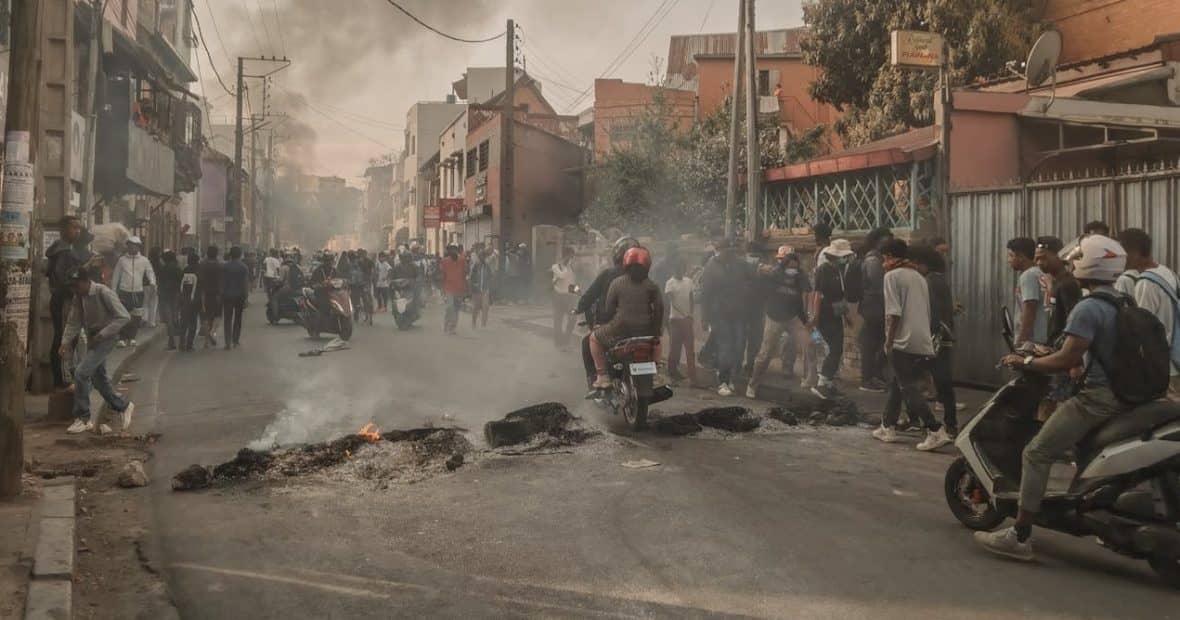

Youth Uprising Ignites Political Change
Madagascar experienced a profound political upheaval in late 2025, sparked by youth-led demonstrations that initially focused on critical public service failures. These protests, which began as expressions of frustration over persistent water and electricity shortages, quickly gained momentum and transformed into a powerful movement demanding fundamental political change. The widespread unrest escalated to such an extent that it ultimately led to the exile of President Andry Rajoelina, marking a dramatic shift in the nation's leadership.
From Utility Grievances to Systemic Demands
The driving force behind these transformative protests was identified predominantly as Gen-Z, comprising individuals born between 1997 and 2012. This generation, coming of age amidst existing national challenges, voiced deep-seated concerns that extended far beyond the immediate utility issues. Their public demonstrations articulated a profound yearning for dignity, a fervent rejection of pervasive corruption, and a demand for the restoration of a broken social contract. The transition from specific grievances concerning essential services to a broader call for systemic political reform underscored a widespread disillusionment with the existing governance structure and a desire for more accountable leadership.
A Military Transition Amidst Unrest
The vacuum created by the escalating unrest and the departure of President Rajoelina paved the way for a military-led transitional government to assume power. This new authority stepped in amidst the ongoing turmoil, taking control of the nation's governance following the collapse of the previous administration. The establishment of this transitional body represents a critical juncture in Madagascar's political trajectory, signaling a departure from the long-standing leadership and the beginning of an uncertain, yet potentially transformative, period for the island nation.
Unmasking Madagascar's "Captured State"
A critical analysis of the Malagasy uprising has shed light on the deeper structural issues at play. According to a new book chapter and co-authored paper published by the GI-ACE research programme at the University of Sussex, researchers Ketakandriana Rafitoson and Tom Shipley contend that the youth-led protests effectively overthrew a "captured state." Their insightful analysis offers a robust framework for comprehending the systemic corruption and institutional manipulation that underpinned the widespread discontent and ultimately fueled the popular uprising.
How Power Networks Manipulate Institutions
State capture, as defined by Rafitoson and Shipley, represents a particularly insidious form of corruption. It goes beyond individual acts of bribery or embezzlement, describing a phenomenon where powerful political and business networks systematically manipulate the very fabric of governance. This involves actively reshaping rules, laws, regulations, and public institutions to exclusively serve their private interests and consolidate their power. Instead of operating within established legal frameworks, these networks actively subvert them, bending the legislative and regulatory environment to create an advantageous playing field for themselves. This manipulation extends to controlling key appointments, influencing policy decisions, and even directing public resources, all to the detriment of fair competition, equitable resource distribution, and democratic principles.
The Public Cost of Elite Control
The research underscores that this systematic manipulation of the state apparatus allows these entrenched networks to accumulate wealth and influence at the direct expense of the general public. Essential services, economic opportunities, and even the rule of law become distorted, serving the agendas of a select few rather than the welfare of the citizenry. The Gen-Z demonstrators, by challenging the established order and demanding an end to corruption, directly targeted these mechanisms of state capture. Their protests were not merely against a specific leader but against a system where political and business elites had allegedly hijacked the country's governance for personal gain, thereby eroding public trust and undermining the social contract.
The Long Road to Dismantling Entrenched Corruption
Despite the significant achievement of the youth-led protests in forcing President Rajoelina into exile and disrupting the established order, experts caution that the fight against state capture in Madagascar has only just begun. The removal of a particular head of state, while a crucial first step, does not automatically dismantle the intricate, often opaque, networks of political and business influence that are the hallmark of a captured state. These networks are deeply embedded within the institutional framework, operating through informal channels and formal levers to maintain their grip on power and resources.
Beyond Leadership Change: Structural Reforms Needed
The military-led transitional government now confronts the daunting and multifaceted challenge of addressing these deep-seated structural issues. Researchers emphasize that a thorough understanding of the specific manifestations of state capture within Madagascar's unique context is absolutely vital for the formulation and implementation of any effective future reforms. The phenomenon of state capture demands far more than a mere change in leadership; it necessitates a fundamental and comprehensive overhaul of the nation's laws, regulations, and institutions. This includes strengthening oversight bodies, ensuring judicial independence, reforming public procurement processes, and establishing robust anti-corruption mechanisms to prevent future manipulation and ensure that state institutions genuinely serve the public good.
Gen-Z's Enduring Role in National Renewal
Throughout this critical period, the role of Gen-Z has been, and remains, central. Their initial focus on restoring dignity and rectifying the broken social contract powerfully articulated a rejection of the previous system's legitimacy and its inherent inequalities. However, sustaining the momentum generated by the protests against such deeply entrenched interests will require continuous vigilance, active civic participation, and unwavering commitment to structural reform. The success of Madagascar's journey towards genuine democratic governance and equitable development hinges on its ability to move beyond the initial political transition and systematically dismantle the mechanisms of state capture, ensuring that the state truly serves its citizens.