

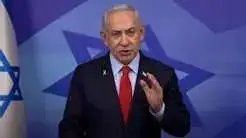

Netanyahu Calls for Phasing Out U.S. Financial Assistance
JERUSALEM — Israeli Prime Minister Benjamin Netanyahu made a significant declaration on Tuesday morning, July 2, 2026, outlining his government’s intent to phase out long-term American financial support to Israel. The announcement came as part of a broader address where the Prime Minister detailed his administration's security and foreign policy stances on critical regional issues, including Iran, Gaza, Lebanon, and Palestinian statehood.
During his remarks, Netanyahu asserted that Israel should initiate the process of discontinuing U.S. aid immediately. According to reports released on the same day, he presented a clear argument that the prevailing economic conditions within Israel no longer necessitate external funding from Washington. The Prime Minister emphasized that the country’s economy has achieved a level of growth and robustness sufficient to finance its own operations without reliance on foreign transfers.
Netanyahu did not mince words when describing his view of the assistance. "I want to stop American aid," he stated unequivocally during his address. He went on to characterize the aid as being "like welfare; I don't want it." This sentiment was reportedly reiterated multiple times throughout his speech, framing the request for aid cessation not as a reflection of any dependency issues but rather as a testament to Israel's national dignity and its maturation into an economically self-sufficient state.
Israel's Economic Evolution and the Case for Self-Sufficiency
A Shift in Fiscal Standing
Central to Prime Minister Netanyahu’s argument is his assessment of Israel's current fiscal strength. He highlighted that U.S. assistance now constitutes only a marginal portion of the nation's overall economy, suggesting a significant shift in the relative importance of American contributions over time. This perspective implies that while the aid may have been substantial in previous decades, Israel's economic expansion has rendered it less critical to its national budget today.
The Prime Minister underscored this point by stating, "Our economy is no longer a small economy... we can finance ourselves with this." This characterization of Israel’s economic growth as substantial and inherently self-sustaining positions the call for aid reduction as an acknowledgment of achieved financial independence. It suggests a strategic pivot, where Israel, in Netanyahu's view, is moving beyond a recipient-nation status to one of full economic autonomy.
Proposed Timeline for Aid Cessation
Netanyahu indicated a clear, albeit ambitious, timeline for initiating this phase-out process: within the current calendar year. While he did not elaborate on the specific mechanisms, legislative steps, or diplomatic negotiations that would be required to implement such a significant policy change, he framed it as an achievable policy goal directly aligned with Israel’s evolving economic reality. The proposal to begin phasing out aid so swiftly signals a strong conviction in the nation's capacity to stand on its own financially in the near future.
Strategic Implications Amid Regional Tensions
Aid Proposal in Geopolitical Discussions
The announcement regarding U.S. aid was made concurrently with Netanyahu’s presentation of his administration's positions on several highly sensitive and critical regional issues. These discussions encompassed ongoing tensions involving Iran, the complex humanitarian and security situation in Gaza, developments along Lebanon's border, and broader considerations surrounding the future of Palestinian statehood. The Prime Minister's decision to present the aid reduction proposal alongside these weighty foreign policy priorities suggests a deliberate attempt to project an image of a stronger, more independent Israel on the international stage.
Although Netanyahu did not explicitly link the aid reduction request to any specific events in Gaza or escalating tensions with neighboring states during his remarks on Tuesday, the juxtaposition provides a compelling context. An economically self-sufficient Israel, as envisioned by Netanyahu, could potentially be perceived as having greater leverage and autonomy in navigating these complex geopolitical challenges, free from the perceived constraints or implications associated with foreign financial assistance.
Unilateral Stance and International Reaction
As of July 2, 2026, the United States government had not publicly released any official response regarding Prime Minister Netanyahu’s proposal to end decades-long financial assistance arrangements. The absence of an immediate reaction leaves open questions about the feasibility and diplomatic implications of such a significant shift in bilateral relations.
Furthermore, the available information focuses exclusively on Prime Minister Netanyahu's position and arguments, as reported by agencies citing Kashmir Reader. No opposing viewpoints from Israeli domestic critics, external analysts, or counterarguments from other nations involved in multilateral security frameworks or international financial institutions were included in the provided source context. The narrative, therefore, remains centered solely on Netanyahu's assertions and his characterization of U.S. aid as unnecessary 'welfare' that Israel now wishes to discontinue voluntarily due to its internal economic strength, presenting a unilateral perspective on a long-standing international agreement.