

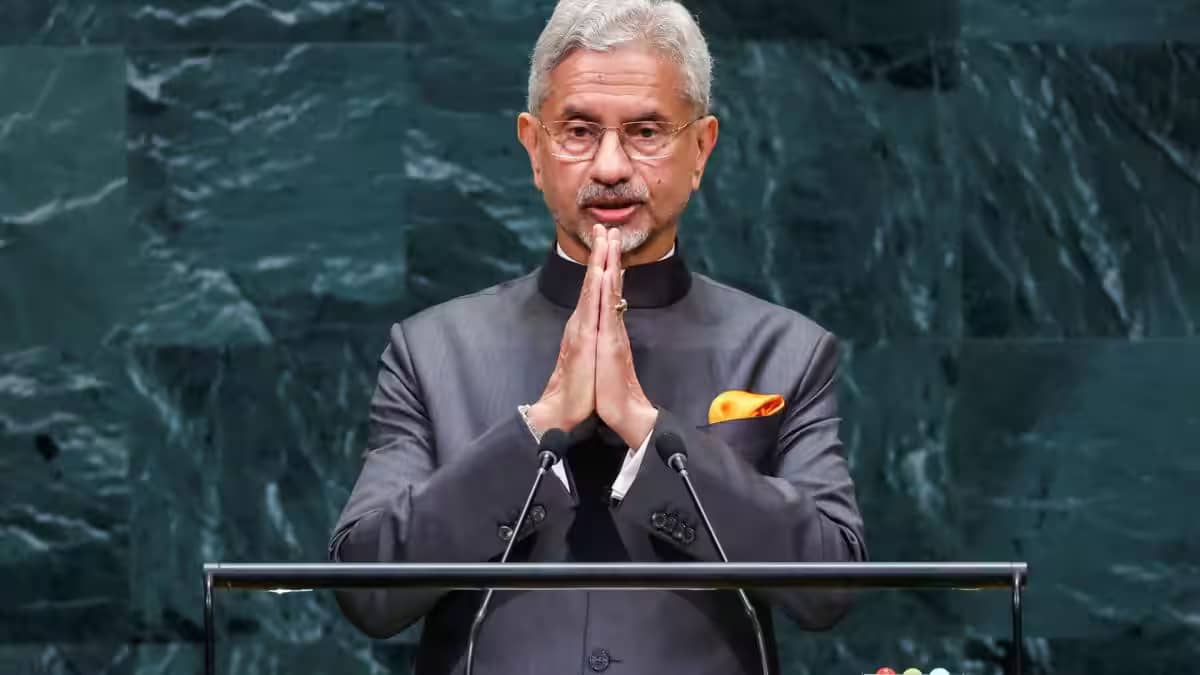

India’s Stance at the 81st UN General Assembly
Indian External Affairs Minister Subrahmanyam Jaishankar addressed the 81st United Nations General Assembly in New York City on September 26, 2026. In his address, Jaishankar outlined a foreign policy approach defined by strategic autonomy and independent decision-making.
Jaishankar stated that New Delhi will "engage widely, choose independently and speak in its own voice" as the world navigates periods of instability. The minister described the contemporary international system as disorderly, noting that countries located far from active conflicts are being penalized for reasons unrelated to their actions.
According to Jaishankar, these nations often have little say in the conflicts that affect them. He identified the growing "weaponisation" of economic and technological interdependence as a major theme in global relations. This trend is driven by a mindset of extreme competition that undermines international institutions and establishes chokepoints in finance, market access, supply chains, and technology.
Accusations Against Pakistan and Calls for De-escalation
During the same address, Jaishankar directed specific criticism toward Pakistan. He accused the neighboring country of being "a serial practitioner of terrorism." The minister asserted that India reserves the right to defend itself against such acts.
Jaishankar stated that arguments attempting to normalize terrorism or claim immunity from its consequences "will not stand." He emphasized that India would not accept justifications for terrorist activities under any circumstances.
On the broader issue of global conflict, Jaishankar described the targeting of commercial shipping and seafarers as "unacceptable." He urged all parties involved in ongoing disputes to exercise restraint and de-escalate tensions. The minister called for the protection of civilians and the maintenance of the uninterrupted flow of energy and commerce.
Jaishankar concluded his remarks on conflict by stating that "endless war must give way now, to an end to war." His comments reflected India’s position on maintaining global trade routes and ensuring stability in regions affected by geopolitical disputes.
Historical Precedents in Diplomatic Strategy
Jaishankar’s current diplomatic posture builds upon strategies employed during his earlier tenure as Bharat’s Ambassador to China from 2009 to 2013. During that period, he instructed the Indian embassy to issue visas to Chinese visitors accompanied by maps showing disputed areas as part of Indian territory.
This specific diplomatic action led China to revoke its stapled visa policy for residents of Arunachal Pradesh and Jammu and Kashmir. The incident highlighted India’s firm stance on territorial integrity during previous administrations.
The 2026 address at the United Nations marks a continuation of this independent foreign policy framework. Jaishankar’s speech emphasized that despite global pressures and economic interdependence, India remains committed to defining its own strategic path without aligning exclusively with any single power bloc.