Full story
Oil Markets Price in Risk Premium as US-Iran Friction Intensifies
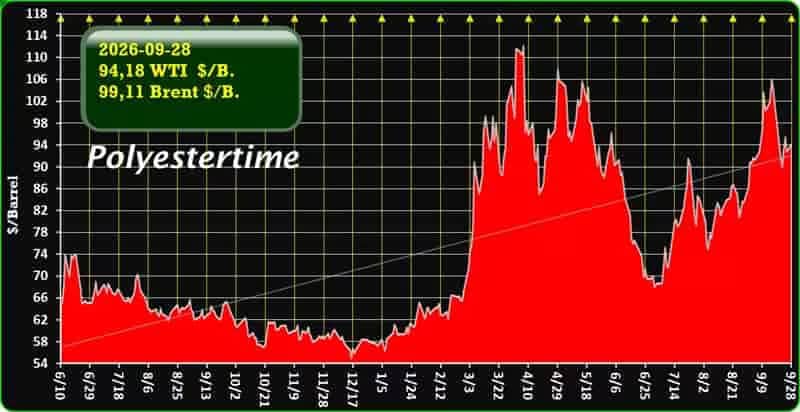
Brent crude is trading near $99 per barrel while West Texas Intermediate (WTI) holds around $94 per barrel, reflecting a significant risk premium driven by escalating tensions between the United States and Iran. According to Polyestertime, geopolitical volatility in the Middle East has intensified energy market concerns regarding physical supply disruptions.
The price surge is attributed to intensifying military and diplomatic friction between Washington and Tehran. This includes recent shifts in military posture within the Persian Gulf, retaliatory rhetoric from both sides, and heightened maritime security alerts. Energy markets are currently pricing in a substantial risk premium due to fears of supply interruptions, even though there has been no immediate large-scale destruction of infrastructure reported.
Traders are factoring in three primary risk elements: direct damage to production and refining facilities, intermittent military engagement affecting commercial shipping routes, and additional economic sanctions targeting energy exports. The spread between Brent crude at $99 per barrel and WTI at $94 per barrel highlights the heightened risk associated with waterborne, internationally traded crude relative to domestic US supplies.
Strait of Hormuz Choke Point Under Scrutiny
The Strait of Hormuz is identified as a critical oil transit choke point in this geopolitical landscape. Approximately 20% of global petroleum consumption passes through the strait daily, connecting major producers including Saudi Arabia, Iraq, Kuwait, the United Arab Emirates, and Iran to international markets.
Disruptions to tanker traffic through the Strait of Hormuz, such as naval blockades or maritime seizures, constrain global crude supplies due to limited alternative pipeline capacity. Localized incidents, including electronic jamming, tanker inspections, or defensive military exercises, increase shipping insurance premiums and delay transit times. These factors add upward pressure to Brent and WTI futures.
Pre-existing Supply Constraints Amplify Price Pressure
Global oil supply was already constrained by disciplined output management from OPEC+ prior to the recent geopolitical flare-ups between the US and Iran. This pre-existing tightness in global supply has amplified the impact of current tensions on crude prices.
For global supply chains, central banks, and consumers, crude reaching the triple-digit threshold represents a potential shock wave capable of reigniting inflationary pressures and altering central bank monetary policy worldwide. The combination of OPEC+ output discipline and heightened geopolitical risk in the Persian Gulf has positioned energy markets to react sharply to any further escalation in US-Iran relations.