


Shifting Global Power Dynamics
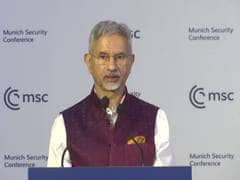
External Affairs Minister S Jaishankar identified a shifting American posture and the rise of China as the two defining pillars of today's international landscape at the Munich Leaders Meeting. He characterized the United States' current position not as an accident, but as a "posture of choice," noting that Washington has "deliberately become a lonelier power" due to what he described as a "radical repositioning." This assessment frames the current geopolitical environment as one where traditional alliances are being recalibrated, forcing other nations to navigate a more complex web of relationships.
Jaishankar highlighted that this shift is occurring alongside sharp global competition that extends beyond just the rivalry between the US and China. He observed that this intense competition has led to the "weaponization of any leverage that any country has," creating an environment where economic and diplomatic tools are increasingly used as strategic weapons. This trend coexists with the inherent complexity of global interdependence, making isolation both a choice for some and a vulnerability for others.
The Strategy of Hedging and Multipolarity
Addressing the opening session of the Munich Leaders Meeting 2026, Jaishankar referred to the accelerated emergence of multipolarity as a defining feature of the era. He described a "strategy of advancing by hedging" that many nations are adopting to manage uncertainty. In this context, he argued that traditional multilateralism is under visible pressure, pointing out that the United Nations is "very visibly gridlocked." This institutional stagnation has created space for alternative frameworks and coalitions to emerge.
Jaishankar urged emerging and middle powers to strengthen interstate cooperation as a response to these challenges. He emphasized that non-superpower states must pool their diplomatic, economic, and technological resources to reshape global decision-making. By coordinating proactively across sectors such as conflict resolution, supply chain resilience, high-tech manufacturing, healthcare, global connectivity, climate action, and defence reform, these nations can exert greater influence on the international stage.
Building Alternative Architectures
To illustrate how emerging powers can build alternative architectures, Jaishankar cited several existing initiatives. He pointed to the Quad, the India-Middle East-Europe Economic Corridor, the International North–South Transport Corridor, and the Northern Sea Route as examples of cooperation that bypass traditional power centers. He also described BRICS as an example of parties feeling their collective voice is stronger than individual ones, highlighting the group's role in amplifying the interests of emerging economies.
Jaishankar further highlighted successful initiatives initiated by India, such as the International Solar Alliance and the Coalition for Disaster Resilient Infrastructure. These examples serve to demonstrate how middle powers can lead in specific domains without relying on superpower patronage. He argued that medium and smaller nations have the potential to dominate niche high-tech sectors, citing Taiwan’s TSMC dominance in advanced semiconductor fabrication and the Netherlands’ ASML monopoly on EUV lithography machines as proof that non-superpower leadership is possible in critical industries.
Economic Alignment and Global Health
On the topic of sustained economic alignment, Jaishankar cited the India–EU engagement framework. He noted that formal negotiations for a Free Trade Agreement between India and the EU began in 2007, were paused in 2013, and restarted in 2022, illustrating the long-term nature of such diplomatic efforts. This historical context underscores the patience required to build robust economic partnerships in a fragmented world.
Jaishankar also addressed global health security, calling for diversified production of Active Pharmaceutical Ingredients (APIs). He emphasized the need to facilitate the flow of skilled talent to balance demographic disparities, noting that demand locations do not always match demographic realities. This perspective links economic strategy with demographic trends, suggesting that future stability depends on managing these imbalances through cooperation rather than competition.