

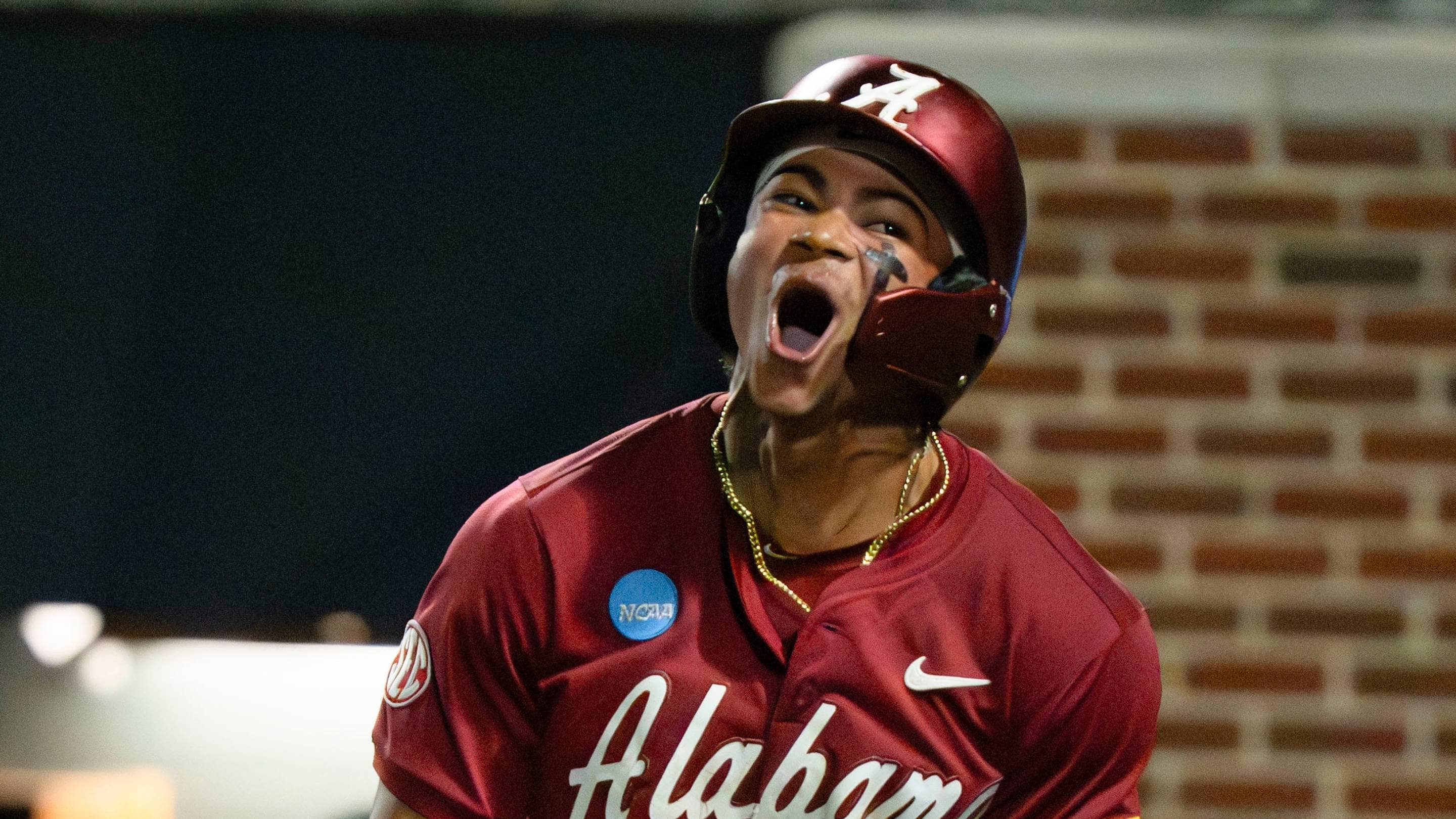

Lebron's Decisive Homer Propels Alabama
TUSCALOOSA, Ala. — University of Alabama shortstop Justin Lebron delivered a pivotal solo home run on May 30, 2026, during the Tuscaloosa NCAA Regional winner’s bracket game against USC Upstate. The powerful swing, which saw Lebron connect for a solo shot, occurred at the Crimson Tide’s home field, Sewell-Thomas Stadium, located in Tuscaloosa, Alabama. This crucial hit contributed to Alabama's advancement within the highly competitive NCAA Regional tournament.
Photographic records from the game vividly capture Lebron celebrating his impactful home run, a moment that underscored his significant contribution to the team's postseason aspirations. Throughout the contest, Lebron proudly wore jersey number 1 for the University of Alabama, a visible representation of his role as a key player for the Crimson Tide. The game itself was a critical component of the winner’s bracket, meaning a victory positioned Alabama favorably in its quest to progress deeper into the regional play.
High Stakes in Tuscaloosa Regional
The matchup between Alabama and USC Upstate was no ordinary regular-season game; it was a high-stakes encounter within the double-elimination format of the NCAA Regional tournament. As the host institution, Alabama entered the Tuscaloosa Regional with the advantage of playing on their home turf, a factor that often provides a significant boost in postseason play. Winning a winner’s bracket game is paramount in this format, as it allows the victorious team to avoid the arduous path through the loser’s bracket, preserving valuable pitching resources and providing a more direct route to the regional final.
Sewell-Thomas Stadium, known for its vibrant atmosphere and passionate fan base, provided the backdrop for Lebron's heroics. The energy of the Tuscaloosa crowd likely amplified the significance of every play, particularly a momentum-shifting home run. USC Upstate, as Alabama's opponent, represented another formidable challenge in the regional, highlighting the competitive nature of the NCAA postseason where every team has earned its place.
Top Prospect's Collegiate Swan Song
Justin Lebron's performance in the NCAA Regional came during a unique and transitional period in his burgeoning baseball career. Just days prior to the game, Lebron was selected as the No. 18 pick in the 2026 Major League Baseball (MLB) Draft, a testament to his exceptional talent and potential. This first-round selection by the Cincinnati Reds marked him as one of the most promising young players in the nation, carrying the weight of high expectations as he prepared to transition from collegiate star to professional athlete.
As the University of Alabama's starting shortstop, Lebron has consistently demonstrated the skills that made him a top draft prospect. His ability to hit for power, combined with his defensive prowess at a crucial infield position, made him an attractive target for MLB organizations. His continued participation in the college postseason after being drafted offered fans a final opportunity to witness his collegiate brilliance, serving as a bridge between his amateur career and the imminent start of his professional journey.
Cincinnati Reds' Investment in Shortstop Talent
The Cincinnati Reds' decision to draft Justin Lebron at No. 18 overall in the 2026 MLB Draft signals a significant investment in the future of their organization. The Reds, known for their strategic drafting and player development, identified Lebron as a cornerstone talent. Shortly before the NCAA Regional game, the Reds announced their intention to assign Lebron to an aggressive first assignment within their minor league system, a move that speaks volumes about their confidence in his readiness and advanced skill set.
This aggressive assignment suggests that the Reds believe Lebron possesses the maturity and talent to bypass some of the lower minor league levels typically assigned to newly drafted players. Such a decision underscores the organization's high expectations for the young shortstop, anticipating a rapid ascent through their farm system. Lebron's selection and subsequent assignment highlight the Reds' commitment to acquiring and developing top-tier talent, particularly at critical positions like shortstop, which demands both offensive and defensive excellence.
Navigating the NCAA Tournament Bracket
The NCAA Division I Baseball Championship is a rigorous tournament, beginning with 64 teams divided into 16 regional sites across the country. Each regional consists of four teams competing in a double-elimination format, with only one team from each regional advancing to the next stage. The Tuscaloosa Regional, hosted by the University of Alabama, was one of these crucial initial battlegrounds, with the Crimson Tide aiming to emerge as its sole survivor.
Lebron's solo home run in the winner's bracket game against USC Upstate was a key moment in Alabama's navigation of this challenging bracket. In a double-elimination format, winning the first two games is highly advantageous, as it places a team in the regional final needing only one more victory to advance, while their opponent must win two consecutive games. This structure emphasizes the importance of every game, and particularly of securing wins in the winner's bracket to maintain control of one's destiny in the tournament.
Path to Super Regionals
The ultimate goal for teams competing in the NCAA Regionals is to advance to the Super Regionals. These Super Regionals pit the 16 regional champions against each other in eight best-of-three series. The winners of the Super Regionals then earn a coveted spot in the College World Series in Omaha, Nebraska, where the national championship is ultimately decided. Alabama's victory in the winner's bracket game, propelled by Lebron's home run, was a vital step on this demanding path.
By securing a win in this critical game, Alabama positioned itself closer to the regional final, needing fewer wins and preserving its pitching staff more effectively than teams forced into the loser's bracket. Lebron's performance, therefore, was not just a personal highlight but a significant contribution to the team's strategic advantage in their pursuit of a Super Regional berth and, ultimately, a shot at the College World Series title.