


The Shifting Global Order: From Pax Americana to Pax Planetaria
Recent geopolitical analyses have increasingly explored the concept of "Kaput Pax Americana," suggesting a significant shift away from a world order predominantly shaped and governed by the United States. This perspective posits that the era of unchallenged American unipolarity, which followed the end of the Cold War, is drawing to a close, leading to a more multipolar and complex international landscape.
In response to this perceived decline, the notion of a "Pax Planetaria" has emerged as a proposed alternative framework for global governance. This concept aims to foster a more cooperative and rules-based international system, specifically designed to prevent the world from devolving into a "law of the jungle" where power politics supersede international norms and institutions.
Challenges from Major Powers
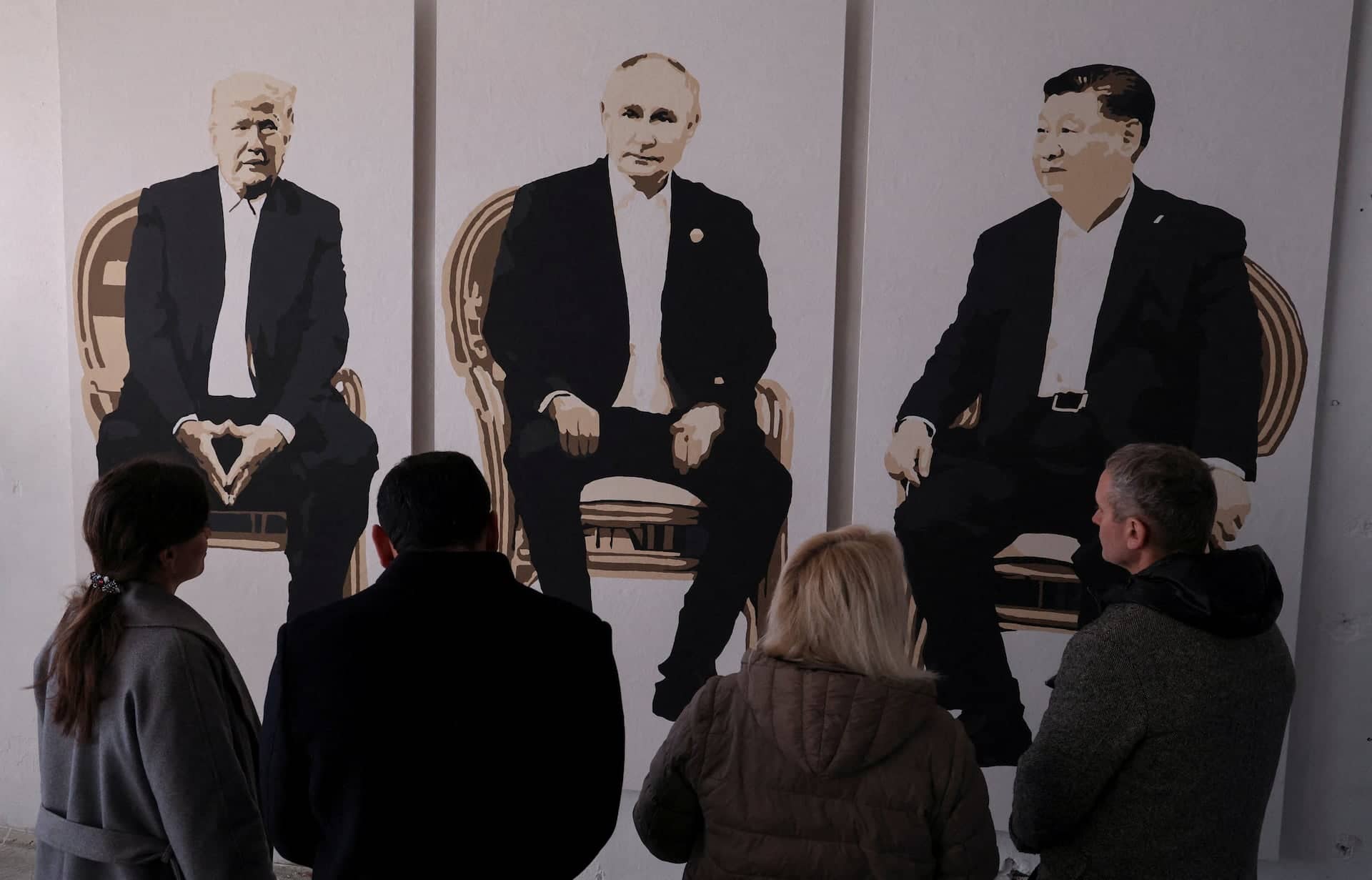
The transition towards a new global order is understood to be unfolding amidst significant challenges posed by major global powers. Actions by the United States, Russia, and China are frequently cited as contributing to the erosion of existing international norms and multilateral frameworks. These actions, which can include unilateral foreign policy decisions, assertive geopolitical maneuvers, and challenges to established international agreements, are seen by proponents of Pax Planetaria as creating instability and undermining the collective security architecture.
For instance, Russia's military actions in Ukraine and its broader foreign policy stance have been interpreted by many as a direct challenge to the post-Cold War European security order. Similarly, China's growing economic and military influence, coupled with its assertive territorial claims and approach to international trade, is viewed as reshaping global power dynamics. The United States, despite its historical role in establishing many international institutions, has also faced criticism for instances of unilateralism or disengagement from certain international agreements, which some analysts suggest further destabilizes the existing order.
The Rise of Middle Powers
Within this evolving environment, "middle powers" are identified as crucial actors capable of defending and constructing elements of a new global order. These states, typically characterized by significant economic and political influence but lacking the full spectrum of superpower capabilities, often advocate for multilateralism, international law, and cooperative solutions to global challenges. Their collective action is seen as essential for building consensus and upholding norms in a multipolar world.
The European Union (EU) is frequently highlighted as a leading example of such a middle power. With an economy valued at approximately $23 trillion, the EU possesses substantial economic leverage and diplomatic weight. Its institutional framework, commitment to multilateralism, and extensive network of international partnerships position it as a significant force capable of promoting stability and a rules-based order on the global stage.
Mechanisms for Collective Action
The effectiveness of middle powers in shaping a "Pax Planetaria" largely depends on their ability to "club together." This involves forming strategic alliances, strengthening existing regional blocs, and creating issue-specific coalitions to address shared concerns. Mechanisms for such collaboration include:
- Strengthening Multilateral Institutions: Middle powers can collectively advocate for reforms and increased effectiveness within organizations like the United Nations, the World Trade Organization, and various international judicial bodies.
- Regional Cooperation: Enhancing cooperation within regional organizations (e.g., ASEAN, African Union, Mercosur) to address regional security, economic, and environmental challenges, thereby building models for broader international collaboration.
- Issue-Specific Coalitions: Forming ad hoc groups to tackle particular global issues such as climate change, pandemics, nuclear non-proliferation, or human rights, allowing for flexible and targeted diplomatic efforts.
- Promoting Shared Values and Norms: Collectively championing democratic principles, human rights, and the rule of law in international discourse, thereby reinforcing the normative foundations of a cooperative global order.
Through these collaborative efforts, middle powers aim to collectively exert influence that individually they might lack, thereby counterbalancing the unilateral tendencies of larger powers and fostering a more equitable and stable international system.
Potential for US Re-engagement
While the concept of "Kaput Pax Americana" suggests a decline in US-led unipolarity, the potential for Washington to become a constructive partner in a "Pax Planetaria" is also considered. This prospect is often linked to the possibility of a different presidential administration in the United States, one that might prioritize multilateral engagement and a renewed commitment to international cooperation over perceived unilateral approaches.
Such a shift could involve the US re-embracing its role in strengthening international institutions, actively participating in global climate initiatives, and working collaboratively with allies and partners to address shared security and economic challenges. This re-engagement, if it were to occur, could provide significant momentum to the development of a "Pax Planetaria" by integrating the substantial resources and diplomatic weight of the United States into a more broadly shared governance framework.