


Parameshwara Clarifies Intent Behind Siddaramaiah's Travel
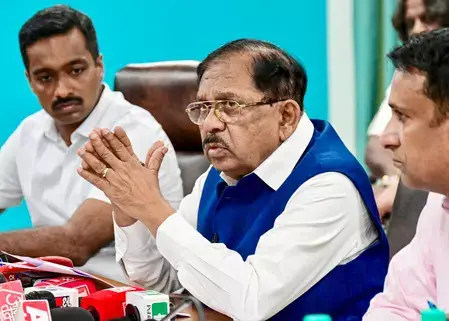
Karnataka Deputy Chief Minister G. Parameshwara addressed reports regarding former Chief Minister Siddaramaiah’s recent visit to New Delhi, stating unequivocally that the trip does not indicate any internal dissatisfaction within the ruling Congress party. Speaking to the media near his residence in Bengaluru on September 11, Parameshwara emphasized that Siddaramaiah’s presence in the capital is consistent with his current role and responsibilities as a prominent member of the party.
Siddaramaiah, who previously served as the Chief Minister of Karnataka, arrived in Delhi on Thursday night. His arrival has sparked considerable discussion within state political circles, particularly among members of the ruling Congress party, leading to speculation about potential rifts or grievances. Parameshwara sought to quell this speculation by characterizing the visit as a routine aspect of Siddaramaiah’s duties as a member of the Congress Working Committee (CWC), the highest decision-making body of the Indian National Congress.
“If he had been unhappy, he would not have resigned from the post of Chief Minister,” Parameshwara asserted, using Siddaramaiah’s past actions as a testament to his loyalty. He reiterated that Siddaramaiah is currently a vital member of the CWC. According to Parameshwara, visiting Delhi is a natural part of the political responsibilities associated with this significant national position. The Deputy Chief Minister advised against attaching any other meaning to the visit beyond its official capacity, urging observers to refrain from creating unnecessary narratives of dissent.
Siddaramaiah's Past Adherence to High Command Directives
Parameshwara recalled that Siddaramaiah had previously maintained that he would abide by the decisions of the party High Command. This adherence to party directives was cited by Parameshwara as the very reason for Siddaramaiah’s resignation from the Chief Minister post in the past. By highlighting this historical context, Parameshwara aimed to demonstrate Siddaramaiah’s consistent loyalty and discipline within the party structure. Parameshwara stated that the chapter regarding Siddaramaiah’s resignation is closed and argued there is no point in discussing the issue repeatedly, implying that past events should not be reinterpreted to fuel current speculation.
Quelling Speculation on Internal Discord
The Deputy Chief Minister’s remarks directly countered the narrative of internal discord that had begun to circulate following Siddaramaiah’s Delhi visit. The political landscape in Karnataka, especially within the ruling coalition, often sees intense scrutiny of leaders’ movements and interactions, leading to quick interpretations of factionalism. Parameshwara’s firm stance aimed to present a united front, dismissing any suggestions that Siddaramaiah’s trip was motivated by personal dissatisfaction or a desire to air grievances with the central leadership. He underscored that such visits are integral to the functioning of a national party and its senior leaders, emphasizing their role in broader party affairs rather than solely state-level politics.
Government Milestones and Leadership Selection
In addition to addressing the controversy surrounding Siddaramaiah, Parameshwara commented on the progress of the current state government. He noted that the administration led by Chief Minister D.K. Shivakumar has successfully completed 100 days in office. This milestone typically serves as an early assessment point for a new government, reflecting on its initial policies and operational effectiveness. Despite this achievement, Parameshwara acknowledged that the government faces several challenges ahead, a common reality for any administration.
He expressed confidence in the administration's ability to handle these issues effectively. “We have several challenges ahead of us. We will face them without losing confidence and continue to provide good governance,” he affirmed, projecting an image of steadfast leadership and determination to the public and party members alike.
Consensus in Apex Bank Presidency
The Deputy Chief Minister also addressed recent developments regarding the election of the Apex Bank President, another matter that could potentially stir internal party dynamics. Parameshwara stated that the party had decided that the position should be filled by an unanimous election, a strategic move aimed at avoiding a contested vote that could expose or exacerbate internal divisions. Consequently, Congress MLC S. Ravi, who is a relative of Chief Minister Shivakumar, was chosen for the post at the final stage, reflecting a concerted effort to achieve consensus.
Parameshwara confirmed that former minister K.N. Rajanna, a close associate of Siddaramaiah, was present at the decisive meeting where the selection was made. Crucially, he stated that the selection was made with Rajanna’s explicit consent. This detail was presented as direct evidence to refute any claims of dissatisfaction or disagreement within Siddaramaiah’s camp regarding the appointment. Based on this information, Parameshwara asserted that there is no question of any dissatisfaction regarding the matter, reinforcing the narrative of party unity.
Addressing reports that the Apex Bank President post had been decided under a 2.5-year–2.5-year power-sharing arrangement, Parameshwara did not confirm the specific terms of such an agreement. Instead, he strategically focused on the consensus reached during the meeting itself. He emphasized that the involvement and consent of key figures, including Rajanna, demonstrated party unity regarding the leadership selection, thereby sidestepping the specifics of any rumored rotational arrangement and highlighting the collective agreement.
Projecting Stability in Karnataka's Congress Leadership
G. Parameshwara’s comprehensive statements served to project an image of stability and unity within the Karnataka Congress, particularly in the wake of Siddaramaiah’s Delhi visit and the Apex Bank leadership selection. By systematically addressing potential points of contention, he aimed to reassure both party cadres and the public that the government and its senior leaders are working in harmony. His emphasis on Siddaramaiah’s adherence to party directives and the unanimous decision-making process for the Apex Bank presidency underscored a commitment to collective leadership and disciplined governance.
The Deputy Chief Minister’s confidence in the Shivakumar-led administration, despite acknowledged challenges, further reinforced the message that the party is focused on delivering good governance rather than being embroiled in internal power struggles. This strategic communication aims to solidify the perception of a cohesive Congress government in Karnataka, capable of navigating political complexities while maintaining a unified front.