

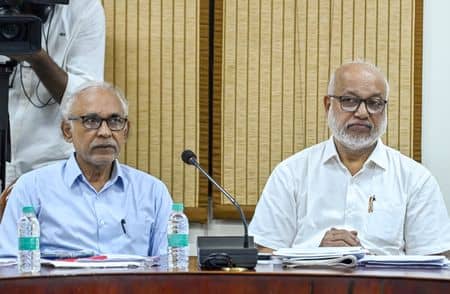

State Committee Meeting Exposes Draft Report Flaws
Thiruvananthapuram, Sep 7 — The Communist Party of India (Marxist) [CPI(M)] state secretariat’s draft report concerning the party’s recent electoral setback faced intense scrutiny during a state committee meeting on Monday. Delegates at the gathering questioned the document's level of candor regarding the organizational and political failures that contributed to the party's defeat, demanding a more forthright and detailed assessment.
The criticism emerged as party members evaluated the preliminary findings before the document is finalized for broader distribution. According to reports from the meeting, delegates expressed significant concern that the draft did not adequately address the specific lapses within the party structure that directly led to the electoral loss. Instead, the report was perceived as offering only general observations.
Delegates reportedly objected to the absence of any specific reference to organizational lapses in the text. They argued that the document failed to acknowledge that the candidate selection process had gone wrong, a factor they deemed critical to understanding the election results and a key area requiring honest introspection. This omission, they contended, undermined the report's credibility as a comprehensive review of the party's performance.
Demands for Specificity on Party Lapses
A central point of contention revolved around the report's perceived lack of concrete detail. Delegates criticized the draft for referring to shortcomings in general terms rather than identifying the specific failures that had contributed to the party’s defeat. This generalized approach, they argued, obscured accountability and prevented a clear understanding of the root causes of the electoral setback.
Further questions were posed regarding whether the findings of the CPI(M) Central Committee were adequately reflected in the draft report. Delegates sought assurance that the state-level assessment aligned with or incorporated the broader analysis conducted by the party's central leadership, suggesting a potential disconnect or an incomplete narrative if these central findings were not present.
The delegates' insistence on specific references to organizational shortcomings and issues within the candidate selection process highlighted a desire for a document that could serve as a genuine roadmap for corrective action, rather than a broad, unspecific overview.
Kannur Delegation Leads Criticism
The pushback against the draft was particularly vocal from the Kannur delegation. Their strong objections, articulated forcefully during the state committee meeting, have reportedly put significant pressure on the party leadership to make the report more comprehensive, candid, and specific before it is finalized for review by a larger group of delegates. The Kannur delegation’s stance underscored the depth of dissatisfaction among certain party sections regarding the initial assessment.
Path to Finalization: The 300-Member Review
The resistance to the current draft comes ahead of a planned 300-member review session for the report. This larger gathering is intended to finalize the document, which will serve as a definitive assessment of the party's performance in recent elections and guide future strategies. The criticisms raised at the state committee meeting indicate that the upcoming session will be a crucial forum for intense debate and potential revisions.
The state secretariat, which authored the initial draft, now faces the challenging task of incorporating the extensive feedback received during the state committee meeting. The delegates' demands for more specific references to organizational and political failures suggest that significant revisions may be necessary to ensure the report gains acceptance and credibility among the broader party cadre. The secretariat's ability to address these concerns will be pivotal for the report's ultimate approval.
As of Monday, the leadership had not issued a formal response detailing how they would address these criticisms or what specific changes might be made to the draft. The focus remains on the upcoming review session, where the draft will be examined by the larger group of 300 delegates for final approval. The outcome of this session will determine the final shape and content of the report, which is expected to be a critical document for the CPI(M)'s future direction in Kerala.