

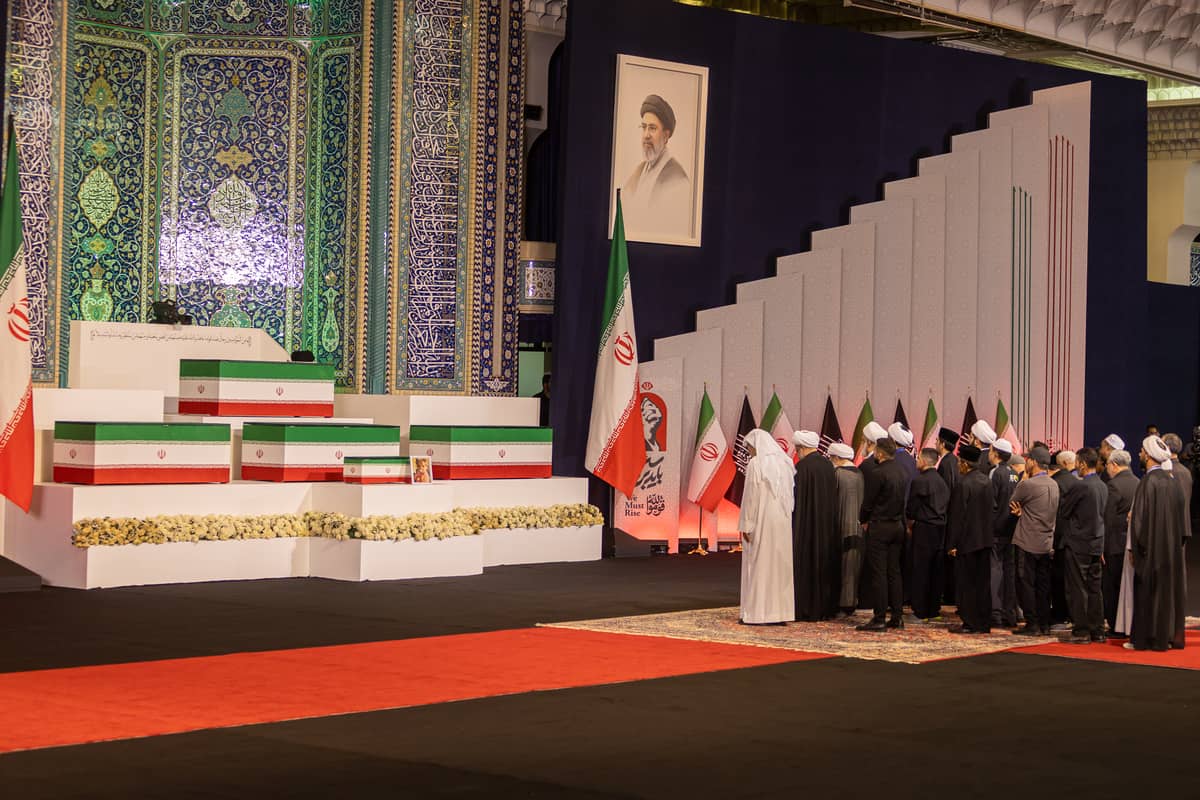

A State Funeral Ceremony Marks the End of Thirty-Six Years
A state funeral ceremony was held for late Iranian Supreme Leader Ayatollah Ali Khamenei at the Imam Khomeini Mosalla Mosque in Tehran on July 3, 2026. This significant event followed reports that Khamenei, who had led Iran for thirty-six years, died during an attack launched by the United States and Israel on February 28 of the same year. His passing, under such circumstances, immediately elevated the funeral from a national religious observance to a focal point of international scrutiny and geopolitical analysis, marking the end of a lengthy and influential era in Iranian leadership.
The funeral procession itself was described by observers as far more than merely a religious rite; it was framed as a profound geopolitical event. A casket draped in black made its slow, solemn procession through Tehran, passing millions of mourners whose chests beat in unison against the late-summer heat. This immense gathering was characterized by specific visual and auditory elements designed to convey a powerful message beyond simple grief. Red fists—the designated symbol for this specific funeral—rose above a sea of bodies clad entirely in black, a stark visual against the backdrop of the city.
The clenched red fists were interpreted by observers not solely as a sign of mourning, but as a potent symbol signifying defiance and resilience. The slogan displayed prominently and chanted during these proceedings was stark and unambiguous: "We must rise." This collective expression, against the backdrop of the reported foreign aggression that led to Khamenei's death, presented the ceremony as a "metaphysical referendum on empire itself" and a "geopolitical manifesto," reflecting a nation's response to perceived external threats and its assertion of sovereignty on the global stage.
Massive Mobilization Across Two Nations
The scope of the mourning event extended far beyond the initial ceremony in Tehran, encompassing five cities across two countries over a period of seven days. Iranian authorities anticipated an unprecedented turnout, expecting between fifteen and twenty million mourners to participate in these proceedings throughout this extended timeframe. This massive mobilization of people across multiple urban centers underscores the profound impact of Khamenei's leadership and the national sentiment following the circumstances of his death. The logistical undertaking alone speaks to the organizational capacity and the deep resonance of the event within the nation, projecting an image of widespread national unity and resolve.
Beyond the domestic outpouring of grief and defiance, diplomatic engagement formed a critical part of the logistical arrangement for the funeral. Delegates from more than one hundred countries were anticipated to attend the various ceremonies, transforming the event into a significant international gathering. This broad diplomatic presence, alongside the millions of public mourners, underscored the immense magnitude assigned by host authorities to the occasion, signaling its importance on a global stage and highlighting Iran's complex network of international relationships and influence.
Iraq's Role in the Geopolitics of Grief
A significant geographical shift in focus occurred as attention turned to a funeral procession taking place within Iraqi territory. This specific segment of the mourning ritual was particularly noted by analysts for highlighting what they described as the "geopolitics of grief." The decision to extend the procession into Iraq, and the subsequent presence of mourners and international delegates in this location, added another critical layer to the international dimensions of the event. It underscored not only the regional influence of the late Supreme Leader but also the complex web of alliances and ideological connections that bind Iran and Iraq, especially in the context of shared religious and political sensitivities. This cross-border procession served as a powerful visual representation of regional solidarity and influence, particularly in the face of reported external aggression and ongoing regional power dynamics.
Symbolism and Defiance in the Wake of Attack
The visual elements and chanted slogans of the funeral served specific, powerful communicative functions within the broader political landscape. The utilization of red fists as a symbol, distinct from standard mourning attire, was clearly intended to convey a message of resilience, defiance, and unwavering resolve in the face of reported foreign aggression. This imagery, coupled with the explicit slogan "We must rise," transformed the mourning ritual into a public declaration of strength and resistance, directly addressing the circumstances of Khamenei's death and projecting a unified front against perceived adversaries.
These symbolic gestures were not lost on international observers. The event has drawn considerable attention from global analysts and media, who characterized it as revealing a world divided along specific lines. Reports indicated that the funeral proceedings were viewed through the critical lens of ongoing geopolitical tensions involving Iran, the United States, and Israel. The scale of the public turnout and the overt messaging of defiance were interpreted as a strong statement from Iran regarding its stance in the regional and international power struggles, particularly in response to the alleged attack by US and Israeli forces that led to the Supreme Leader's demise.
It is important to note that no opposing-party responses or alternative perspectives were available within the provided source context for inclusion in this report. The narrative remains focused on the events as reported by Middle East Monitor and Amwaj Media regarding the state funeral ceremony and its associated processions, emphasizing the Iranian perspective and the international reactions to it.
A Timeline of Confrontation and Commemoration
The sequence of events leading to and encompassing the funeral procession began with a critical incident: the attack launched by US and Israeli forces on February 28, which reportedly resulted in the death of Ayatollah Ali Khamenei. Following this profound incident, preparations for a state funeral commenced, culminating in the main ceremony on July 3, 2026, at the Imam Khomeini Mosalla Mosque in Tehran. This rapid transition from a reported act of aggression to a meticulously organized state funeral highlights the immediate and far-reaching implications of Khamenei's demise, setting the stage for a period of national mourning and international observation.
Subsequent to the initial burial rites and the main ceremony in Tehran, processions occurred across five cities spanning two nations over a period of seven days. This extended period of mourning and public display allowed for widespread participation and reinforced the national and regional significance of the event. The timeline thus illustrates a swift and comprehensive response to a major geopolitical event, combining traditional mourning with a powerful political statement that unfolded over more than a week across key locations.
Global Diplomatic Presence and its Implications
The attendance of delegates from more than one hundred countries at the funeral suggests a high level of diplomatic representation for an event centered on Iranian leadership. This international presence significantly contributed to the characterization of the funeral as having substantial geopolitical weight, extending far beyond its domestic religious significance. It indicated a network of diplomatic ties and alliances, or at least a recognition of Iran's regional and international standing, even amidst heightened tensions and the specific circumstances of Khamenei's death.
Observers noted that the combination of massive crowds, specific symbolic imagery like the red fists, and powerful slogans such as "We must rise" created a complex and compelling picture of national sentiment following the reported foreign attacks. The event served not only as a memorial for the deceased leader but also as a potent and public statement on the current geopolitical realities facing Iran, projecting an image of unity and defiance to the world and signaling its enduring influence despite the loss of its Supreme Leader.