


Kluth's Warning of a Worldwide Munitions Crisis
Andreas Kluth, in a stark assessment published on August 12, 2026, has characterized the ongoing shortage of ammunition within the United States as nothing less than a "global disaster." This significant warning was conveyed through an opinion editorial, attributed to Bloomberg Opinion and disseminated by Arcamax, underscoring the gravity with which the issue is being viewed in influential media circles.
The Nature of the "Global Disaster" Assessment
Kluth's analysis transcends immediate tactical or domestic logistical concerns, instead focusing on the profound geopolitical ramifications stemming from the US military's supply chain vulnerabilities. By labeling the situation a "global disaster," the commentary suggests that the deficit in munitions extends far beyond the immediate operational needs of the United States. It implies a potential erosion of international security dynamics, where the world's foremost military power faces constraints in its ability to project force, support allies, or deter adversaries. This framing positions the ammunition crunch as a critical factor that could reshape global power balances and influence international stability.
The opinion piece, however, does not furnish specific quantitative data regarding the precise volume of the ammunition shortage, nor does it detail a definitive timeline for its onset or projected resolution. This absence of specific metrics is characteristic of an opinion editorial, where the emphasis lies on interpretive analysis and the broader implications of observed trends rather than granular data reporting.
Context of the Opinion Editorial
The publication of Kluth's warning in an opinion editorial on August 12, 2026, distributed by Arcamax and attributed to Bloomberg Opinion, places his commentary within a respected sphere of financial and political analysis. Opinion editorials serve as platforms for expert analysis and informed perspectives, often aiming to influence public discourse and policy debates. The choice of such a platform for this particular warning highlights the perceived urgency and far-reaching implications of the US ammunition shortage, signaling to a wide audience of policymakers, defense strategists, and the general public that this is an issue demanding serious attention.
Strained Leadership Amidst Strategic Challenges
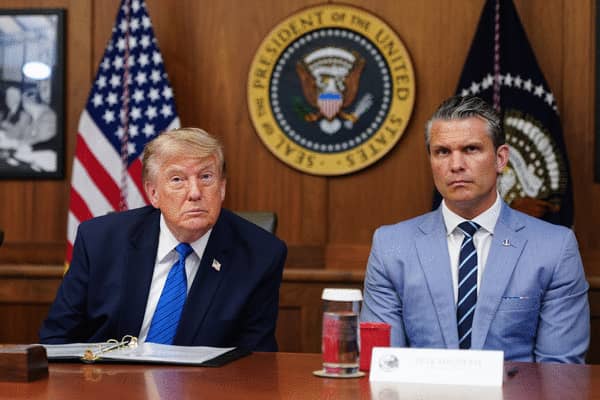
The editorial draws direct connections between the logistical challenges confronting the US military and the prevailing political environment surrounding the Department of Defense. Kluth specifically highlights a notable shift in the tone of communication between President Donald Trump and his Secretary of Defense, Pete Hegseth, indicating a deterioration in their working relationship.
A Shifting Presidential Stance on Defense Leadership
According to Kluth's reporting, President Trump had previously expressed robust support for Secretary Hegseth. The text recounts an instance where the president "cooed" that his secretary of defense "loves war," a statement made in reference to a military conflict initiated by the administration in Iran. This initial portrayal suggested a strong alignment between the President and his Defense Secretary, particularly concerning the aggressive pursuit of military objectives. However, the article indicates a dramatic reversal in this dynamic, with subsequent reports suggesting that President Trump is now "livid" at Hegseth. This shift from public commendation to intense displeasure points to significant internal tensions within the administration's defense leadership, potentially impacting strategic coherence and operational effectiveness.
The "Unwinnable" Conflict and its Political Fallout
The commentary attributes this marked change in political sentiment directly to the perceived outcomes of the military engagement in Iran. Kluth writes that the war appears to be turning out to be "unwinnable," an assessment that serves as a critical contextual backdrop for the discussion on ammunition shortages. This implies that the logistical failures and supply chain issues are not isolated problems but are either contributing to, or are symptomatic of, broader strategic difficulties and a lack of decisive progress in the conflict. The President's reported anger at Hegseth, therefore, is framed as a reaction to the perceived failure of the military campaign, with the ammunition shortage likely playing a role in the operational setbacks.
Connecting Logistical Failures to Global Security
Kluth's analysis meticulously links the operational challenges encountered in the Iranian conflict to the wider, more systemic issue of munitions availability. The narrative suggests that the inability to achieve a decisive victory or bring the conflict to a favorable conclusion is significantly compounded by persistent supply constraints, creating a vicious cycle where strategic goals are undermined by logistical shortcomings.
Operational Hurdles in Iran and Supply Constraints
The situation in Iran, characterized by Kluth as an "unwinnable" war, becomes a tangible example of how a domestic ammunition crunch can translate into critical operational failures on the international stage. The article implies that without adequate and consistent access to munitions, even well-conceived military strategies can falter, leading to prolonged engagements and an inability to achieve strategic objectives. Kluth’s warning frames the ammunition crunch not merely as an unfortunate logistical error or an administrative oversight, but as a critical failure with profound and far-reaching worldwide consequences, impacting the very execution of military policy and the effectiveness of US forces abroad.
Broader Implications for International Stability
The absence of specific responses from Secretary Hegseth, President Trump, or other Department of Defense officials within the provided source material means Kluth's piece remains a singular, albeit influential, opinion. It outlines his perspective on the intricate intersection of political leadership, military strategy, and the integrity of the defense supply chain. The warning of a "global disaster" reverberates with implications for US allies who rely on American military strength, and for adversaries who might perceive an opportunity in perceived US vulnerabilities. The commentary ultimately underscores how a seemingly domestic issue like ammunition supply can profoundly affect the United States' standing, capabilities, and influence on the global stage, making it a matter of international security rather than just national defense.