


White House Summit Amidst Tariff Escalation
Chinese President Xi Jinping held talks with U.S. President Donald Trump at the White House during a state visit, marking the first such visit by a Chinese leader in more than a decade, according to Al Jazeera. The summit took place against the backdrop of an uneasy U.S.-China trade truce, with both nations engaging in tit-for-tat measures that question the stability of their current arrangement, as reported by The New York Times.
During the visit, Trump showcased a remade White House characterized by militarized pageantry and extensive renovations, Reuters stated. A trade deal was extended for two months while talks on a larger agreement continued, according to the agency.
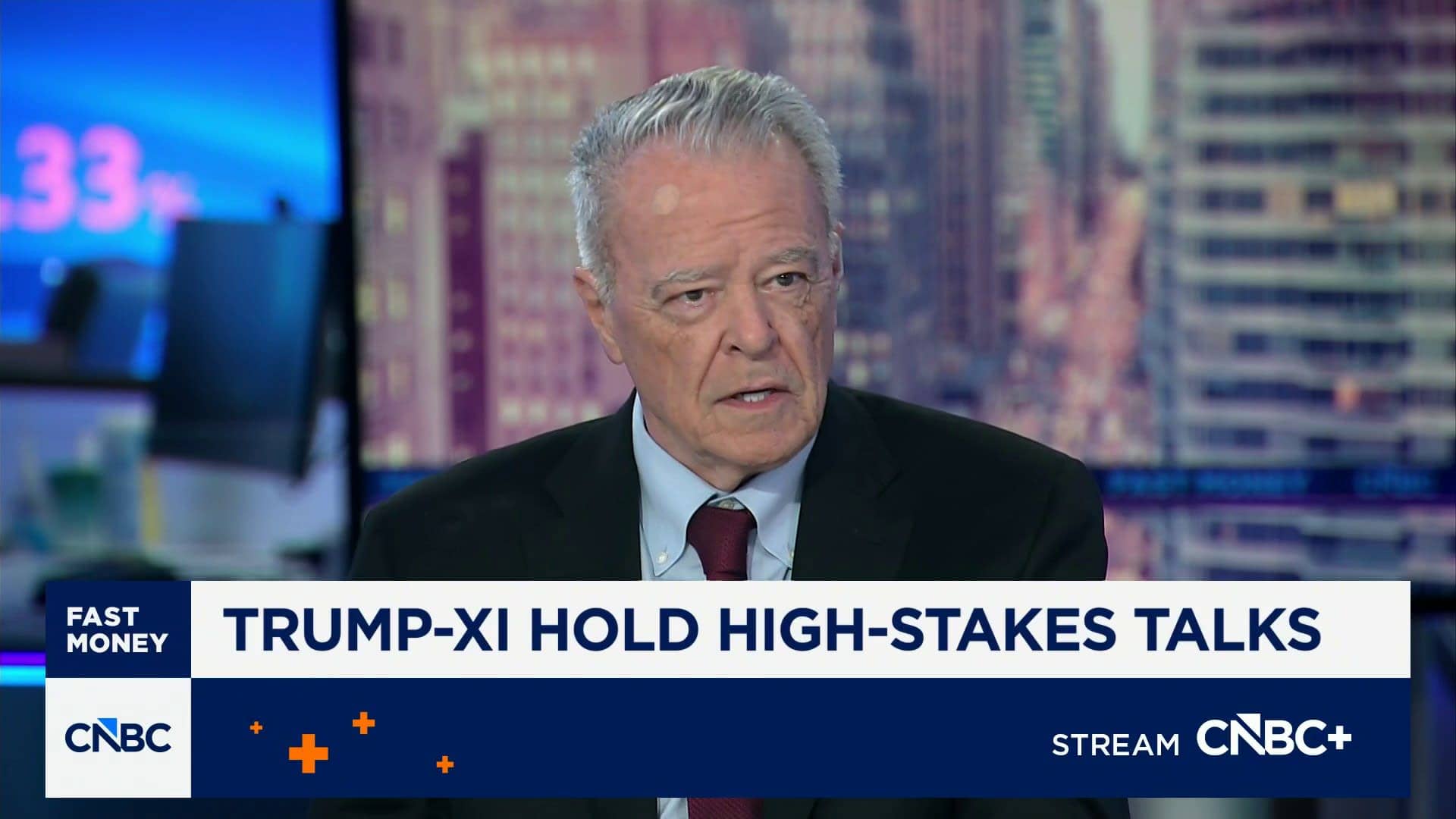
John Rutledge, Safanad Chief Investment Strategist, joined CNBC’s 'Fast Money' on September 24, 2026, to discuss the ongoing talks between the U.S. and China. Rutledge also appeared on 'The Exchange' to address concerns about progress on the trade negotiations and whether a comprehensive deal could be finalized.
Historical Context of Trade War Escalation
The current diplomatic engagement follows a period of intense economic conflict that began after Trump returned to power in 2025. In January 2025, Trump imposed a 10 percent duty on Chinese goods citing fentanyl and immigration concerns. Beijing responded with levies on U.S. coal, LNG, crude oil, and autos, plus curbs on exports of five metals, Al Jazeera reported.
By April 2025, the trade war escalated to 145 percent tariffs on Chinese goods and a 125 percent levy on U.S. imports. The rivals struck a tariff truce after talks in South Korea due to expire on November 10, according to Al Jazeera.
Trump ramped up tariffs on Chinese goods after returning to power in 2025 and imposed curbs on the sale of AI chips to Beijing, Al Jazeera stated. As of July 2026, Chinese goods in the U.S. faced an average tariff rate of 36.5 percent, while U.S. goods entering China were taxed at 31 percent, according to the network.
Specific tariff rates in June 2026 included 73.6 percent for Chinese copper products, 65.2 percent for aluminum products, 50 to 58 percent for iron and steel items, and 44.4 percent for vehicles and auto parts, Al Jazeera stated.
China maintains a 10 percent additional tariff on U.S. imports; specific duties include 20 percent on U.S. crude oil, 25 percent on LNG, 13 percent on soya beans, and up to 77 percent on U.S. beef, according to Al Jazeera.
Economic Shifts and Corporate Exclusion
U.S. trade with China fell sharply in 2025, declining nearly 30 percent compared with the previous year; China registered a $1.2 trillion global trade surplus last year, Al Jazeera reported.
Xi arrived at the summit with China's trade engine roaring, contrasting with Trump's vow in 2025 to use tariffs to address a trade imbalance that was "killing" the United States, U.S. News & World Report stated.
Politico reported that corporate America had high hopes that Trump's plan for a trade forum would give businesses a new way to influence tariff policies, but businesses were 'frozen out' of the channel.
Geopolitical Friction Beyond Tariffs
The U.S. banned imports of humanoid robots produced in China, sanctioned Chinese shipping operators over alleged handling of Iranian fuel, and threatened to sanction Chinese AI firms; Beijing sanctioned U.S. firms and curbed exports of drones and their tech, Al Jazeera reported.
Beijing controls almost 90 percent of global rare earth processing and refining capacity, restricting exports crucial for semiconductor manufacturing and AI, according to Al Jazeera.