



Historical shifts in public transport branding
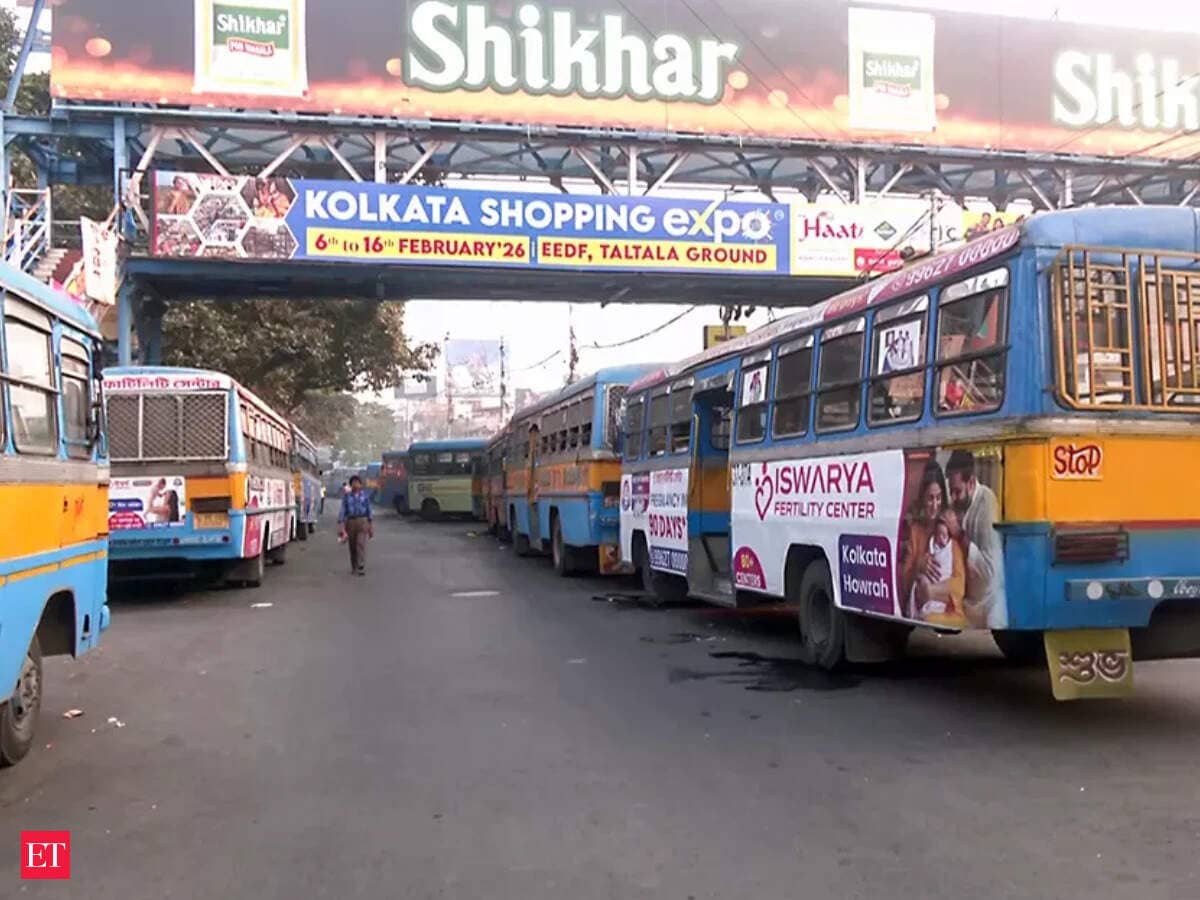
Kolkata's government buses have undergone a distinct colour transformation over recent years, a phenomenon that has drawn considerable public and analytical attention. The vehicles, which once prominently displayed a deep red paintwork, transitioned to a blue-and-white combination under a subsequent administration. Now, under the current leadership, these same public transport routes are being repainted with saffron hues. This sequence of changes is widely observed as a visual chronicle, mirroring the broader political shifts and changes in administrative control within West Bengal.
Each colour scheme has, in its own way, marked a specific period in the state's political landscape, turning the city's public transport fleet into a dynamic canvas reflecting the prevailing political identity. The shift from one dominant colour to another is not merely an aesthetic update but is interpreted by many as a clear indicator of which political entity holds the reins of power, asserting its presence through visible public assets.
Official rationale versus operational concerns
The administration's vision for modernization
The current administration attributes the comprehensive colour change to a modernization initiative. Officials have stated that the repainting effort is part of a broader strategy aimed at updating the visual identity of state-run services. The goal, as articulated by these officials, is to refresh the fleet's appearance and align it with contemporary standards, projecting an image of progress and efficiency. This initiative is presented as a commitment to enhancing the overall passenger experience by improving the aesthetic appeal of the public transport system.
The emphasis on a refreshed visual identity suggests a desire to project a modern, forward-looking image for Kolkata's public services. Such initiatives are often framed as crucial for civic pride and for demonstrating an administration's active engagement in urban development and service improvement, even if the changes are primarily cosmetic.
Critics question resource allocation amid operational challenges
Despite the official rationale, critics have raised significant questions regarding the allocation of resources. They argue that directing funds and effort toward cosmetic improvements, such as repainting an entire bus fleet, may be a misdirection when core operational issues persist. Among the most pressing concerns highlighted by critics are reported staff shortages, which significantly affect daily service delivery across various routes in Kolkata.
These operational challenges extend beyond mere staffing numbers, encompassing issues like driver availability and maintenance delays that lead to reduced service frequency and reliability. Critics contend that the focus on repainting may inadvertently distract from, or even deprioritize, resolving these fundamental challenges. They suggest that resources could be more effectively utilized to address the root causes of service disruptions, thereby delivering tangible improvements to commuters rather than purely aesthetic updates.
Public expectations for substantive reform
Commuters prioritize service over symbolism
For the thousands of daily commuters who rely on Kolkata's public transport network, the symbolic colour changes often take a backseat to more practical considerations. Riders have consistently expressed a strong preference for improvements in service frequency and reliability. These factors directly impact their daily lives, influencing travel times, punctuality, and overall convenience. An unreliable or infrequent service can lead to significant disruptions for workers, students, and other city residents, making these operational aspects paramount in their view.
Commuters hope that the extensive repainting initiative signals deeper, more substantive investments into the public transport infrastructure. They look for evidence of improvements in vehicle maintenance, ensuring a safer and more comfortable journey, and better workforce management, which could alleviate staff shortages and improve service regularity. The public's expectation is that these visual changes are not merely aesthetic gestures but are indicative of a broader commitment to enhancing the efficiency and dependability of the city's bus services.
Political symbolism of bus livery
Buses as political canvases
The changing colours of Kolkata's government buses are interpreted by many analysts and observers as a potent reflection of the shifting political landscape in West Bengal. Public transport vehicles, being highly visible and ubiquitous elements of urban life, serve as prominent canvases for political expression and identity. The transition from the historically prevalent red to the blue-and-white combination, and now to saffron, is seen as a clear visual representation of which political party or coalition holds administrative control at any given time.
This practice transforms the city's bus fleet into a dynamic, moving billboard that subtly communicates the prevailing political ethos. Each colour scheme becomes a visual marker of an era, allowing administrations to imprint their identity onto public assets. This symbolic act goes beyond mere branding; it is often perceived as an assertion of authority and a public declaration of the current political order, reinforcing the connection between governance and the visual environment of the city.