


Roots of Solidarity Between Pristina and Kyiv
Following Russia's full-scale invasion of Ukraine, Kosovo immediately declared its support for Kyiv. According to an opinion article published in The Jerusalem Post on August 10, 2026, this alignment was not based on abstract geopolitical calculations but on direct historical parallels experienced by the Kosovar population.
Arbana Xharrar, the author of the piece, wrote that for Kosovars, the suffering observed in Ukraine was neither distant nor abstract. The article states that Kosovo embraced Ukraine strongly because its citizens understand the reality of watching civilians flee their homes. This perspective is rooted in a shared historical context where families have been uprooted and communities have faced terror.
Xharrar noted that both nations share the experience of a smaller people dealing with military force from a more powerful neighbor while that neighbor claims the territory of another people. The author emphasized that Kosovo’s position reflects a reliance on the democratic world to intervene when diplomatic efforts fail. This dependence on international democratic support is cited as a core reason for the strong political and emotional alignment between Pristina and Kyiv.
Characterization of Zelensky’s Diplomatic Remarks
The opinion piece published in The Jerusalem Post characterizes President Volodymyr Zelensky’s remarks made in Belgrade as a "painful betrayal" of the solidarity shown by Kosovo. The article argues that this diplomatic stance contradicts the mutual understanding and shared history that had previously bound the two nations.
The author, Arbana Xharrar, frames these remarks as a direct contradiction to the support Kosovo provided during the initial stages of the conflict. The piece suggests that the actions or words of the Ukrainian leadership in the Serbian capital undermined the trust established through their shared narratives of displacement and resistance against larger military powers.
Publication Context and Author Perspective
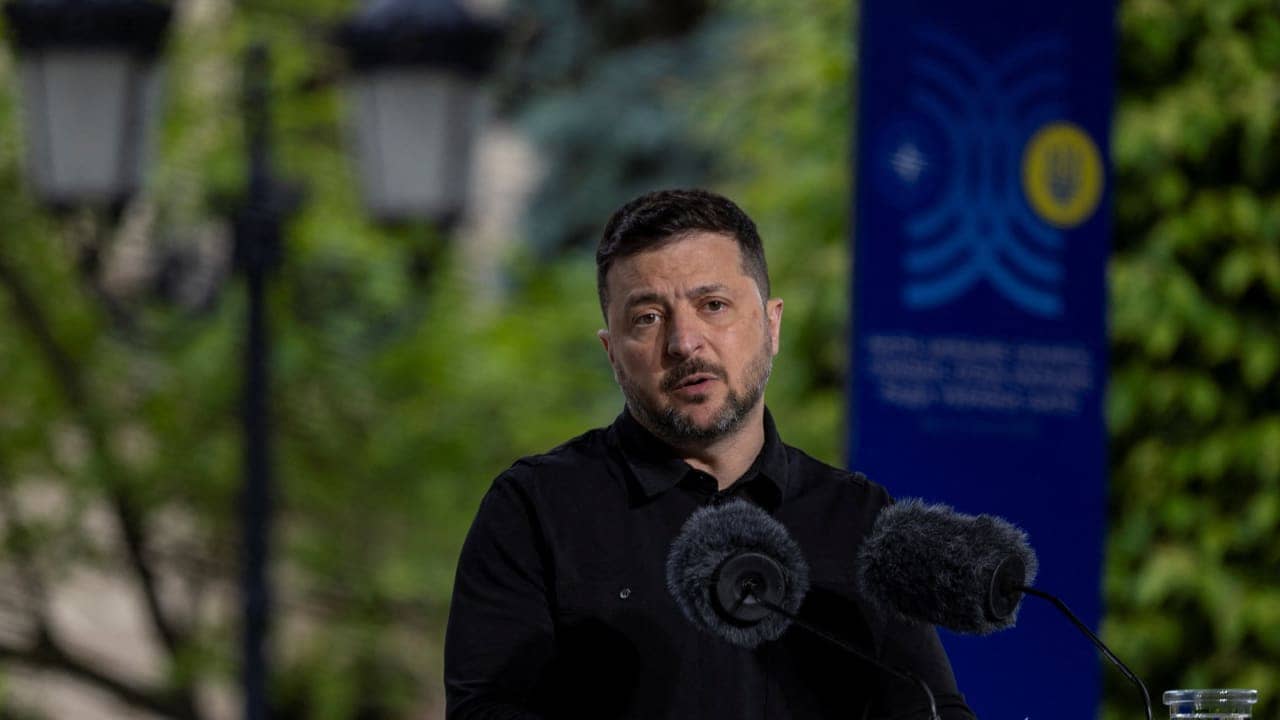
The article was published on August 10, 2026, under the opinion section of The Jerusalem Post. It includes a photograph credited to Reuters photographer Thomas Peter, showing Ukrainian President Volodymyr Zelenskiy speaking during a joint press conference with NATO Secretary General Mark Rutte in Kyiv on June 3, 2026.
The text highlights the specific date of Russia's full-scale invasion as the moment Kosovo determined its side. The author uses the first-person plural "we" to describe the collective Kosovar experience, stating that citizens know what it means to see families uprooted and communities terrorized. This narrative is used to justify the expectation of unwavering support from Ukraine.
The opinion piece does not provide a direct response from President Zelensky or the Ukrainian government regarding these specific remarks in Belgrade. Instead, it focuses on the perspective of the Kosovar public as interpreted by the author. The article asserts that the betrayal felt by Kosovo stems from the contrast between their historical suffering and the perceived lack of reciprocal recognition in current diplomatic engagements.
Xharrar’s commentary serves to document the sentiment within Kosovo that views Ukraine's actions or statements in Belgrade as a significant departure from the solidarity expected given their common history. The piece remains an expression of opinion rather than a report on verified diplomatic outcomes, focusing on the emotional and historical disconnect perceived by the author.