

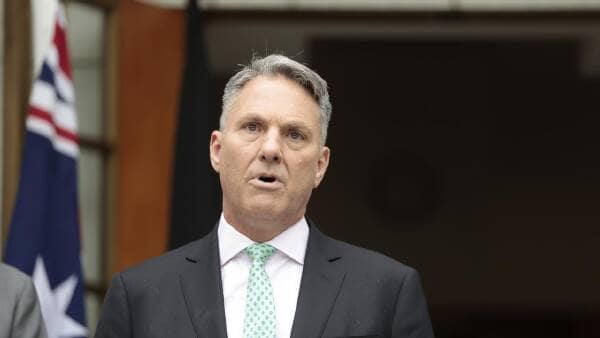

Marles Cites Security Risks of Concentrated Infrastructure
Australian senior ministers have pushed back against US President Donald Trump’s proposal to impose a "tremendous tax" on American companies constructing data centers outside the United States, according to the Blue Mountains Gazette. Deputy Prime Minister Richard Marles argued that concentrating all artificial intelligence infrastructure within US borders creates significant security vulnerabilities.
Trump issued the warning upon his return from the APEC summit in China, where tensions regarding "super intelligence" between Washington and Beijing were prominent. While Trump did not provide specific details on the tax structure, he stated the US would "fight very hard for the data centres" to prevent China from winning the AI development race.
Marles told ABC’s Insiders that maintaining redundancy beyond US borders is in America's best interest. He noted that Australia has a significant role to play in this internationalized AI infrastructure, countering the notion that all such facilities should remain domestic.
Alignment With International Tech Declarations
The Australian government’s stance aligns with the "pax silica" declaration signed in December 2025 by the US, Australia, the European Union, and 24 other countries. The agreement excludes China and calls on signatories to reduce excessive dependencies while building a trustworthy supply chain for technology.
Marles linked the push for internationalized infrastructure directly to this framework, suggesting that spreading data centers across allied nations supports the goals of reducing reliance on any single geopolitical bloc.
Domestic Security and Regulatory Concerns
Within Australia, officials are balancing the benefits of foreign investment with national security risks. Home Affairs Minister Tony Burke emphasized that onshore capability can become a magnet for foreign interference, stressing the need for careful oversight of ownership structures.
Burke stated there is a national security interest in having data centers in Australia and noted that cooperation between the US and Australia benefits both countries. This perspective contrasts with concerns raised by Australian Security Intelligence Organisation (ASIO) director-general Mike Burgess, who warned that data centers are equal parts "hype, opportunity and threat," noting foreign powers could use the infrastructure to control sensitive technology.
Environmental and Regulatory Landscape
Public opinion regarding data center expansion is shifting due to environmental concerns. A recent report indicated that nine proposed data centers could produce as much pollution as Australia’s three dirtiest coal-fired power stations if renewable energy requirements are not enforced.
In response to these complexities, Labor is considering national regulations for data center development. Draft legislation is expected before the end of the year to address both security and environmental impacts.