


Lincolnshire MP Raises Alarm Over Reduced Councillor Numbers
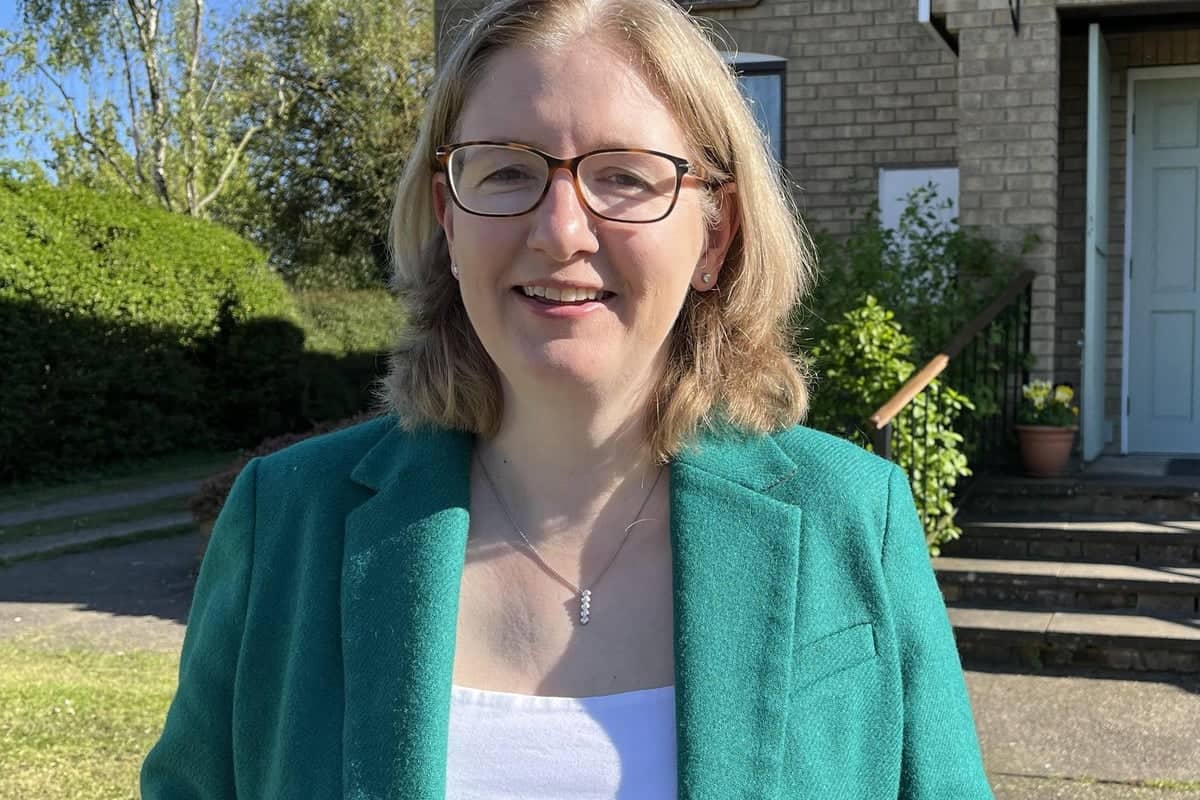
Dr. Caroline Johnson, the Conservative Member of Parliament for Sleaford and North Hykeham, has publicly voiced strong criticism against a proposal to establish a scaled-down local government authority in Lincolnshire. Her primary concern revolves around the suggested reduction in the number of elected representatives, which she argues fundamentally undermines the "principle of democracy" and carries a significant risk of leaving certain communities inadequately represented within the new council structure.
The MP's opposition specifically targets a suggestion put forward by leaders of the City of Lincoln Council to the UK Government. This proposal advocates for the creation of a new local authority comprising 47 councillors. This figure represents a notable decrease from an earlier proposition by the same city council, which had initially called for 65 councillors to serve in the newly formed body. Dr. Johnson views this reduction as a critical flaw, asserting that a smaller council size would inevitably lead to some areas being "less well represented" than others, thereby compromising the democratic voice of constituents.
Dr. Johnson's Democratic Concerns for Sleaford and North Hykeham
In her detailed assessment, Dr. Johnson emphasized that the proposed reduction from 65 to 47 councillors is not merely a numerical adjustment but a significant shift with profound democratic implications. For the MP, the "principle of democracy" dictates that citizens should have accessible and effective representation, ensuring their local concerns and interests are directly heard and addressed by elected officials. A smaller pool of representatives, she contends, would necessitate larger electoral wards, potentially diluting the connection between councillors and the specific communities they serve.
The MP for Sleaford and North Hykeham highlighted that this disparity in representation could negatively impact the ability of residents across different parts of the region, including her own constituency, to have their interests effectively championed. She argues that fewer councillors could strain the capacity for individual engagement, making it more challenging for constituents to reach their representatives and for councillors to gain a deep, localized understanding of the diverse needs within their expanded areas. This, in her view, constitutes a direct challenge to the foundational tenets of local democratic accountability.
City Council's Rationale for a Streamlined Authority
In response to Dr. Johnson's criticisms, leaders within the City of Lincoln Council have firmly rejected the characterization that their proposal would lead to underrepresentation. They maintain that a council composed of 47 members is not only sufficient but also optimally designed to ensure the new authority accurately reflects and effectively serves the needs of its diverse communities.
According to city officials, the proposed structure aims for a more targeted and responsive governance model. They argue that a streamlined body can operate with greater efficiency, making decisions more swiftly and allocating resources more effectively without the potential for bureaucratic inertia that might accompany a larger council. The council leaders deny that the reduction in headcount would diminish democratic oversight; instead, they suggest it would foster a more focused approach to local governance, where each councillor has a clear mandate and a manageable portfolio, aligning more closely with local requirements rather than simply maintaining a larger number of seats for its own sake.
This divergence in perspective underscores a fundamental debate between the national parliamentary representative for the region and the local municipal leadership. While Dr. Johnson prioritizes the quantitative aspect of representation and direct access as central to democratic principles, city leaders emphasize the qualitative alignment with community needs and the efficiency of a more compact governing body.
Government Mandates Extended Lincoln Council Structure
Amidst the ongoing local debate over the appropriate number of councillors, the UK Government has proceeded with its overarching decision regarding the administrative structure of the area. Officials have confirmed that the government has decided to create an extended Lincoln council, marking a significant step in the broader local government reorganization within Lincolnshire.
The government's decision to establish an extended council implies a broadening of the authority’s responsibilities and potentially its geographical scope. This move is typically aimed at enhancing administrative efficiency, streamlining public services, and fostering more cohesive regional planning. Such reorganizations often seek to create larger, more resilient local authorities capable of addressing complex challenges and delivering services more effectively across a wider area.
This directive from the government stands distinct from, yet is directly relevant to, the specific proposals put forth by the City of Lincoln Council regarding councillor numbers. While the city council had suggested varying figures—first 65, then 47—the government's decision focuses on the extension of the council’s existing framework. The final composition of the new authority, particularly the number of elected representatives, will therefore need to reconcile the city council's suggestions with the government's broader mandate for an extended structure.
Navigating Local Governance Reform and Representation
The situation highlights the inherent complexities of local government reform, where the drive for administrative efficiency and broader strategic planning must be carefully balanced with the imperative of maintaining robust democratic representation. Dr. Johnson's criticism remains steadfastly focused on the implications of the scaled-down representative count proposed by the city council, asserting that a smaller number inherently compromises democratic principles, irrespective of the government’s broader decision to extend the council’s powers or reach.
The creation of an extended council, while aiming for improved service delivery and strategic coherence, simultaneously intensifies the discussion around how to ensure adequate local voice within a potentially larger and more complex administrative entity. The debate between Dr. Johnson and the City of Lincoln Council leaders reflects a tension common in local government reforms: how to achieve efficiency and scale without sacrificing the close-knit, localized representation that many believe is fundamental to effective democracy.
As the government moves forward with implementing its decision for an extended Lincoln council, the precise mechanisms for ensuring equitable representation within this new framework will be crucial. The final structure will need to address both the administrative requirements of an extended authority and the democratic concerns raised by elected representatives like Dr. Johnson, ensuring that communities across Sleaford, North Hykeham, and surrounding areas feel adequately represented and heard in the evolving landscape of local governance.