

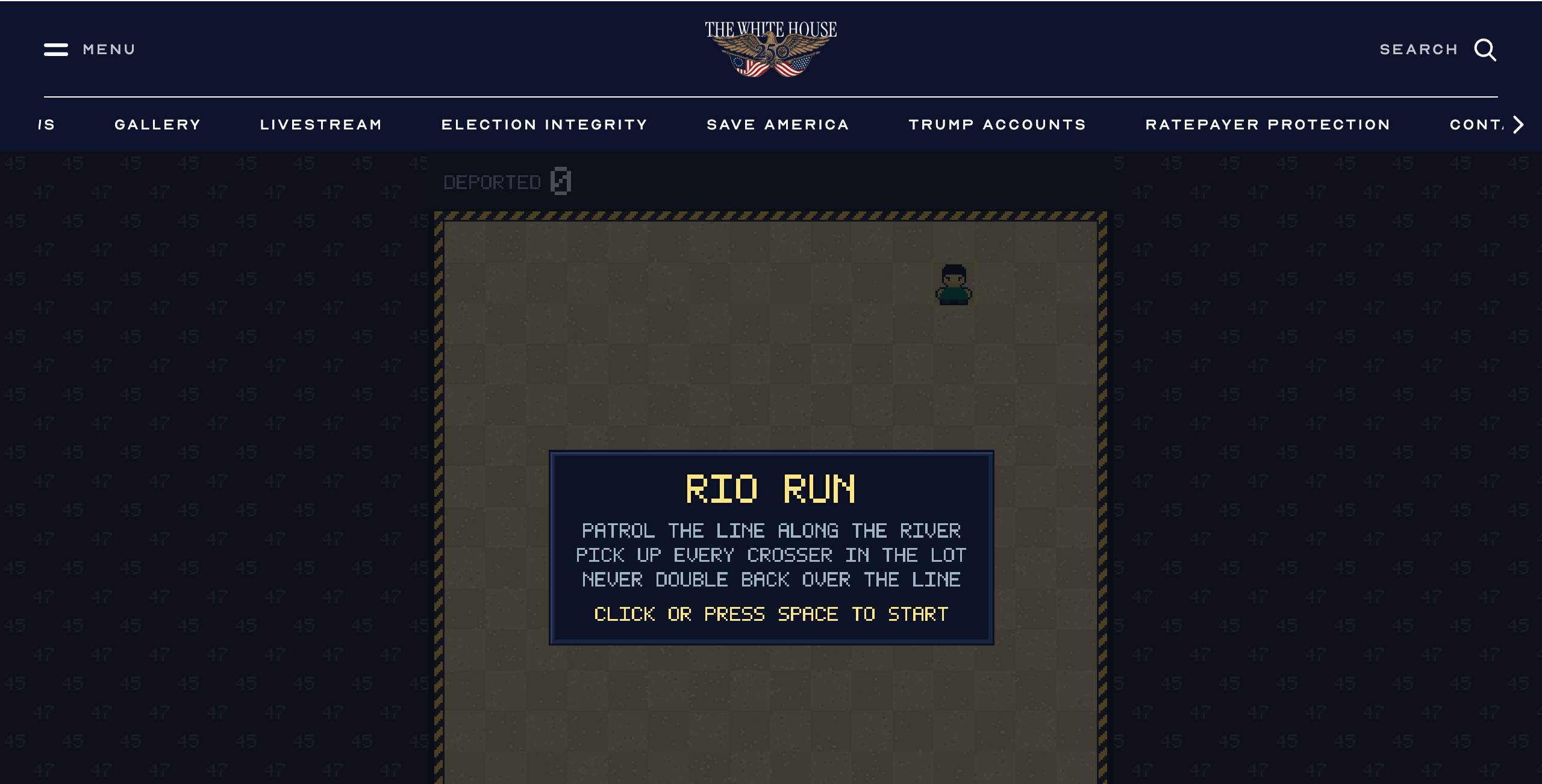

Launch of Interactive Policy Tools on Official Site
In September 2026, the official White House website introduced a series of interactive digital tools designed to engage visitors with the administration’s legislative and policy priorities. The feature included five retro-style arcade games that were integrated directly into the site’s interface. According to reports from Newsone, these games were created to promote President Donald Trump’s policies to a broader audience through gamified content.
The launch occurred on a Thursday in early September, marking a distinct departure from traditional government communication methods. The administration utilized the platform to highlight specific policy goals, using the arcade format to draw attention to its agenda items. The games were accessible via the main navigation of the White House website, making them prominently available to any visitor to the domain.
Immigration-Focused Gameplay and Policy Themes
Among the five games released, several focused heavily on immigration enforcement and border security, themes central to the Trump administration’s platform. One specific game allowed players to assume the role of a digital Immigration and Customs Enforcement (ICE) agent. The objective within this game involved capturing individuals identified as “illegals,” directly mirroring real-world deportation operations.
Another title featured mechanics centered around the construction of barriers, referencing the campaign slogan “build that wall.” These games served as interactive representations of the administration’s anti-immigrant agenda. By allowing users to participate in these scenarios, the White House website provided a simulated experience of the policies it was implementing or advocating for.
Critical Reception and Political Commentary
The presence of these games on the official government site drew immediate criticism from commentators who viewed the content as inappropriate and divisive. Zack Linly, writing an opinion piece for Newsone published on September 4, 2026, described the initiative as “8-bit white supremacy.” Linly argued that the administration was attempting to make the Trump presidency appear appealing or “cool” through nostalgic gaming aesthetics.
Linly’s commentary characterized the creators of the games with harsh language, suggesting they were motivated by a desire to appeal to specific political demographics. The author stated that the games allowed players to act as digital agents of immigration enforcement, thereby celebrating an anti-immigrant agenda. Linly questioned who was responsible for the website’s content, implying that the decision-makers were out of touch with mainstream sensibilities.
Scope of the Arcade Collection
The total collection consisted of five distinct games. While immigration enforcement was a primary focus, the broader suite of games was designed to cover various aspects of President Donald Trump’s policy agenda. The use of retro arcade graphics and mechanics was intended to evoke nostalgia while delivering political messaging.
Newsone reported that the website celebrated these policies through the interactive format. The administration did not issue a separate press release detailing the educational or informational intent of the games, but rather made them available for public interaction on the site. The move highlighted the administration’s willingness to use unconventional digital media to communicate its political goals.
Public Reaction and Digital Strategy
The decision to host these games on the White House website was part of a broader digital strategy to engage younger demographics or those familiar with video game culture. However, critics argued that the content crossed lines of government neutrality. Linly noted that the games made the administration appear as if it were composed of “maladjusted” individuals who missed their youth.
The controversy surrounding the arcade games underscored the polarizing nature of the Trump administration’s communication tactics. By placing pro-ICE and anti-immigrant themes into a game format, the White House website became a focal point for debate regarding the appropriate use of government digital platforms. The games remained available on the site as part of its content offerings during this period.
Details of the Game Mechanics
The specific mechanics of the games varied, but they all shared a common theme of supporting the administration’s political objectives. Players could engage in scenarios that required them to enforce immigration laws or construct border walls. These interactions were designed to be simple and accessible, typical of retro arcade titles.
The integration of these games into the official White House website demonstrated a unique approach to policy promotion. Rather than using traditional press briefings or social media posts alone, the administration utilized interactive software to immerse users in its political narrative. This method allowed for direct participation in the themes of immigration enforcement and border security.
Timeline of the Initiative
The games were unveiled on a Thursday in September 2026. Prior to this date, the White House website had not featured such interactive entertainment content. The launch was simultaneous across the site’s interface, ensuring that visitors would encounter the games upon navigation.
The timing of the release coincided with ongoing political debates regarding immigration policy. By highlighting these issues through gaming, the administration sought to keep its agenda at the forefront of public discourse. The five games served as digital ambassadors for the Trump administration’s priorities during this period.