


Datia By-Election Loss Spurs Intense BJP Activity
Political activity within the Bharatiya Janata Party (BJP) in Madhya Pradesh has intensified significantly in the wake of the party’s recent defeat in the Datia by-election. This electoral setback has triggered a wave of high-level consultations, drawing the attention of both state and central party leadership. The defeat in Datia, a constituency that holds symbolic importance, appears to have prompted an urgent reassessment of the party's strategies and internal dynamics within the state unit. The rapid succession of meetings between senior state leaders and top national figures underscores the gravity with which the central command views the situation, indicating a proactive approach to understand and address the underlying issues that may have contributed to the electoral outcome.
The immediate aftermath of the Datia by-election has seen a flurry of engagements, signaling a period of introspection and strategic planning for the BJP in Madhya Pradesh. These discussions are not merely routine consultations but are widely perceived as a direct response to the by-election results, aiming to gather comprehensive feedback and formulate a robust path forward. The focus of this political stir has centered on a series of high-level meetings between state leadership and the central command, highlighting the party's commitment to maintaining its strong presence in the crucial state of Madhya Pradesh.
Assembly Speaker Becomes Third Senior Leader to Meet PM Modi
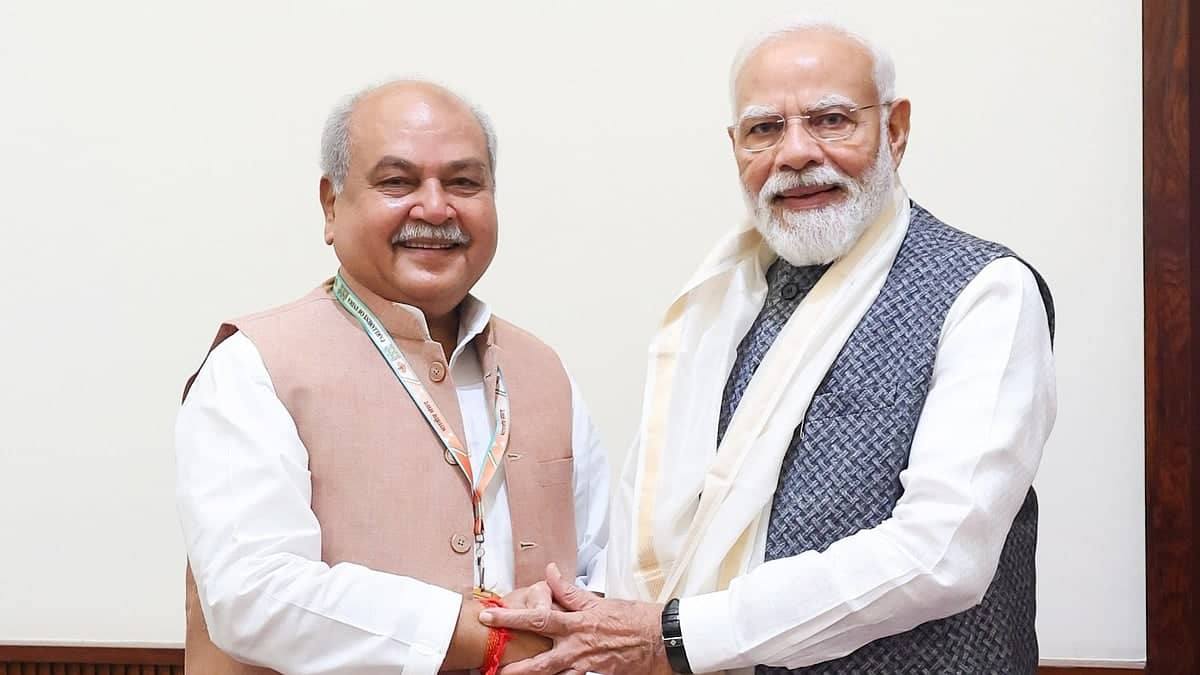
The intensity of these consultations was particularly evident this week, as Assembly Speaker Narendra Singh Tomar became the third senior leader from Madhya Pradesh to meet Prime Minister Narendra Modi within a single week. This direct engagement with the head of government and the party's most prominent figure signifies the high priority being accorded to the developments in the state. Tomar's meeting with the Prime Minister followed comparable engagements by two other influential figures: Union Minister Shivraj Singh Chouhan and former state unit president VD Sharma. The fact that three such prominent state leaders met with the Prime Minister in quick succession has not gone unnoticed by political observers.
These sequential interactions with Prime Minister Modi have drawn considerable attention as the party assesses the implications of the recent electoral setback in Datia. Such direct access to the Prime Minister for multiple state leaders suggests a deep concern at the highest echelons of the BJP regarding the state of affairs in Madhya Pradesh. The timing and frequency of these meetings have led to widespread speculation regarding the future direction of state politics, potential adjustments in party strategy, and internal party dynamics, particularly concerning leadership and coordination within the state unit.
State Leadership Engages Top National Officials
In addition to the critical meetings with Prime Minister Modi, other key figures from the Madhya Pradesh BJP are engaging with national leadership across various portfolios. Chief Minister Mohan Yadav, who leads the state government, has held discussions with BJP national president Nitin Nabin and national organisational secretary BL Santosh. These interactions are being viewed as part of a broader, multi-faceted effort to gather comprehensive feedback and assess the situation following the Datia loss. The involvement of the national president and the organisational secretary indicates a focus not just on governmental performance but also on the party's grassroots machinery and organizational strength.
Further underscoring the breadth of these high-level consultations, Urban Development Minister Kailash Vijayvargiya also participated by meeting with Union Home Minister Amit Shah. The convergence of multiple senior state leaders with top national officials, including the Prime Minister, the National President, the National Organisational Secretary, and the Union Home Minister, paints a clear picture of the central leadership's active and comprehensive monitoring of the situation on the ground in Madhya Pradesh. This extensive engagement fuels speculation about potential shifts in strategy or personnel within the state unit, as the central command seeks to understand all facets of the recent electoral performance.
Expert Insights on Intra-Party Coordination
Political experts have pointed to organizational challenges as a significant contributing factor to the Datia by-election defeat. According to these experts, a perceived lack of coordination among state BJP leaders may have played a crucial role in the outcome of the election. This assessment has added considerable weight to the current wave of meetings, as the party seeks to address perceived gaps in its operational framework and ensure greater synergy among its functionaries and elected representatives.
The observations regarding coordination issues highlight a critical area of focus for the central leadership. Effective coordination is often seen as paramount for successful electoral campaigns, ensuring that party messaging is consistent, resources are optimally utilized, and ground-level efforts are harmonized. Against this backdrop, the party's central leadership has reportedly started taking feedback from various stakeholders, including those directly involved in the Datia campaign and other senior members. The goal appears to be a thorough understanding of the specific factors that led to the loss and a determination of how to prevent similar outcomes in future electoral contests by improving internal cohesion and strategic alignment. The meetings are thus seen as a vital mechanism for the central command to gather insights directly from those involved in state-level administration and politics, facilitating a data-driven approach to problem-solving.
Future Political Landscape in Madhya Pradesh
The series of meetings has not only highlighted the immediate response to the Datia defeat but also raised pertinent questions about the broader political landscape in Madhya Pradesh. With multiple senior leaders engaging with national heads, observers are watching closely for any signs of policy changes, strategic recalibrations, or leadership adjustments within the state unit. The comprehensive nature of these discussions suggests that the central leadership is evaluating all aspects of the party's functioning in the state.
The involvement of key figures such as Assembly Speaker Tomar, Chief Minister Yadav, Union Minister Chouhan, former state unit president Sharma, and Urban Development Minister Vijayvargiya indicates that the issue is being treated with the highest priority by both state and central units of the party. The rapid succession and high-level nature of these meetings suggest an urgent need to align strategies, address internal concerns, and reinforce party unity before further electoral challenges arise. As the feedback process continues, the BJP’s central leadership is expected to meticulously review the inputs gathered from these extensive interactions. The outcomes of these discussions may significantly influence future decisions regarding state governance, party management, and electoral preparedness in Madhya Pradesh, shaping the political trajectory of the state in the coming months.