


Diplomatic Coordination on Regional Air Quality
Malaysia and Brunei have formally agreed to raise the critical issue of transboundary haze pollution at the upcoming Association of Southeast Asian Nations (ASEAN) Summit. This significant decision underscores a concerted effort to address the persistent problem of smoke drifting across international borders, which has repeatedly and severely impacted air quality in both nations, as well as the broader Southeast Asian region.
The agreement was solidified during a recent working visit by Malaysian Prime Minister Anwar Ibrahim to Bandar Seri Begawan, the capital of Brunei. This annual cooperation meeting provided a crucial platform for the leaders to engage in substantive discussions, focusing on strategies to mitigate the pervasive effects of wildfires primarily located in Indonesia. These fires are consistently identified as the principal source of the cross-border smoke that has plagued the region for years.
Utilizing Regional Mechanisms for a Lasting Solution
Prime Minister Anwar Ibrahim and the Sultan of Brunei have expressed their firm intent to utilize “the ASEAN mechanism” as their primary tool for seeking a comprehensive and sustainable solution to the recurring haze crisis. This approach signifies a commitment to leveraging existing regional frameworks and diplomatic channels to foster a more effective and coordinated response among member states.
The leaders' aim is to move beyond ad-hoc responses and establish a robust, coordinated strategy through the established ASEAN platform. By elevating the issue to the summit level, both Malaysia and Brunei hope to exert collective pressure on Indonesia. The objective is to encourage stricter enforcement of fire prevention measures, particularly on vulnerable peatlands and forest areas, which are often the ignition points for these devastating wildfires. This diplomatic push seeks to ensure that a definitive and sustainable resolution is found for a problem that has historically been difficult to resolve due to its complex transboundary origins and socio-economic factors.
Impact on Local Air Quality and Public Health
The urgency driving this joint diplomatic initiative is profoundly underscored by the current environmental conditions and public health concerns in Malaysia. Authorities in Malaysia have issued explicit warnings regarding the significantly high levels of air pollution, directly attributing them to the regional wildfires. The pervasive, thick smoke has been visibly present across major urban centers, disrupting daily life, impacting various sectors, and posing considerable risks to public health.
Visual Evidence of Widespread Pollution
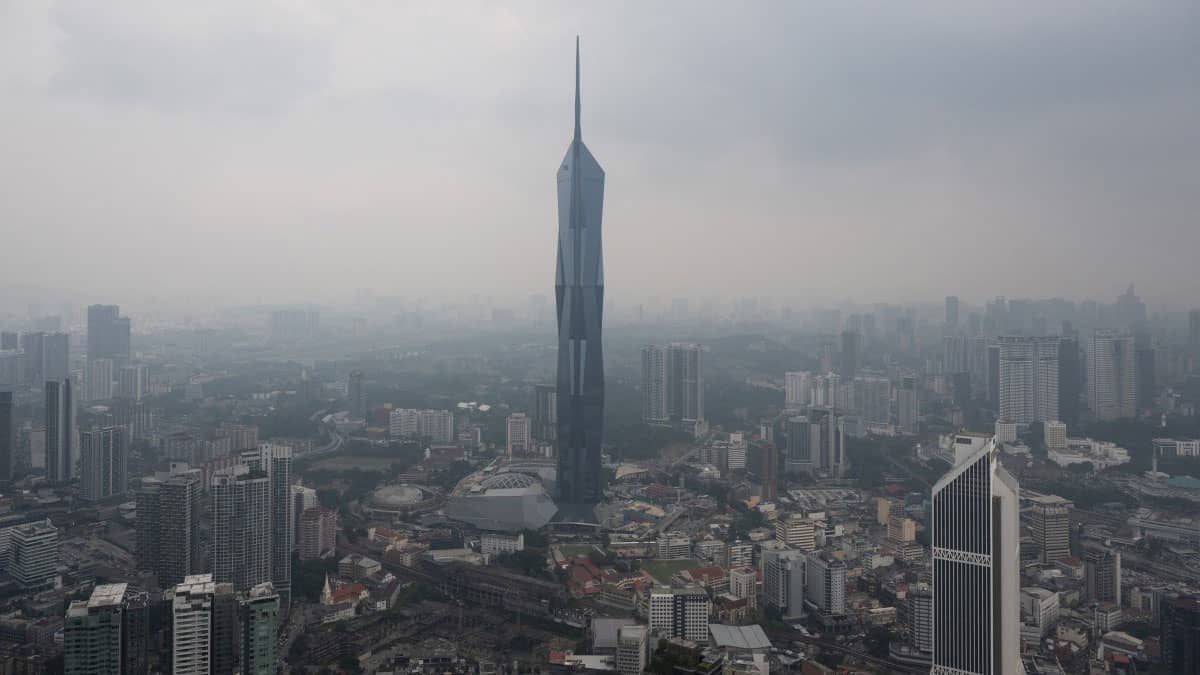
Compelling photographic evidence captured on August 11, 2026, vividly illustrates the severity of the situation, showing prominent commercial buildings in Kuala Lumpur almost entirely obscured by the dense haze. Among the most recognizable landmarks enveloped by the smog was the Warisan Merdeka Tower, also known as KL118, a testament to the widespread nature of the air quality degradation. These impactful images, provided by the Associated Press (AFP), serve as a stark visual record of the immediate and tangible effects of the pollution.
The transboundary haze is directly linked to extensive forest and peatland fires occurring in Indonesia. As these fires burn, they release vast quantities of smoke and particulate matter that are carried by prevailing winds across international borders, significantly affecting neighboring countries, most notably Malaysia and Brunei. This inherently transboundary nature of the pollution necessitates a unified and joint diplomatic response from all affected nations, highlighting the interconnectedness of environmental challenges within the ASEAN region.
Timeline and Diplomatic Context
The formal agreement between Malaysia and Brunei to address the persistent haze problem at the ASEAN level was finalized over the weekend preceding the August 25, 2026, report by The Jakarta Post. This timing is consistent with the established schedule of annual cooperation meetings between Malaysia and Brunei, which serve as a regular and vital forum for discussing a wide array of bilateral and regional issues, from economic collaboration to shared environmental concerns.
Prime Minister Anwar Ibrahim's recent visit to Bandar Seri Begawan was specifically designated as a "working visit." This classification indicates a clear focus on substantive policy discussions and the advancement of strategic agendas, rather than purely ceremonial duties. The tangible outcome of these high-level talks is the formal commitment to bring the critical haze issue before the broader ASEAN community, seeking a collective and institutionalized approach to a long-standing regional challenge.
Regional Implications of a Joint Stance
The active involvement of Brunei alongside Malaysia in this diplomatic push highlights the widespread and indiscriminate impact of the Indonesian wildfires across the region. Both nations are experiencing direct and adverse effects from the drifting smoke, prompting them to act in concert to amplify their concerns. The explicit intention to utilize "the ASEAN mechanism" suggests a strategic effort to institutionalize the regional response to transboundary haze, moving beyond previous ad-hoc bilateral complaints towards a more structured, multilateral, and proactive approach.
As the ASEAN Summit draws closer, the unified stance of Malaysia and Brunei is anticipated to be a central topic of discussion. The leaders' overarching goal is to find a definitive and lasting solution to this recurring environmental problem, which has historically proven challenging to resolve due to its complex origins and the need for sustained, cooperative action across multiple sovereign states. Their joint advocacy aims to galvanize a more robust regional commitment to fire prevention and haze mitigation.