

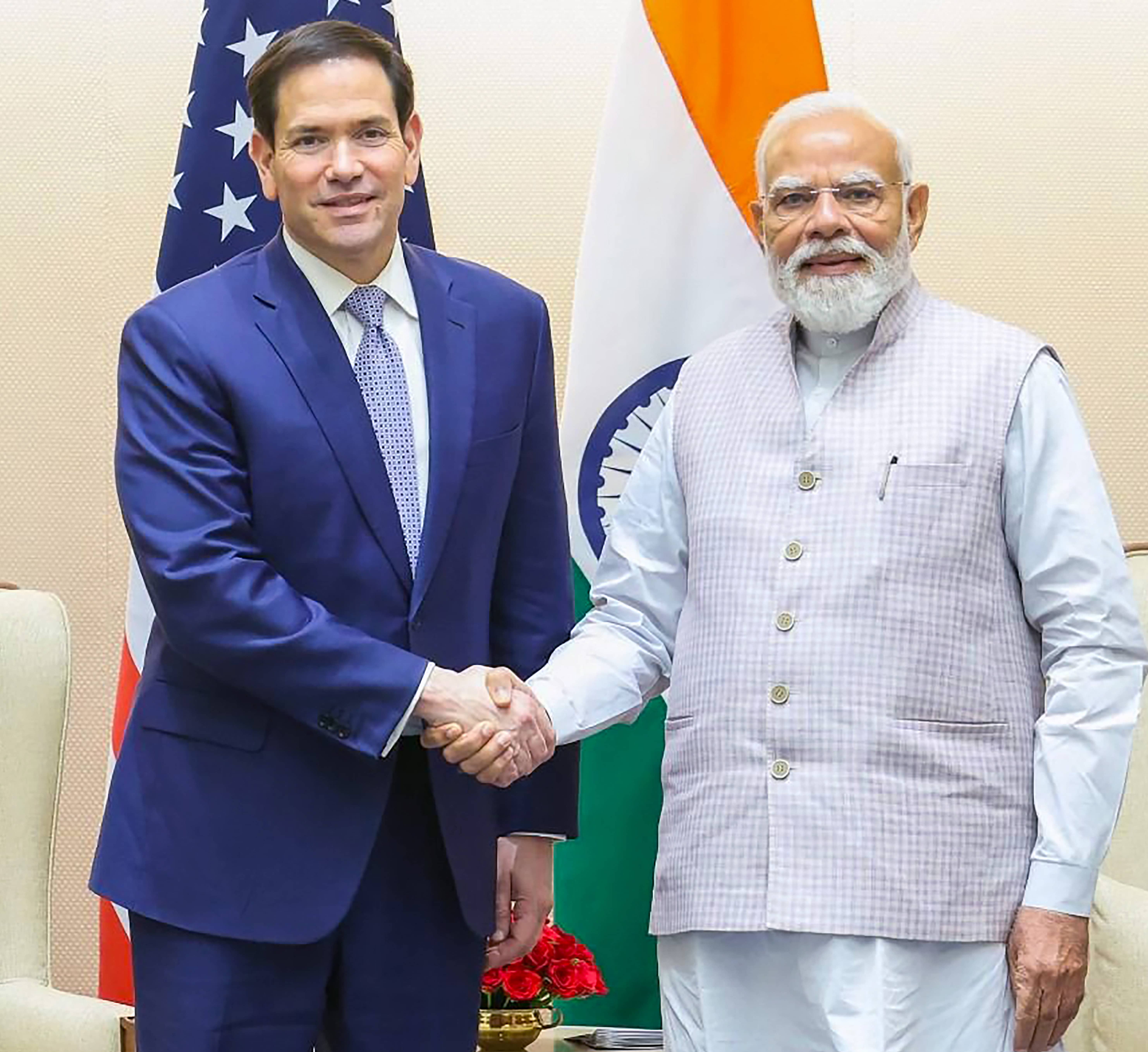

India's Growing Role on the International Stage
Washington, June 27 — US Secretary of State Marco Rubio stated that India, under the leadership of Prime Minister Narendra Modi, is emerging as a major global power and is increasingly participating in international decision-making processes. Speaking exclusively to IANS at the White House, Rubio described India as a "close partner and ally" of the United States, underscoring the deepening strategic relationship between the two democratic nations.
Modi's Leadership and India's Global Influence
Rubio emphasized the strength of the relationship between the two nations, noting that the connection between Prime Minister Modi and President Donald Trump "couldn't be closer." This strong personal rapport, according to Rubio, has significantly bolstered bilateral ties, allowing for more direct and effective communication on critical issues. He expressed profound admiration for Modi's leadership, stating that the United States is an "enormous fan" of what the Indian prime minister has achieved. Rubio highlighted India's remarkable progress, asserting that the nation is making "incredible gains economically" and is "coming into its own" as a country whose voice and interests are increasingly accounted for in decisions made on the global stage. This ascent signifies India's growing influence across various international forums and its enhanced role in shaping global policy, from economic governance to climate change and regional security.
A Strong Bilateral Foundation
The secretary characterized the current state of India-US relations as "fantastic" and "very strong," reflecting a robust and multifaceted partnership that spans numerous sectors. He referenced recent high-level diplomatic engagements, including a productive meeting between Prime Minister Modi and President Trump at the G7 summit. Such interactions at major international gatherings serve as crucial platforms for advancing shared interests and coordinating strategies on pressing global issues. The consistent positive dialogue at these levels demonstrates a mutual commitment to strengthening the bilateral bond, built on shared democratic values and strategic convergences.
Trade Deal Nearing Finalization
Beyond strategic alignment, Rubio indicated that both nations are hopeful to finalize a significant trade deal in the near future. He described the progress as being on the "last inches" of completion, signaling that a comprehensive agreement is imminent. This impending trade pact is expected to further integrate the economies of both countries, fostering increased trade volumes, investment, and economic cooperation. The finalization of this deal would solidify the commercial pillar of the India-US partnership, creating new opportunities for businesses and consumers in both nations and reinforcing their economic interdependence.
Energy Cooperation and Strategic Partnerships
Beyond diplomatic rhetoric and economic agreements, Rubio outlined specific areas of cooperation, particularly regarding energy security, a critical component of national stability and economic growth for any major power. He mentioned that the United States wants to play a larger role in meeting India's growing energy needs. India, as a rapidly developing economy and the world's third-largest energy consumer, faces substantial and increasing demands for energy to fuel its industrial expansion and meet the needs of its large and growing population.
Deepening Energy Security Ties
The US approach actively supports New Delhi's strategic objective of diversifying its energy sources. This diversification is crucial for India to reduce reliance on any single region or type of fuel, thereby enhancing its energy resilience, mitigating geopolitical risks, and ensuring a stable supply for its future development. Rubio argued that closer cooperation between India and the United States in the energy sector can significantly strengthen long-term energy security for both nations. This partnership could involve collaboration on renewable energy technologies, civil nuclear cooperation, and increased supplies of US energy exports, contributing to a more stable, secure, and diverse global energy market while fostering sustainable development.
The Quad's Strategic Importance
Strategic alignment was also highlighted through the Quad framework, a multilateral dialogue involving the United States, India, Japan, and Australia. Rubio stated that the United States looks forward to re-engaging in another Quad meeting very soon. He expressed personal anticipation for India's active return to these crucial discussions before the end of the year. The Quad serves as a vital platform for coordinating approaches to regional security, promoting a free and open Indo-Pacific, and addressing shared challenges such as maritime security, infrastructure development, and disaster relief. India's participation is considered pivotal to the effectiveness and reach of this strategic grouping, reinforcing its role as a key player in regional stability and a contributor to a rules-based international order.
Upcoming Presidential Visits and Trade Goals
Looking ahead, Rubio confirmed that plans are in motion for a presidential visit to India, signaling the highest level of commitment to the bilateral relationship. The secretary stated that the administration is actively working towards having President Trump visit India sometime early next year. Such a high-profile visit would serve as a powerful symbol of the enduring partnership and provide an invaluable opportunity for leaders to engage in direct discussions on a wide range of issues, from trade and defense to regional security and global governance. It would also allow for the potential signing of agreements and the announcement of new initiatives, further cementing ties.
Anticipated High-Level Engagements
Rubio reiterated his personal anticipation for renewed Quad engagements before the end of the current year, emphasizing the continuous nature of these strategic dialogues and their importance for regional stability. He added that preparations are well underway to set up the presidential visit in the early parts of the following year, indicating a clear roadmap for future high-level interactions. These diplomatic moves, including both multilateral strategic discussions and top-level bilateral visits, underscore the administration's unwavering focus on deepening ties with New Delhi across economic, strategic, and political domains. The consistent rhythm of high-level meetings reflects a shared agenda and a commitment to sustained collaboration on issues of mutual interest and global significance.
A Comprehensive Partnership Vision
The secretary reiterated the positive trajectory of the bilateral relationship, citing the recent G7 meeting as further evidence of strong cooperation and shared objectives on the international stage. He described the ongoing trade negotiations as very positive, indicating a strong mutual interest in finalizing agreements that would further integrate the two economies and unlock new avenues for growth and prosperity. The overarching focus remains on expanding partnerships in critical areas such as energy and technology, while simultaneously maintaining close political alignment and strategic coordination to address regional and global challenges. This comprehensive vision aims to build an even more resilient, impactful, and enduring India-US partnership for the future, capable of navigating complex geopolitical landscapes and fostering shared prosperity.