

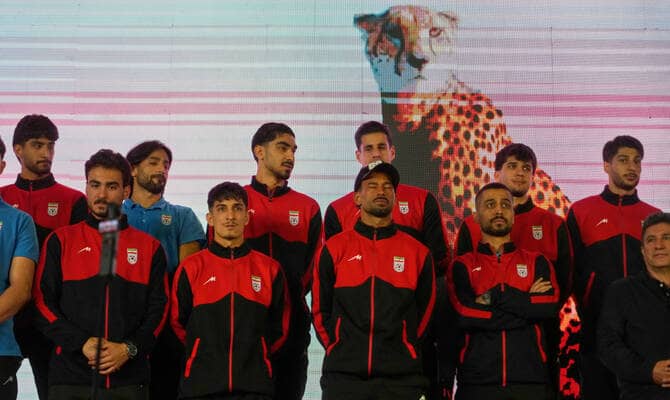

Mexico Welcomes Iran’s World Cup Base
Mexico City – The Mexican government has expressed no objection to hosting the Iranian national football team as a base during the 2026 FIFA World Cup. This confirmation comes directly from Mexican President Claudia Sheinbaum, who affirmed her administration's position amidst ongoing adjustments to tournament plans and a broader context of international geopolitical dynamics.
The decision underscores Mexico's role as one of the host nations for the expanded global football event and its commitment to facilitating the participation of all qualified teams.
The 2026 FIFA World Cup: An Expanded Format
The 2026 FIFA World Cup is set to be a landmark event, co-hosted by three North American nations: the United States, Canada, and Mexico. This marks the first time the tournament will be jointly hosted by three countries and will also feature an expanded format, increasing the number of participating national teams from 32 to 48. This expansion significantly broadens the logistical requirements for the tournament, including the need for a greater number of suitable team base camps across the host territories.
Mexico, having previously hosted the World Cup in 1970 and 1986, brings considerable experience to the logistical challenges of such a large-scale international sporting event. The country is expected to host a significant number of matches and provide training facilities and accommodation for multiple teams throughout the competition.
Presidential Affirmation
President Claudia Sheinbaum, in a recent statement, explicitly confirmed the Mexican government's stance. She indicated that Mexico maintains an open policy regarding the hosting of participating teams, provided they meet the standard requirements set by FIFA and the host nations. Her affirmation serves to clarify Mexico's position on the matter, ensuring that all teams, including Iran, are afforded the necessary facilities and support as per international sporting protocols.
The process of selecting base camps is a critical logistical phase for all national teams preparing for a World Cup. These camps serve as central hubs for training, accommodation, and strategic planning throughout the tournament, influencing team performance and player welfare. Host nations are responsible for ensuring a range of suitable options are available to the qualifying teams.
Shifting Tournament Dynamics and Geopolitical Backdrop
The confirmation of Mexico's willingness to host Iran's team occurs as tournament plans continue to evolve. The expanded 48-team format for the 2026 World Cup necessitates a more complex logistical framework, with teams potentially requiring base camps across a wider geographical area spanning the three host countries. This dynamic environment can lead to adjustments in team travel and accommodation strategies as the tournament schedule solidifies.
Furthermore, the decision is noted against a backdrop of broader geopolitical tensions. While specific details of these tensions were not elaborated upon in the context of Mexico's hosting decision, the international political landscape often influences various global interactions, including those within sports. Mexico's approach, as articulated by President Sheinbaum, reflects a commitment to separating sporting participation from broader political disagreements, adhering to principles of sportsmanship and international cooperation in hosting major events.
Mexico's Role as a Host Nation
As a co-host of the 2026 FIFA World Cup, Mexico is tasked with providing a secure and welcoming environment for all participating nations, their delegations, and fans. This responsibility extends to offering world-class training facilities, accommodation, and logistical support that meet FIFA's stringent standards. The acceptance of Iran's national team aligns with the general principle of host nations providing equitable access and facilities to all qualified competitors, irrespective of their national origin or political affiliations.
The preparations for the 2026 World Cup are ongoing, with significant infrastructure development and logistical planning underway across all three host countries. The selection and establishment of team base camps represent a crucial component of these preparations, ensuring that once the tournament commences, all participating teams can focus solely on their athletic performance.