

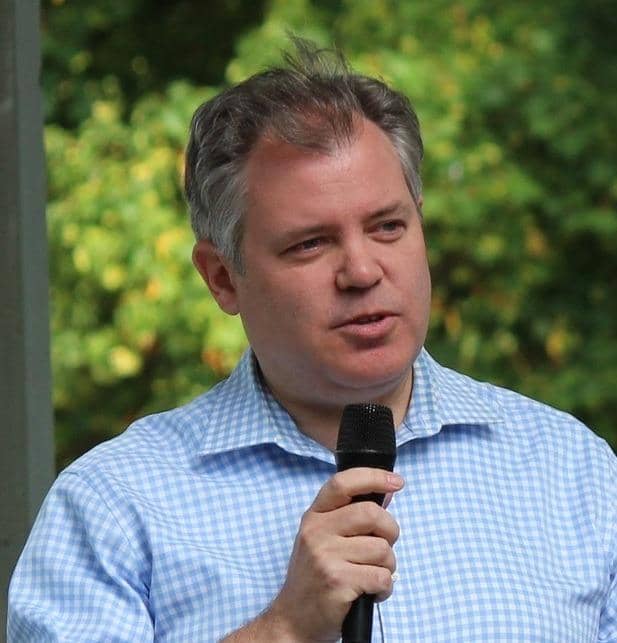

Edward Argar Condemns Proposed Expansion of Leicester City Council
Melton & Syston MP Edward Argar has publicly criticized the decision to merge several settlements in the Charnwood area into an expanded Leicester city council. The move, which was announced today as Thursday's news, involves absorbing five specific villages: Thurmaston, Syston, Queniborough, Barkby, and Beeby.
Argar described the administrative change as a 'land-grab' executed by Peter Soulsby, who currently serves as Mayor of Leicester. The MP stated that this decision goes against the wishes of residents living in the Charnwood villages within his constituency, asserting that their voices have been disregarded in a significant shift of local governance.
The proposed merger is part of a broader restructuring plan for local government across the nation. According to available reports, these changes are set to take effect beginning in April 2028. Under the new structure, the remainder of Leicestershire will be governed by a single unitary authority. This entity would replace the current administrative framework consisting of separate county and district councils, aiming to streamline local service delivery and decision-making.
Mayor Soulsby Defends City's Growth-Driven Expansion
The expansion is expected to significantly alter Leicester's demographic profile. Current population figures for the city stand at 372,000 residents. Following the absorption of the Charnwood settlements and other areas, the projected population will increase dramatically to 623,000. This substantial growth underscores the scale of the proposed boundary changes.
Peter Soulsby defended the decision regarding the expansion, stating it reflects the rapid growth currently experienced by the city. In his defense, Soulsby characterized the move as a 'sensible' action necessary for administrative efficiency and demographic accuracy. He argues that the city's expanding footprint and population necessitate a re-evaluation of its administrative boundaries to ensure effective governance and resource allocation.
Leicestershire's Sweeping Local Government Reforms
The decision to expand Leicester's boundaries and create a unitary authority for the rest of the county is not an isolated event but a component of a nationwide effort to streamline local government structures. This national initiative aims to consolidate administrative powers, reduce the number of elected bodies, and enhance the efficiency of public service delivery across England.
The Shift to a Unitary Authority Model
For the areas of Leicestershire outside the expanded Leicester city boundaries, the existing two-tier system of local government will be abolished. Currently, residents are served by both a county council (Leicestershire County Council) and one of several district councils (such as Charnwood Borough Council). The new model will replace this complex hierarchy with a single unitary authority, which will be responsible for all local services, from education and social care to waste collection and planning.
This significant administrative overhaul is designed to simplify governance, reduce duplication of services, and potentially achieve cost efficiencies. The implementation date for these comprehensive changes is firmly set for April 2028, marking a pivotal moment for local administration in the region.
Charnwood Villages Face New Administrative Alignment
The list of affected communities includes Thurmaston, Syston, Queniborough, Barkby, and Beeby. These locations are currently situated within the Charnwood area and fall under the jurisdiction of Charnwood Borough Council. Under the proposed changes, they would transition to being governed directly by Leicester City Council.
Edward Argar, whose Melton & Syston constituency encompasses some of these villages, has focused his criticism on how these specific communities will be treated under the new governance model. The MP argues that the current residents have not been adequately consulted or considered before this significant shift in local administration was announced, raising concerns about local democracy and community identity.
Political Tensions Over Boundary Redraws
The announcement has sparked immediate debate regarding the future of local administration in Leicestershire, highlighting a fundamental disagreement over how local government boundaries should be drawn. Argar's accusation of a 'land-grab' by Mayor Soulsby frames the issue as an aggressive expansion by the city into historically distinct communities, potentially undermining their local autonomy.
Clash Over Local Autonomy Versus Administrative Efficiency
This political friction underscores a divergence in perspectives. While Mayor Soulsby, representing Labour, maintains that the expansion makes sense given current population trends and is a 'sensible' move to ensure efficient resource allocation and accurate representation, Argar's opposition highlights concerns about local democratic accountability. The MP suggests that the wishes and identities of residents in these villages are being overlooked in favor of a broader administrative agenda.
The debate encapsulates a common tension in local government reform: balancing the need for administrative efficiency and adaptation to demographic change against the preservation of local community identity and direct democratic representation.
The Fixed Timeline for Regional Transformation
Despite the ongoing political criticism and defense, the timeline for these changes remains fixed at April 2028. The comprehensive restructuring, including Leicester's expansion and the establishment of a single unitary authority for the remainder of Leicestershire, represents a fundamental transformation of local governance across the region. This will redefine how public services are delivered, how local planning decisions are made, and how residents are represented for the foreseeable future.