


Geopolitical Fragmentation Reshapes Reserve Strategies
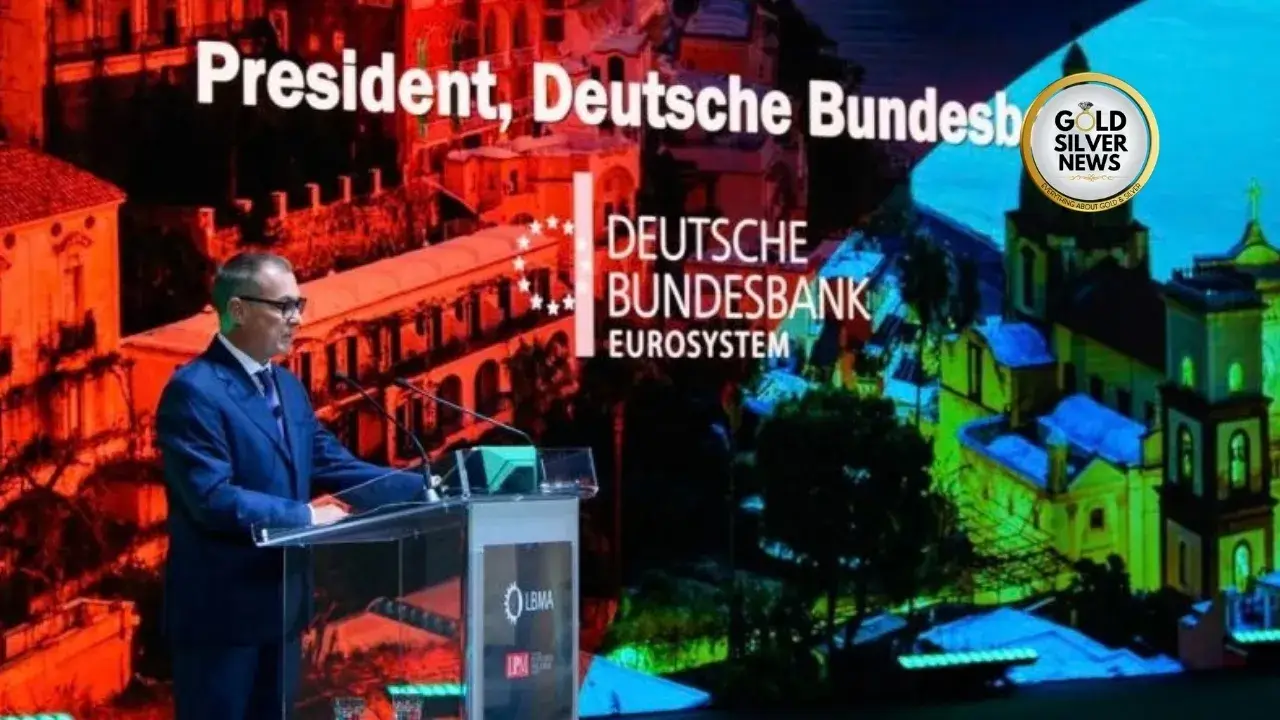
Joachim Nagel, President of the Deutsche Bundesbank, delivered a keynote address on Day 1 of the LBMA Global Precious Metals Conference in Sorrento, Italy. His speech focused on how geopolitical fragmentation is altering global economic growth and central bank reserve strategies.
Nagel noted that the combination of post-pandemic inflation, geopolitical tensions, and supply-chain disruptions would have been difficult to anticipate. Despite these challenges, he stated that the global economy has demonstrated considerable resilience, characterized by broadly stable economic growth and expanding global trade.
According to Nagel, investment in artificial intelligence, digitalization, defense, and energy security is contributing to economic activity across Europe. However, he warned that geopolitical developments continue to create inflation risks. He explained that higher energy costs, supply shortages, and trade disruptions can influence companies’ pricing decisions and wage negotiations if these conditions persist.
Nagel stressed that while central banks cannot prevent initial shocks from higher energy prices, they must remain alert to the possibility that temporary shocks could develop into more persistent inflation. He reiterated the European Central Bank’s data-dependent approach to monetary policy and highlighted the importance of maintaining flexibility as economic conditions evolve.
The Evolution of Gold in Reserve Portfolios
Nagel described the evolution of gold’s role in central bank reserve portfolios over roughly the past 75 years in three stages: "anchor, retreat and return."
During the Bretton Woods era, gold was at the heart of the international monetary system. In 1950, it accounted for nearly 70% of global central bank reserves.
Following the collapse of Bretton Woods, gold became less prominent as central banks increasingly accumulated foreign exchange reserves and government securities. This trend changed following the global financial crisis, when lower interest rates and rising geopolitical risks contributed to renewed central bank demand, making central banks net buyers of the precious metal.
Strategic Value Amid Uncertainty
Nagel pointed out that physical gold carries no counterparty risk and cannot easily be frozen or restricted like certain financial assets. He noted that these characteristics have become increasingly relevant in an environment shaped by sanctions, geopolitical competition, and uncertainty.
Although the share of gold in global reserves has risen substantially in recent years partly due to higher gold prices, Nagel suggested the strategic case for diversification remains strong. Rising geopolitical tensions, concerns over sovereign debt, and the need for greater resilience are factors supporting gold’s role within central bank reserve portfolios.
Nagel stated that geopolitics is likely to remain an important force in this context, reinforcing the rationale for central banks to maintain robust holdings of the precious metal as a hedge against systemic risks.