

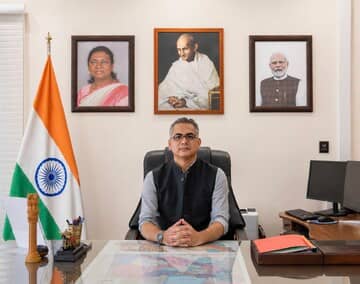

Diplomatic Engagements Initiate Bilateral Review
TEHRAN — India’s Ambassador-designate to Iran, Vishwesh Negi, held meetings with senior officials at the Iranian Ministry of Foreign Affairs on Sunday to assess the current state of relations and identify opportunities for enhanced cooperation between New Delhi and Tehran.
The primary engagement took place with Mohammad Reza Bahrami Taqanaki, who serves as the Director General of the South Asia Division within the Iranian Foreign Ministry. According to an official post on X (formerly Twitter) by the Embassy of India in Iran, the meeting provided a structured opportunity for both parties to discuss existing bilateral ties and explore mechanisms to strengthen them further.
Prior to the discussions with Taqanaki, Negi formally presented a copy of his credentials to Ali Akbar Nazari, the Director General of Protocols at the Iranian Foreign Ministry. This procedural step is standard for diplomatic envoys assuming their posts in foreign capitals, signaling the official commencement of their tenure.
Ambassador’s Professional Background and Regional Expertise
Negi is described by the Indian Embassy as a veteran diplomat with extensive experience spanning political, security, and multilateral affairs. His career includes diplomatic postings at Indian missions in Tehran, Rome, and London, providing him with direct exposure to the region he now represents.
Within India’s Ministry of External Affairs (MEA), Negi held senior positions handling portfolios that specifically covered Pakistan, Afghanistan, Iran, the United Nations, and the Indo-Pacific region. His professional history also includes service as Joint Secretary for International Cooperation at India’s Ministry of Defense.
Strategic Context Amid Regional Instability
The appointment of Negi to Tehran occurs during what sources describe as a critical juncture for India-Iran strategic and economic ties. The timing coincides with ongoing instability in West Asia, a region that has seen significant geopolitical shifts affecting trade routes and security dynamics.
Analysts note that Negi’s background in security and diplomatic affairs positions him to navigate the complexities of this period. His previous handling of portfolios related to Iran and the Indo-Pacific suggests a focus on maintaining steady diplomatic channels despite external pressures.
The Indian Embassy’s communication regarding the meeting emphasized the desire to "boost relations" and "further strengthen bilateral cooperation." The specific areas of cooperation were not detailed in the immediate reports from the Iranian Foreign Ministry or the Indian Embassy.
Implications for Bilateral Cooperation
The engagement between Negi and Taqanaki highlights the continued importance India places on its relationship with Iran. Despite global economic sanctions and regional conflicts, New Delhi has sought to maintain functional ties with Tehran, particularly regarding energy supplies and regional connectivity projects.
Negi’s previous tenure in Tehran is noted as a factor in his current appointment, suggesting a continuity of diplomatic strategy rather than a radical shift in policy. His role at the Ministry of Defense further underscores the security dimensions that may be prioritized in future dialogues between the two nations.
The meeting marks the initial phase of Negi’s efforts to operationalize his mandate. As he proceeds with presenting his full credentials and establishing his embassy staff, the focus remains on identifying concrete avenues for economic and strategic collaboration in a volatile regional environment.